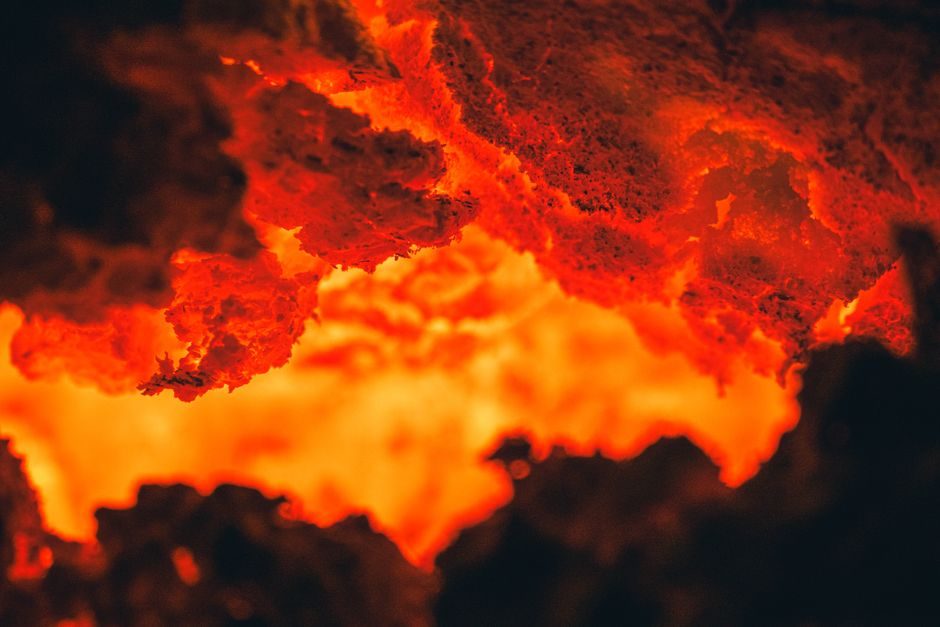
The first decision on a gas-fired aluminum melting furnace is matching furnace class to production rate: reverberatory (stationary) furnaces in the 1-50 t holding range typically deliver 1.5-3 t/h melt rate, while crucible and shaft designs trade capacity for higher thermal efficiency at the 0.3-2 t/h band [S1].
Spec-driven selection is dominated by four numbers: holding capacity in tonnes, specific energy consumption in kWh per tonne, burner input in MW and melt rate in t/h. Cross-link to the broader spec-driven selection of gas-fired aluminum melting furnaces reference for the procurement workflow and to gas-fired aluminum melting furnace for the equipment-class definition.
Specific Energy Consumption & Burner Sizing
Modern gas-fired aluminum melting equipment typically targets 550-700 kWh/t specific energy, which corresponds to roughly 40-55 Nm³ of natural gas per tonne of metal charged when fired at typical net calorific value [S1]. Furnaces equipped with regenerative or recuperative burners can drop specific gas consumption toward the 32-38 Nm³/t band by recovering flue-gas sensible heat above 700 °C [S1].
Burner thermal output scales with the melt rate: a 2 t/h furnace requires approximately 2.4-3.0 MW of burner input at 60 % thermal efficiency, rising to 7-9 MW for a 5 t/h furnace. Holding-only furnaces (no melting duty) can be downsized to 0.4-0.7 MW per tonne of bath because the metal arrives above liquidus. For a deeper dive on the underlying equipment, the melting furnace entry covers generic thermal-balance terminology.
Capacity Bands & Production Fit
Capacity bands map directly to plant tonnage: 0.5-2 t crucible furnaces suit job shops, R&D and aerospace alloy development with batch sizes of 200-800 kg; 3-10 t reverberatory furnaces cover the die-casting and secondary smelter mid-range; 15-50 t stationary furnaces serve primary smelters and large extrusion billet lines producing 50-200 t/day [S1]. The 5 t class is the most common global spec, driven by extrusion-press match-up and forklift/skull handling ergonomics.
A useful rule: select holding capacity at 1.3-1.5× the hourly melt rate to absorb charge interruptions and ladle-transfer surges. A plant needing 4 t/h sustained throughput should specify 5-6 t holding rather than a tight 4 t bath, otherwise dross formation rises and burner cycling losses dominate. For an aerospace spec with tight melt-loss budgets, see best gas-fired aluminum melting furnace for aerospace — aerospace selection tightens the melt-loss ceiling to under 1.0 % versus the 1.5-2.0 % norm in secondary smelting.
Refractory Lining & Alloy Compatibility
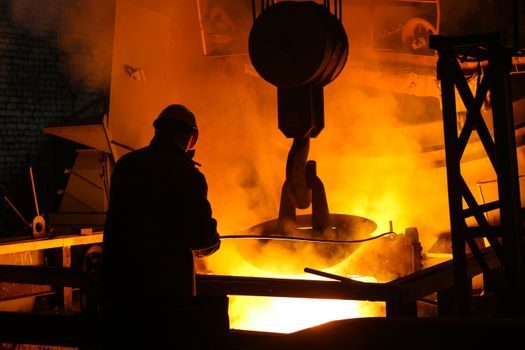
Refractory choice is the second-largest cost driver after burner system. The dominant construction is a 200-300 mm working lining of 70 % Al₂O₃ high-alumina brick or phosphate-bonded castable behind a 50-100 mm insulating backing, with high-purity silicon carbide (SiC) ramming mixes used in tap-out spouts, launder linings and the high-wear hearth/sidewall band. SiC content of 60-90 % is typical for high-temperature (1100-1200 °C) holding zones because of its thermal-shock resistance and low wetting by molten aluminum [S3].
Lining life on aluminum-melt service is usually expressed in 3-7 years for the working face (hearth/sidewall) and 5-10 years for the roof, depending on alloy aggressiveness, fluxing practice and iron pickup. High-magnesium Al-Mg alloys attack silica-based refractories, so plants melting 5xxx-series alloys typically switch to alumina-magnesia spinel linings. For material-property context, the aluminum alloy entry covers melt chemistry limits, and the fired brick entry documents the brick-grade system commonly used to spec the working face.
Flue-Gas Heat Recovery & Emissions
Flue-gas heat recovery is now baseline on any new gas-fired aluminum melting furnace above 2 t capacity. Regenerative burners recover 55-65 % of sensible heat in the 1000-1200 °C exhaust stream, while recuperative systems recover 30-45 % at lower capital cost. A 5 t/h reverberatory furnace equipped with regenerative burners typically drops stack temperature from 1100 °C to 180-220 °C, recovering 1.5-2.0 MW of thermal output and trimming gas consumption by 25-35 % [S1].
Emissions targets for new European builds are commonly NOx ≤ 50 mg/Nm³ (low-NOx burner or staged combustion) and CO ≤ 100 mg/Nm³. Recuperative low-NOx burners in the 2-8 MW class are now offered by multiple European and Chinese OEMs, with staged air regulation achieving NOx floor near 30 mg/Nm³ on natural gas duty. Combustion air preheat above 400 °C raises flame temperature but also raises NOx — most spec sheets include a curve showing NOx versus preheat temperature to keep selection honest.
Operating Limits & Failure Modes

Operating limits: bath superheat is normally held at 720-760 °C for Al-Si casting alloys and 700-740 °C for extrusion billets; exceeding 780 °C accelerates dross generation and H₂ pickup and shortens refractory life. Bath temperature uniformity of ±10 °C across the hearth is the practical ceiling for gas-fired designs; induction holds tighter (±5 °C) but at higher kWh per tonne. [S1]
Failure modes: (1) burner tile cracking from thermal cycling — typical life 1-3 years on heavy duty; (2) hearth erosion at the charge-door zone from mechanical impact; (3) door-frame distortion allowing air ingress that spikes NOx and wastes gas; (4) flux and salt attack on silica-bearing linings when melting Al-Mg alloys above 760 °C. A practical procurement step is to require an OEM thermal-cycle test report documenting 200+ cold-to-hot cycles without refractory crack growth. The linear guide and crossed-roller-guide entries are unrelated to furnace selection but illustrate the kind of mechanical-spec discipline that should also be applied to door-hinge and tilting-mechanism specs.
Sourcing, Standards & Procurement Levers
Procurement workflow: (1) lock melt rate, holding capacity, alloy family and shift pattern; (2) request bids on fixed SEC (kWh/t) and fixed gas-consumption (Nm³/t) at a stated metal temperature; (3) require refractory draw, burner turndown ratio (10:1 minimum for modern regenerative units) and stack emissions data; (4) require site-acceptance test with 8 h continuous melt at rated throughput, with the burner ramped through 30-100 % load to verify turndown; (5) lock spare-parts pricing and refractory-rebuild labour rate for the first 5 years. [S2]
Standards: ASME BPVC Section I governs fired pressure-vessel integrity for any heat-recovery boiler section; ISO 13705 is the relevant reference for aluminum-melting furnace performance test methods; NFPA 86 covers furnace oxygen-enrichment and safety interlocks; EN 746-2 covers European safety of industrial thermoprocessing equipment. The spec-driven selection of gas-fired aluminum melting furnaces article walks through the supplier shortlist and lead-time map, while a comparison against the line-frequency induction alternative is in the line-frequency induction furnace suppliers reference.
Track for 2026 spec updates: tightening EU ETS carbon pricing is pushing European die-casters to retrofit regenerative burners on existing 3-10 t reverberatory furnaces — payback has fallen to 18-30 months at current natural-gas/CO₂ spreads. In parallel, several Chinese OEM lines are now offering pre-engineered 5 t and 10 t regenerative tilting furnaces with quoted 38 Nm³/t gas consumption, a number that was OEM-specific claim territory five years ago. For plants with intermittent duty (single-shift die-casting, R&D melt trials), a 1-2 t crucible furnace on a 1.5-2.5 MW burner remains the lowest-capex path and the most defensible spec when running below 8 h/day.