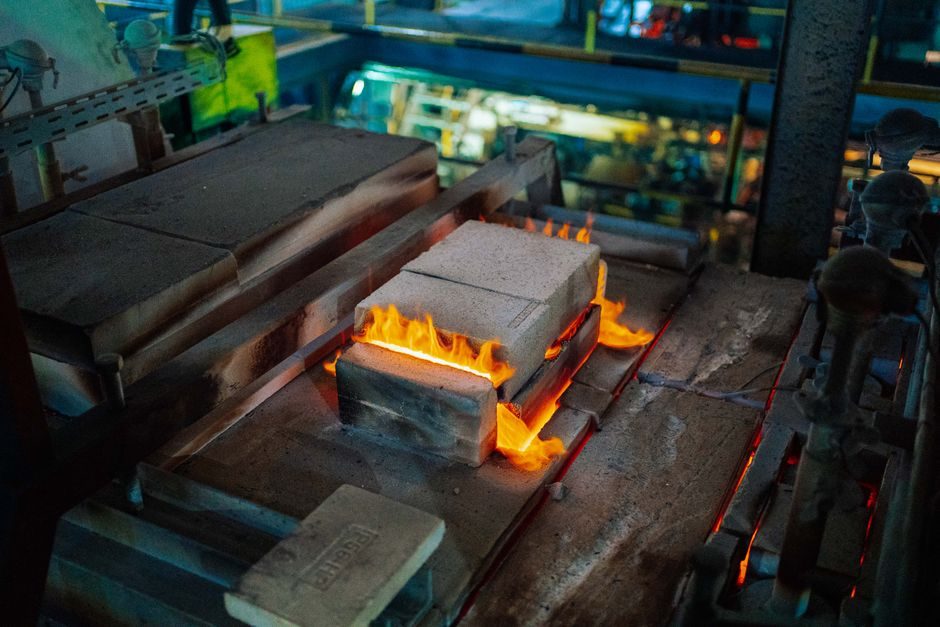
A gas-fired aluminum melting furnace sized at 1–10 t/h melt rate typically lists between US$80,000 and US$200,000 ex-works from Chinese OEMs, with CE and ISO 9001 certification and 5-sets-per-month production capacity quoted on 2026-05-13 catalogue data [S1]. Selection turns on six decision variables: furnace type, melt rate, holding efficiency, burner system, refractory lining, and charging method, and the right combination drives payback through gas consumption and dross rate rather than headline price.
Gas-fired units remain the lowest-cost fossil-fuel option for foundries that need 1–50 t holding capacity and accept 660–760 °C bath temperatures, with reverberatory configurations dominating small-to-mid volume production. Process engineers typically cross-check a gas-fired melting furnace selection against induction equivalents when electricity tariffs fall below US$0.05/kWh; below that threshold, induction's higher electrical efficiency can outweigh the fuel-side economics that make gas competitive elsewhere.
Furnace Type, Capacity Bands, and Throughput Math
Reverberatory furnaces handle 60–80% of gas-fired aluminum melting installations worldwide, with stationary, tilting, and rotary subtypes differentiated by charge handling rather than bath chemistry [S3]. Stationary reverberatory units paired with hydraulic charging bins are the dominant configuration for 3–25 t melt rates; the hydraulic-cylinder charging retrofit documented in 2021 reduced charging-bin downtime and replaced electromechanical chain hoists on 5–15 t furnaces [S2].
Capacity bands follow a clean three-tier pattern: 1–3 t/h units serve job-shop and prototype foundries, 5–15 t/h covers mid-volume automotive and extrusion billet supply, and 20–50 t/h reverberatory or shaft configurations feed casthouse and remelt operations. Charging method scales with size: hand-charged door for sub-3 t/h, hydraulic bin tippler for 5–15 t/h, and well-charged or shaft-charged large units for 20+ t/h. A practical sizing rule: nameplate melt rate should be 1.2–1.4× the designer's average hourly demand to keep the bath at 700–750 °C under peak load without over-firing.
Burner System, Regeneration, and Gas Consumption
Regenerative burner retrofits on aluminum holding furnaces deliver 30–50% fuel savings over conventional radiant-tube fired systems, with payback reported in the 18–36 month range when natural gas exceeds US$8/MMBtu [S3]. Gas-fired reverberatory aluminum holding furnaces are widely described as the lowest-efficiency fossil-fuel melting system without regeneration, which is the engineering case driving the technology.
Burner selection follows three criteria: thermal input (kW or MMBtu/h), turndown ratio (the ratio between maximum and minimum stable firing rate, with values of 8:1 to 20:1 typical for modern regenerative units versus 3:1 to 5:1 for conventional on/off burners), and NOx emissions compliance. A 12-burner high-speed auto-controlled array on a 350 t car-bottom gas-fired furnace rated 1200 °C max represents the heavy-industrial extreme of the same burner family used in smaller aluminum units [S4]. For the aluminum alloy melt shop specifically, regenerative burners also improve melt uniformity because the high-velocity preheated air drives convective stirring in the bath.
Refractory Lining and Bath Temperature Control
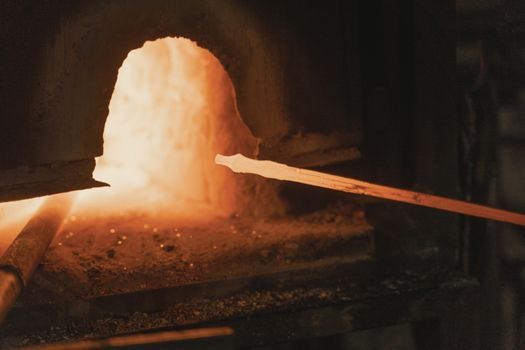
Lining selection is a hidden cost driver: monolithic castable (alumina-based, 70–85% Al2O3) is standard for non-contact zones, while high-alumina or silicon-carbide brick is specified for the metal-contact hearth and ramp. Service life of the hearth typically runs 12–36 months depending on dross removal discipline, flux practice, and maximum bath temperature, with each 50 °C of over-temperature roughly halving lining life in the contact zone. [S1]
Process engineers should treat refractory specification as a structured trade-off rather than an afterthought. A typical 5 t/h reverberatory furnace uses 80–120 t of refractory across hearth, sidewalls, roof, and burner blocks, with material costs commonly falling between US$15,000 and US$45,000 ex-works depending on grade. The same fired brick family used in the car-bottom 1200 °C class [S4] is widely available from refractory suppliers, but aluminum service requires tighter control of Fe2O3 and SiO2 pickup into the bath than generic heat-treat service.
Charging, Flux Practice, and Dross Control
Dross rate is the second-largest operating cost after gas, typically 2–5% of charged weight for clean scrap and 5–10% for oily or painted turnings. Hydraulic bin tipplers with single-acting multistage telescopic cylinders are the established retrofit path for replacing electromechanical hoists on existing 5–15 t furnaces [S2].
Flux practice and cover gas interact with furnace type: rotary degassing is rarely paired with stationary gas reverberatories, but flux injection through a door lance and argon or nitrogen cover at 5–15 SCFH per ton of bath is standard for premium ingot production. Hold-and-pour stations often use separate well-heated holding furnaces, which is why a complete gas aluminum melting furnace line is sold as a matched set rather than a single vessel.
Specification Comparison: Reverberatory vs Regenerative vs Crucible
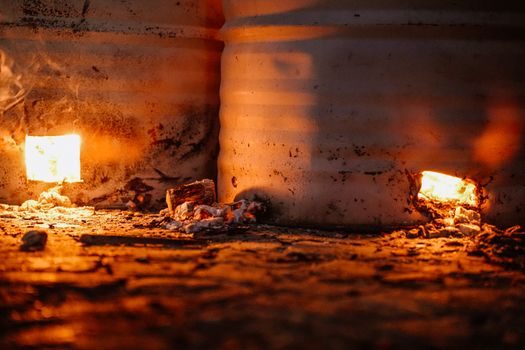
The three dominant gas-fired configurations trade capital, efficiency, and flexibility in different directions, and the right pick depends on operating hours per year, alloy mix, and electricity availability. The table below lines up the same decision criteria a process engineer would apply to a 3–10 t/h foundry: [S2]
• Stationary reverberatory: 2–50 t/h capacity, US$80,000–US$200,000 capital for 5 t/h class, 25–35% thermal efficiency without regeneration, 3:1 burner turndown, suited to continuous high-throughput operation and wide alloy range. • Regenerative reverberatory: 2–30 t/h capacity, US$120,000–US$280,000 capital, 45–60% thermal efficiency, 10:1 to 20:1 burner turndown, best when natural gas exceeds US$8/MMBtu and annual operating hours exceed 5000. • Gas-fired crucible: 0.1–2 t/h capacity, US$5,000–US$30,000 capital, 15–25% thermal efficiency, 1:1 to 2:1 turndown, suited to small batch, alloy changes, and intermittent operation where the higher unit gas cost is offset by low capital and flexibility.
Beyond the headline numbers, two practical notes matter: regenerative systems require a minimum holding temperature window of 50–80 °C to keep regenerators cycling, which is a poor fit for alloys needing tight 700 ± 10 °C control; and crucible furnaces can be moved between cells, which is a genuine advantage for job shops. A useful side-by-side review of how size, coil, and lining drive a parallel decision in electric melting is laid out in this induction furnace sizing guide, which is worth reading if gas and induction are both on the table.
Standards, Sourcing, and Certification Trail
Buyer-side compliance for a Chinese-supplied gas-fired aluminum melting furnace is anchored on CE (EN 746-1 industrial thermoprocessing equipment safety) and ISO 9001 quality system certification, both of which are routinely quoted on OEM listings and verifiable via the certificate number and issuing body [S1]. Burner systems on CE-marked equipment fall under the Gas Appliances Regulation (EU) 2016/426 in the European market, with factory acceptance testing typically witnessed by the buyer's inspector for refractory pre-heat, burner flame pattern, and bath temperature uniformity.
Lead times from Foshan, China-based manufacturers run 60–90 days for standard 5–15 t/h reverberatory units and 120–180 days for engineered-to-order regenerative systems, with L/C and T/T the dominant payment terms on export listings [S1]. Engineers specifying a melting furnace should also request the refractory material data sheet, burner data sheet, NOx and CO emissions guarantee, and the bath temperature uniformity test report, all of which are standard deliverables on a 2026 quote pack.
Limitations, Failure Modes, and Common Specification Traps
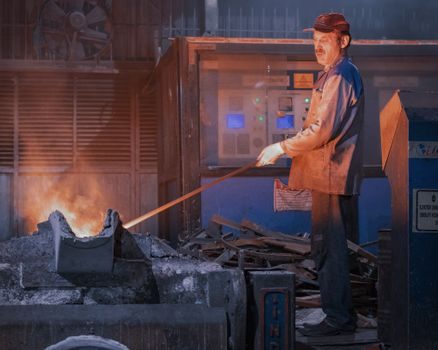
The most common specification trap is matching nameplate melt rate to average demand without peak load headroom; under-firing a reverberatory furnace during a 30-minute pour cycle drives burner cycling, refractory thermal shock, and elevated dross. A second trap is ignoring gas supply pressure: a 10 MMBtu/h burner system needs 7–10 kPag stable manifold pressure, and undersized supply pipes cause flame lift and high-CO combustion. [S3]
Operators should also plan for refractory dry-out, a 24–72 hour controlled burn-in schedule that is frequently missed on tight delivery schedules and is the leading cause of early lining failure.
Trackable signals for buyers before signing a PO: request the OEM's last three installed reference units, the gas consumption per ton of molten metal on a comparable duty cycle, and the burner turndown guarantee in writing. Expect a 2026 ex-works quote on a 5 t/h CE/ISO regenerative reverberatory in the US$150,000–US$250,000 band, a 90-day FAT window, and a 12–18 month warranty on the burner and refractory package.