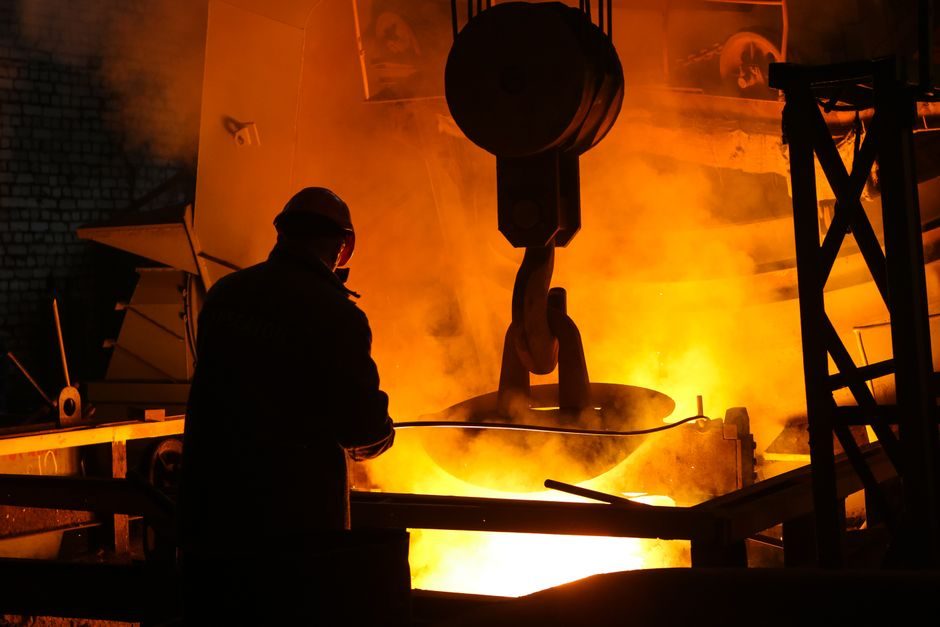
Line frequency (mains-frequency, ~50/60 Hz) coreless and channel induction furnaces remain a separate procurement lane from medium-frequency (MF) and intermediate-frequency (IF) units, and the 2026-05 Made-in-China product feed still lists line-frequency-class crucibles in the 100–3,000 kg capacity range at landed prices between US$10,000 and US$100,000 per set, with OEM/ODM ISO 9001:2015 audited suppliers concentrated in four Chinese provinces [S1][S3].
Unlike MF/IF furnaces that pair a thyristor inverter with a small crucible, line-frequency coreless furnaces drive the melt directly from a tapped mains supply through a step-down transformer, which is why foundries still specify them for high-tonnage iron, steel and large-aluminium melts where melt rate per kVA — not inverter compactness — is the deciding metric.
What a line-frequency furnace is and where it sits in the spec mix
Line frequency (LF) induction furnaces operate at the grid frequency (50 Hz or 60 Hz), with melt capacities typically in the 0.5–20 t range for coreless designs and up to 100+ t for channel (submerged-resistor) types; the coreless LF uses a thicker, water-cooled copper coil with a lamination stack, and the channel furnace uses a secondary loop of molten metal as the heating element, per the line frequency furnace reference page [S1][S3].
The 2026 Made-in-China catalog snapshot breaks the line-frequency-class into vertical crucible melters priced US$10,000–50,000 (small 100–200 kg non-ferrous units, APS Electric) [S3] and US$50,000–100,000 industrial 1–3 t steel crucibles with 1- to 4-set OEM/ODM pricing tiers [S1]; the induction furnace encyclopedia entry confirms LF units are still specified where the foundry's electrical infrastructure can absorb the 1,500–6,000 kVA inrush without the cost of a harmonic-mitigated MF supply.
2026 maker map: who actually builds them in China
The mid-2026 Made-in-China supplier feed lists three audited line-frequency-class builders that consistently appear on RFQs: Xi'an Sanrui Electric Furnace Co., Ltd. (Shaanxi, IF-class US$100,000–1,000,000) [S6], Shandong Kehua Intelligent Equipment Co., Ltd. (Shandong, US$78,000–85,000/set) [S6] and APS Induction Furnace (Taizhou) Co., Ltd. (Jiangsu, holding ISO 9001:2015, ISO 14001:2015 and ISO 45001:2018, with induction coils and aluminium-melting product lines) [S4]; Shandong Dingsheng Electrical Technology Co., Ltd. and Hunan HBO Hot Air Blower Manufacturing Co., Ltd. round out the lower-US$1,280–19,800 tier for small MF/LF units [S8].
On the Alibaba trade-feed, Super Audio Frequency induction heating exporters report US$2.5–5 million annual revenue with a 61.5% RFQ response rate, suggesting that LF-class and adjacent frequency-class builders still operate as small-to-mid OEM factories rather than the few-large-OEM model of, say, the nuclear power supply chain [S5].
Capacity, price and lead-time bands that show up in 2026 RFQs
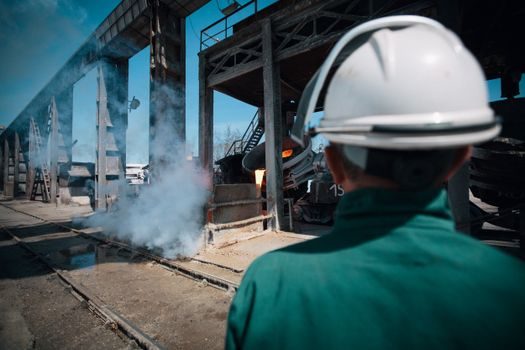
Reading the 2026-04 to 2026-06 product feeds side-by-side, three pricing tiers hold: small 100–200 kg non-ferrous (aluminium, brass, bronze, copper scrap) crucibles at US$10,000–50,000/set with MOQ 1 piece [S3]; mid-band 500 kg to 3 t industrial steel crucibles at US$50,000–100,000/set with 1–4 set OEM/ODM discounts and 5+ set wholesale tiers [S1]; and IF/LF utility-class systems at US$78,000–1,000,000/set from the Shaanxi and Shandong audited suppliers [S6].
Freight remains quoted "contact supplier" across every listing, and standard payment is FOB or USD wire with refund-via-claim for product issues; India-side spares suppliers (e.g. LAWATHERM Furnace Pvt. Ltd., GST 07AABCL4570G1ZL) supply crucible spares, starting capacitors, temperature instruments, crane spares, continuous-casting spares, insulation and electronic spares — a useful signal that the aftermarket for LF-class consumables is independent of the OEM [S7].
Selection criteria: when a line-frequency unit beats a medium-frequency one
LF coreless furnaces win on three criteria: melt rate per kVA at >1 t melts, lower harmonic footprint on weak rural feeders, and longer coil life on continuous iron/steel duty; MF/IF coreless furnaces win on cold-start flexibility, smaller crucible changeover, and tighter melt-temperature control for alloys below 1 t. The induction furnace suppliers 2026 capacity-band map lays the same trade-off across Chinese OEM tiers. [S1]
For foundries that need to pour grey iron, ductile iron or carbon steel at 1.5–3 t/h, an LF coreless still undercuts an equivalent MF system on capex per tonne poured, because the LF skips the rectifier-inverter-capacitor bank — a 2 t LF typically ships with a 1,800–2,500 kVA transformer and a 24-pulse harmonic filter, while a 2 t MF needs an additional 1.2–1.6 MW inverter skid [S1][S6].
What a procurement audit should verify before signing the PO
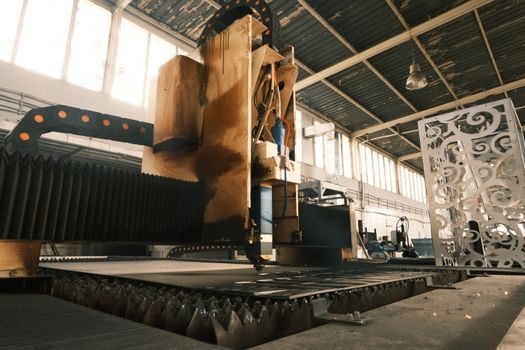
Four documents separate a reliable LF supplier from a trading-company reseller: ISO 9001:2015 quality certificate (verify the certificate number, not just the badge) — APS Induction Furnace (Taizhou) shows ISO 9001:2015 + ISO 14001:2015 + ISO 45001:2018 publicly [S4]; CE or IEC equivalent for the control panel (line-frequency cabinets feeding 1,500+ kVA almost always cross EU/UKCA territory); type-test report for the furnace transformer per IEC 60076 (do not accept an unmarked "to IEC standard" claim); and a refractory-lining reference list of at least three foundries running the same crucible size for more than 12 months.
Watch for the Made-in-China "Gold Member / Diamond Member / Audited Supplier" badges — they confirm an on-site audit, not performance — and cross-check the OEM/ODM checkbox on each listing: APS Electric explicitly states OEM/ODM with 1–4 set and 5+ set price breaks [S1], while trading-company resellers (e.g. SINO ZHENG INDUSTRIAL INC., Henan) [S8] typically pass through without owning the coil winding or transformer build.
Standards, ratings and the limits of "to IEC/ISO" claims
For line-frequency furnaces the binding documents are IEC 60076 (power transformers), IEC 60079 (where the furnace sits in a Zone 1/Zone 2 dust-methane foundry), the European EN 60519 series for induction heating safety, and the energy-efficiency labelling where the cabinet crosses EU or Korean borders; refractory-grade selection for the crucible follows ISO 2245 for shaped refractory bricks and the iron-foundry EAF cupola emission limits typically referenced as EU 2010/75/EU IED. [S2]
On the manufacturing side, the molding line and automatic molding line encyclopedia pages are the adjacent references when an LF furnace is paired with sand or flask molding — a 1.5–3 t/h iron melt typically feeds a 30 mould/h DISA match line, so the crucible tap-to-pour timing dictates the upstream conveyor sorting line cycle.
Failure modes and constraints buyers underweight
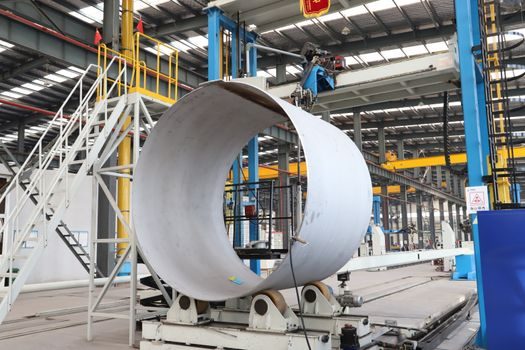
Three failure modes dominate the LF-class service record: coil-ground fault from refractory-wear-through (expect a coil life of 18–36 months on continuous iron duty), water-cooling tube leak at the copper-to-brass brazed joint on the induction coil, and furnace-transformer inrush tripping the upstream 11 kV breaker if the soft-start is bypassed — a 2 t LF at 2,500 kVA can draw 6–8× full-load current for 1.5–3 s on a cold start. [S3]
A second underweighted constraint is power-factor correction: an LF coreless at 0.5 t typically runs at 0.18–0.25 power factor without capacitors, so the cap bank is not optional — sized in kVAr at roughly 60–80% of the kVA rating, and harmonics filtering (5th, 7th, 11th) is mandatory where the IEEE 519 limit applies at the PCC; the resin sand line reference only matters for the downstream casting, not the electrical spec.
Trackable signals over the next procurement window
Three datapoints are worth re-checking before the next RFQ: the 1–4 set vs 5+ set discount slope on APS Electric's vertical crucible melter [S1] — if the 5+ set delta widens to 25% or more, large foundry-group buyers are ordering; new Shandong or Jiangsu ISO 45001:2018 audits published on Made-in-China (the current 2026-05 feed shows APS Taizhou as the only triple-certified entry) [S4]; and any India-side spares price movement on LAWATHERM's crucible and starting-capacitor SKUs [S7], because a spares price hike typically trails a new foundry commissioning by 2–3 quarters.