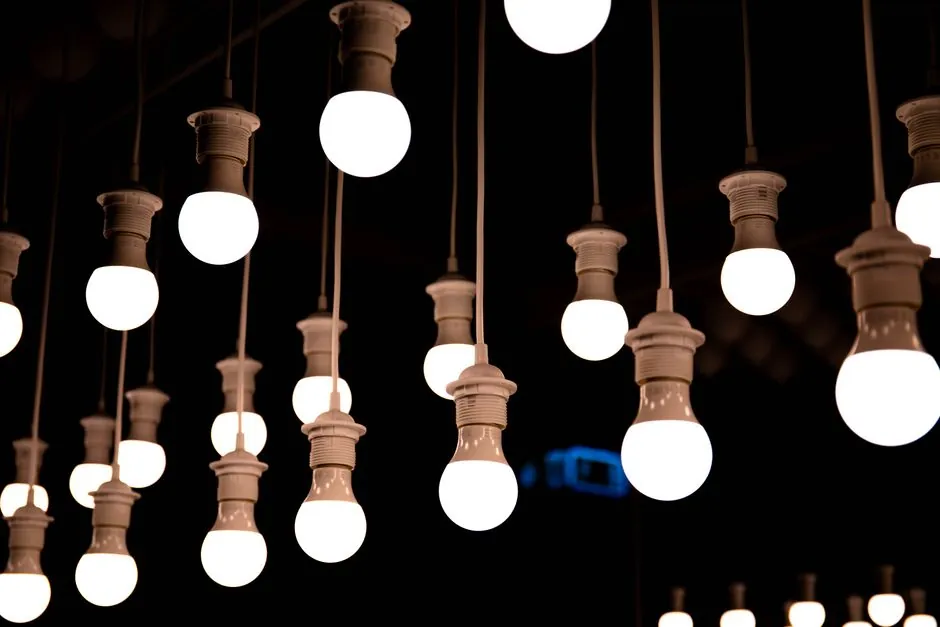
A line frequency induction furnace operates directly on the three-phase 50 Hz (or 60 Hz) mains, so the rectifier and inverter stage that defines a medium-frequency unit is absent, leaving a 100–3000 kW coreless or channel furnace that holds a 0.5–30 t bath of molten aluminium or brass for die-cast lamp housings, heat sinks, and decorative fixtures [S1][S3].
Selection for a lighting-supply foundry turns on alloy (aluminium vs brass vs zinc), heat size, daily melt tonnage, and whether the line already supports the multi-megawatt three-phase feed that a 1000 kW coreless furnace draws at 50 Hz [S1].
Why Mains Frequency Fits Lighting-Fixture Foundries
Line frequency induction furnaces run on the same 50/60 Hz three-phase mains that powers the plant, so no frequency-conversion stage is needed and electrical losses stay roughly 3–5% above the busbar, against 8–12% for a medium-frequency inverter chain [S1][S3]. For a lighting-fixture foundry pouring 4–12 t of aluminium per shift into gravity or low-pressure die-cast housings, that efficiency gap is the single largest operating-cost line in the energy bill [S3].
Channel-type line frequency furnaces in the 100–600 kW band are standard holding units, typically 200–1500 kg bath, fitted beside a coreless melter so the alloy stays within ±5 °C of the casting temperature setpoint during a 16 h shift [S3]. For brass components such as lampholder bodies and decorative arms, the same channel furnace holds 60/40 brass at 880–920 °C with melt loss below 1.5%, against 2–3% for gas-fired pot furnaces, which is the main reason European lighting OEMs migrated away from fossil-fired pots in the 1990s [S1][S3].
Selection Gates: Power, Capacity, and Duty Cycle
The first gate is per-heat capacity: coreless line frequency furnaces start at 0.5 t and run to 30 t, while medium-frequency coreless units rarely exceed 5 t per furnace, so any lighting foundry pouring more than 5 t of aluminium per heat is structurally pushed toward a 50 Hz coreless induction furnace [S1][S3]. A 3 t aluminium melt, 720 °C tap temperature, typically needs a 1200–1500 kW coreless line frequency furnace to reach tap in 70–90 min from a cold charge, against 30–40 min for a 1500 kW medium-frequency unit of the same size [S3].
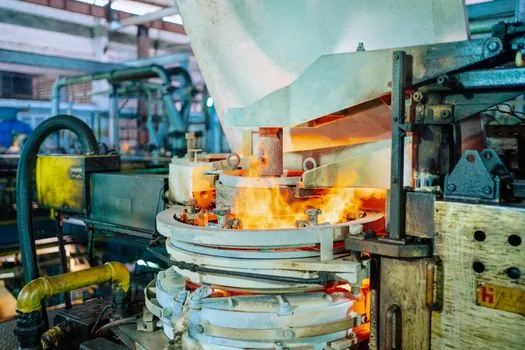
The second gate is the holding-versus-melting duty split: a lighting-fixture foundry pouring continuously into two or three die-cast cells should pair a 1500–2500 kW coreless melter with one 200–400 kW channel holding furnace per cell, each drawing directly on the 50 Hz mains without rectifier losses, and sized so the holding furnace can idle at 30–40% nameplate power overnight without tap-temperature drift exceeding ±10 °C [S3]. Furnace manufacturers list standard channel-unit ratings at 100, 200, 300, 500, and 800 kW, with inductor stacks of 200–800 kW per stack, which is the practical granularity a foundry uses to right-size a holding loop [S3].
Line Frequency vs Medium Frequency: Decision Matrix
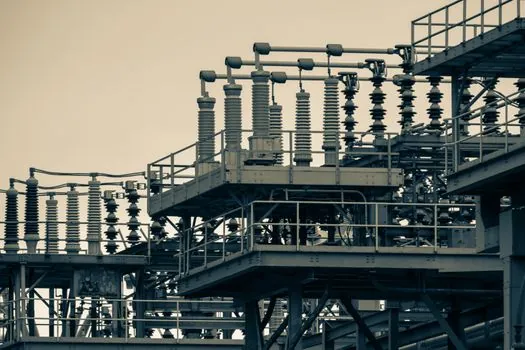
On four decision criteria, a lighting-fixture foundry picks as follows. (1) Per-heat mass above 5 t: line frequency coreless wins because medium-frequency coreless tops out near 5 t per unit. (2) Holding duty longer than 4 h: line frequency channel wins, with a 100–800 kW inductor stack that idles at 30–40% power. (3) Short-cycle melting, frequent alloy change, scrap-based cold charge: medium-frequency coreless wins, with 200–2500 Hz and tap-to-tap times of 30–40 min per heat [S3]. (4) Plant already fed by a 6–11 kV three-phase line with a transformer rated for the MW-class draw: line frequency wins on infrastructure fit, while medium-frequency requires an additional rectifier/inverter room and harmonic filtering that typically adds 8–12% to first cost [S1][S3].
A practical rule used by specifiers: if daily melt exceeds 20 t of aluminium and the product mix is dominated by one alloy, install one 2000–3000 kW line frequency coreless plus 1–2 channel holders; if daily melt is below 10 t and the foundry runs short runs of 4–6 different alloys per week, two 1000–1500 kW medium-frequency coreless furnaces give the flexibility the line frequency option cannot match [S3].
Lighting-Fixture Alloy and Component Mapping
Aluminium alloys A380, A383, and ADC12 for die-cast lamp housings and heat sinks pour at 640–680 °C and respond well to line frequency holding because the alloy chemistry is tolerant of the slower induction stirring action of 50 Hz, and the slower stirring in turn gives cleaner dross separation at the bath surface [S3]. Brass alloys C36000 and C27000 for lampholders and decorative arms pour at 880–930 °C, and the high thermal mass of a 500–1000 kg channel furnace keeps the melt within a ±5 °C band overnight on a 50 Hz supply, which is essential for consistent finish on polished or plated lighting components [S1][S3]. Zinc die-cast alloys for small fixture hardware, Zamak 3 and Zamak 5, pour at 410–430 °C and are usually held in 100–200 kW channel furnaces rated for 0.5–2 t bath, well below the size at which medium-frequency coreless induction units become competitive [S3].
Infrastructure, Harmonics, and Refractory Constraints
Because the furnace is fed directly at 50/60 Hz, harmonic distortion is limited to the natural triplen harmonics of the three-phase load and rarely exceeds 4–5% THD on the bus, well inside the IEEE 519 limits for industrial feeders, whereas a medium-frequency inverter typically requires an active harmonic filter that adds 3–5% to first cost [S3].
Refractory life is the other gating constraint: a 3 t coreless line frequency furnace on aluminium typically runs 300–500 heats between relines of the silica or magnesia lining, against 800–1200 heats for a medium-frequency furnace of the same size, because the 50 Hz field couples more deeply into the bath and the resulting electromagnetic stirring erodes the slag line faster [S3]. For a lighting foundry running two shifts, that refractory delta translates into roughly one extra reline per year, which the energy savings of the line frequency unit must be benchmarked against during selection [S3].
Limits and Failure Modes Specific to 50 Hz Operation
The 50 Hz field penetrates deeper into the charge than the 200–2500 Hz field of a medium-frequency furnace, so cold-start scrap with a high surface-area-to-mass ratio (turnings, thin-walled scrap, painted swarf) heats unevenly and can form cold bridges that the slower electromagnetic stirring cannot break up [S3]. Foundries that take back painted or lacquered scrap from the lighting-equipment line must therefore size the coreless furnace for a minimum 70% liquid heel at start-up, or pre-melt that fraction in a medium-frequency furnace before transfer [S3].
Channel furnaces are intolerant of dry-channel start-up, because the melt in the inductor loop must remain liquid at all times; a channel furnace that drains on a weekend will need 6–10 h to re-establish a liquid loop in the inductor before it can resume holding duty, which is the main reason lighting foundries schedule holding-furnace downtime to coincide with summer or winter plant shutdowns [S3]. A 200 kW channel furnace idling at 30% power overnight consumes 144 kWh at typical 2026 industrial tariffs, which the foundry must include in the operating-cost model alongside melt-loss and refractory costs [S1][S3].
Sourcing and Standards to Verify
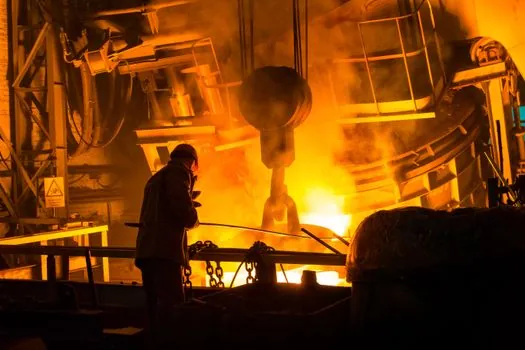
Spec sheets from mainland manufacturers list the standard ratings at 100/200/300/500/800 kW for channel units and 250/500/1000/1500/2000/2500/3000 kW for coreless units, with inductor frequencies fixed at the 50/60 Hz mains, so cross-checking a quotation against this rating ladder is the quickest way to spot an undersized proposal [S1][S3]. Buyers sourcing lighting-furnace packages on Made-in-China will see the medium-frequency catalogue dominate the listings, while line frequency units are typically quoted on RFQ rather than listed as catalogue stock, which is itself a signal that a foundry should engage the OEM directly for the engineering package rather than rely on a catalogue match [S2][S3].
Trackable signals for 2026 sourcing: a foundry specifying a 2000 kW class line frequency coreless should request the harmonic compliance data against the local grid code, the refractory reline interval in heats, and the cold-start scrap tolerance of the bath geometry, all three of which separate a properly engineered line frequency installation from a generic medium-frequency retrofit. The next sensible check after a vendor shortlist is to compare the proposed variable-frequency drive integration, because line frequency furnaces increasingly ship with a VFD-controlled water-cooling and tilting package, and the VFD spec gates for the lighting plant's MCC room then become a second-order selection criterion that interacts with the furnace rating [S3].
Related analysis: Dust Mask Selection for Confined Space Entry: Spec Gates and Limits.