
A gear motor is an integrated power pack that combines a gearbox with an electric motor in a single housing, typically delivering 0.12-30 kW of output torque for conveyors, mixers, and small machinery [S1 context]. A motor grader is a 30,000-50,000 lb self-propelled earthmoving machine, with current Cat units spanning 171 hp (120 GC) to 535 hp (24 class) at 4.1-5.4 in bore [S5].
The two product categories share no functional overlap. Gear motors sit inside industrial process lines as torque-producing components, while motor graders operate outdoors as standalone grading, snow removal, and road-maintenance machines with 12 ft moldboards and Tier 4 Final / EU Stage V emissions [S1][S5]. Engineers specifying either should treat them as separate procurement tracks with different spec sheets, duty cycles, and supplier ecosystems.
Definition and Functional Scope of Each Category
A gear motor is a factory-assembled unit where an electric motor drives a speed-reducing gear stage (helical, worm, or planetary), delivering high torque at low rpm to a load shaft. It is specified by kW rating, output speed, service factor, and mounting configuration, and is typically sourced from industrial drive catalogs rather than construction-equipment dealers [S1 context]. [S2]
A motor grader, in contrast, is a 6-wheel (or all-wheel-drive) machine whose primary tool is a centrally mounted moldboard used for fine grading, ditch cutting, and snow removal. Current production Cat units span base power outputs of 171-304 hp in the 120 GC through 18 models, with the 24 class reaching 535 hp at 5.4 in bore and 6.0 in stroke [S5]. Typical equipped operating weight on a 150 is 45,012 lb, with a 12 ft blade [S5].
The key distinction is that a gear motor is a subassembly, while a motor grader is a complete machine. Buyers specifying the former look at gear ratios and IEC duty cycles; buyers specifying the latter look at moldboard pull, articulation, and emissions tier.
Selection Criteria: Power, Duty, and Environment
Gear motor selection is driven by required output torque (Nm), input speed (rpm), and service factor (SF 1.0-2.0+). Industrial-grade helical and parallel-shaft units are common in conveyor and agitator duty, with worm units used for low-speed, intermittent applications. Standard reference is the AGMA gear-strength calculation system for load capacity. [S2]
Motor grader selection is driven by base power (1st gear, net), operating weight, and moldboard width. Wagner Equipment lists the Cat 140 at 179 hp net (1st gear) and 42,647 lb typically equipped, while the Cat 150 steps up to 200 hp and 43,950 lb, both with 12 ft blades [S1]. Cleveland Brothers extends the lineup to a Cat 14 at 238 hp, 16 at 290 hp, and 18 at 304 hp base power, plus a 160 at 224 hp in the Tier 4 range [S5].
Environment matters: gear motors for hazardous areas require ATEX/IECEx certification for Zone 1 or Zone 2 use, while motor graders must meet U.S. EPA Tier 4 Final and EU Stage V emissions, with the 150 AWD Tier 4 unit explicitly certified to both [S5].
Component-Level Comparison: Drive vs Machine
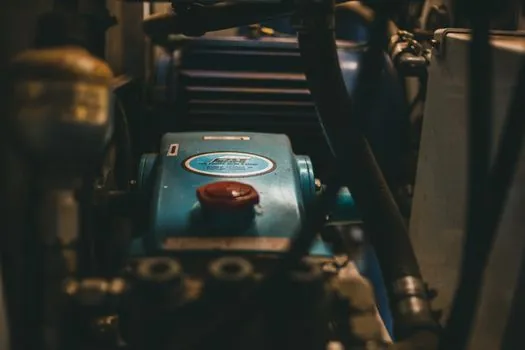
Comparing a gear reducer family against a motor grader family is structurally a category mismatch, but a side-by-side spec map clarifies the gap. Output power for industrial gear reducers typically runs 0.12-30 kW (0.16-40 hp) at output speeds of 0.1-500 rpm, while a motor grader engine delivers 171-535 hp at full load to the wheels and hydraulics [S5].
Weight is the second divider: an industrial gear reducer assembly weighs 5-300 kg depending on size, while a motor grader like the Cat 150 weighs 45,012 lb (≈20,420 kg) typically equipped [S5]. Mounting, too, differs: gear reducers use foot, flange, or shaft-mount; motor graders ride on 14.0R24 tires on multi-piece rims and articulate around a center joint [S5].
For procurement, gear reducers are listed in industrial MRO catalogs with kW + service factor nomenclature. Motor graders are listed by Caterpillar (and competitors) through dealer channels, with model codes keyed to engine class and AWD/joystick/lvr option packages [S1][S5].
Drive Type Comparison Inside Gear Motors
Within the gear motor family, the practical decision is between helical gear reducers, worm units, and planetary stages. [S1]
Selection-by-criterion: for continuous conveyor duty at high efficiency, helical; for intermittent lift or hoist where backstop is wanted, worm; for servo-driven precision where coaxial packaging is required, planetary. All three fall under the gear motor umbrella but solve different duty profiles.
Motor Grader Sub-Models Compared by Net Power
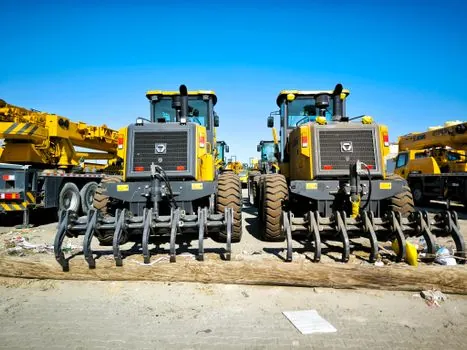
The Cat motor grader family as listed by Cleveland Brothers spans 10 model variants, with the 120 GC at 171 hp (ISO 9249/SAE J1349) and the 24 class at 535 hp (EEC 80/1269) [S5]. Mid-range 140 and 150 models overlap at 200-255 hp, with the next-generation 150 at 219 hp and a Cat C9.3B engine [S5].
Operating weight scales with power: 140 LVR is 44,613 lb; 150 next-gen is 45,012 lb; the 18-class is 304 hp base power with a Cat C13 at 5.1 in bore and 6.2 in stroke [S5]. Buyers should map engine code (C7.1 / C9.3 / C9.3B / C13) to power class, since emissions tier and displacement change across the lineup.
For a grader-to-grader selection criteria pass, the four decisive axes are: base power (hp, 1st gear net), operating weight (lb, typically equipped), moldboard width (ft), and emissions tier (Tier 4 Final / EU Stage V vs older configurations). Match these four against the haul-road or fine-grading duty at the site.
Failure Modes, Maintenance, and Sourcing
Transmission issues in motor graders are commonly reported in field service notes: gear shifting failures, sluggish response, and limited top speed in the working range [S2][S4]. One common root cause is degraded hydraulic oil or electrical connector contamination on solenoid packs; the documented field fix on a Cat 140H is to remove side covers, clean the trans-electrical connectors and hoses, and verify coil voltage under load [S4]. Heat-stressed coils are a known secondary cause [S4].
For gear motors, typical failure modes are oil seal leaks, bearing pitting from shock loading, and gear tooth spalling when service factor is undersized. A documented blade-rotation gear mesh adjustment on legacy graders uses four adjusting shims to set backlash, indicating where factory tolerance and field maintenance overlap [S3].
Sourcing tracks differ: gear motors are purchased from industrial drive distributors and OEM catalogs with full AGMA duty ratings; motor graders are purchased from authorized Cat dealers such as Wagner Equipment Co. and Cleveland Brothers, with model codes and option packages tied to region and emissions certification [S1][S5].
Applicable Standards and Reference Frameworks
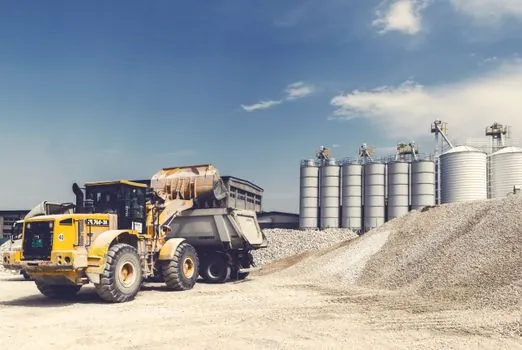
Motor grader engine power is published to ISO 9249, SAE J1349, and EEC 80/1269 standards, with emissions certified to U.S. EPA Tier 4 Final and EU Stage V on current production models [S5]. Operating weight is calculated with full fuel, coolant, operator, push block, transmission guard, rear ripper/scarifier, and 14.0R24 tires on multi-piece rims, per the Cat published note [S5].
Gear motor ratings reference AGMA load-capacity calculations, IEC 60034 for motor performance, and ATEX 2014/34/EU or IECEx for explosive atmospheres where specified. Buyers should request the AGMA rating sheet, the service-factor basis, and the certification dossier before releasing a purchase order for either category.
For motor graders, request the factory published flywheel power curve, the emissions declaration, and the AWD / LVR / joystick option code, since these change weight, tire spec, and operator interface [S1][S5]. For a related comparison on earthmoving equipment selection, the bulldozer vs motor grader stage-based selection for road work reference covers the grader's place in a mixed fleet.
Trackable signals over the next 6 months: new Cat 140/150 next-gen shipments into North American dealer lots, AWD option adoption on the 150, and the next revision of the 18-class (304 hp) emissions configuration. For fleet-level TCO context across heavy equipment, the ownership-math article applies the same lifecycle lens to truck cranes and is worth reading alongside any grader procurement decision.