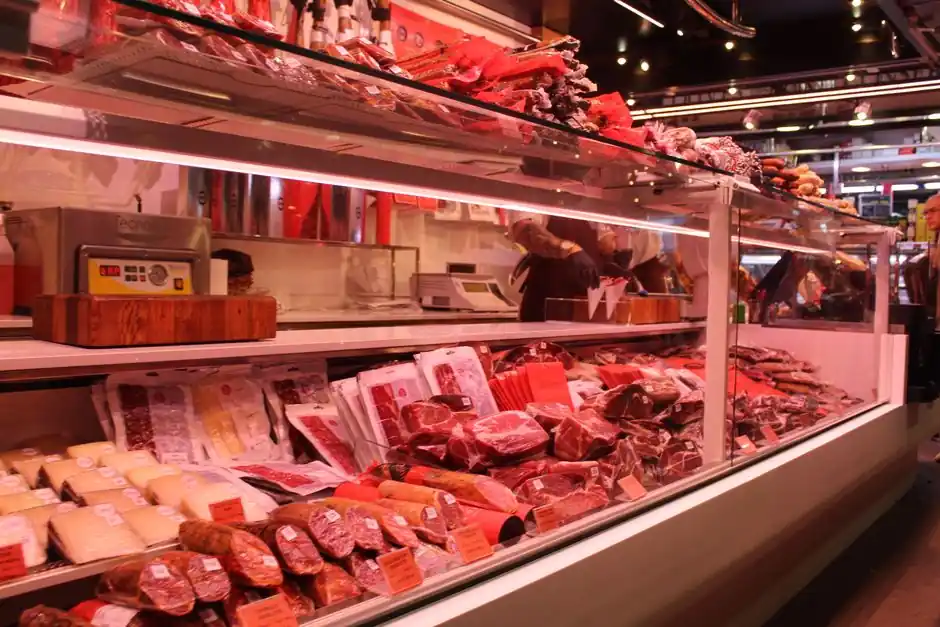
In food-processing plants, gearbox choice is driven by five mechanical factors before the motor is even sized: required output speed, running torque, startup load, continuous duty hours and the cleaning environment around the machine [S2]. Unlike general industrial duty, the gearbox must also survive routine washdown, food-grade lubricants, and sealed housings that block contamination ingress [S1][S2].
The dominant architectures in 2026 specifications remain helical inline, helical-bevel (right-angle), parallel-shaft, worm, cycloidal, planetary and stainless washdown units, matched by application rather than by a single “food-grade” label [S1][S2]. Powder-mix, dough and beverage lines trend toward right-angle and parallel-shaft units, while conveyors and packaging cells typically use inline helical reducers sized for continuous-duty thermal limits [S2].
Five selection inputs that decide the gearbox type
Bosinuo's food-processing selection flow lists eight inputs, but five govern the architecture: required output speed, running torque, startup load, continuous operation time, and cleaning environment [S2]. Output speed and ratio drive the choice between worm (high single-stage ratio, often 5:1 to 100:1), helical inline (1:1 to approximately 300:1 across two stages) and cycloidal (high ratio in a coaxial envelope) [S1][S2].
Startup load is decisive for mixers handling dough, sauce or powder: these batches change viscosity mid-cycle, so high startup torque with smooth speed transmission is specified, which favors helical-bevel K-series and cycloidal units over standard worm designs [S2]. Continuous operation time, often 16 to 24 h/day on a bottling or bakery line, eliminates lightly rated gearboxes and pushes selection toward Class II or III thermal ratings with food-grade or PAO synthetic lubricant [S1][S2].
Cleaning environment is the discriminator between standard paint-epoxy housings and full stainless washdown gearboxes: caustic foam, CIP chemicals and 1,500 to 2,000 psi spray demand 304 or 316 stainless housings, smooth contours without crevices, and sealed input/output shaft seals [S1]. Where washdown is intermittent, painted aluminum or cast-iron housings with food-grade oil remain acceptable and noticeably cheaper [S2].
Four common gearbox types for food plants
Helical gearboxes are the workhorse of food lines: angled teeth give high efficiency (typically 96 to 98 percent per stage), low vibration, and continuous-duty ratings suited to conveyors, mixers and packaging equipment [S1]. They are the default inline choice for variable-speed packaging conveyors and for ingredient feeders where smooth torque is required at low rpm [S1][S2].
Bevel-helical gearboxes provide right-angle power transmission in a compact envelope, making them the standard for bottling lines, food conveyors and automated packaging cells where floor space is constrained [S1]. K-series helical-bevel units are the typical OEM fit for large vertical agitators, processing tanks and continuous blenders because multiple mounting configurations (flange, foot, shaft) are available [S2].
Worm gearboxes are used where compact size and high single-stage reduction matter, including bakery equipment, smaller conveyors and packaging machinery [S1]. The trade-off is efficiency: worm reducers typically run 30 to 90 percent depending on ratio and lead angle, and generate more heat, so in a continuous-duty washdown cell a helical or bevel-helical unit is often a better thermal choice [S1][S2].
Stainless steel washdown gearboxes are built specifically for hygienic zones: 304 or 316 stainless housings, smooth weld-free surfaces, sealed bearings and food-grade lubricant, rated for daily high-pressure cleaning and chemical exposure [S1]. They cost 2 to 3 times a comparable painted unit but are the only practical option in direct food-contact zones, especially meat, dairy and ready-meat lines that run CIP every shift [S1].
Application-specific gearbox matching
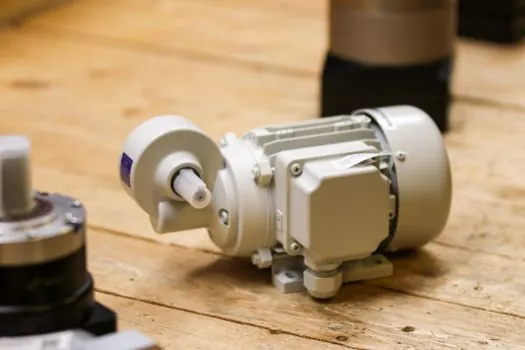
Food mixers see varying load as viscosity and batch size change, so the gearbox must deliver high startup torque, low-speed output, smooth transmission and shaft-load support; K-series helical-bevel, F-series parallel-shaft and cycloidal reducers are the three typical fits for this duty [S2]. K-series is preferred for vertical agitators and large dough mixers where right-angle drive saves headroom; F-series suits horizontal and side-mounted blenders; cycloidal units are picked for high-load, frequent start-stop machines because of their high reduction ratio and overload tolerance [S2].
Conveyors are the highest gearbox count in any food plant, transporting raw ingredients, packaged goods, bottles, frozen product and finished cases. R-series inline helical reducers dominate packaging and transfer conveyors because they combine stable speed control, flexible mounting, and a thermal reserve sized for long continuous runs [S2]. For more on duty-cycle matching in heavy industries, see the gearbox selection map for mining duty, which lays out the same service-factor logic applied to conveyors and mills.
Bottling, filling and packaging cells typically combine a bevel-helical or inline helical reducer on the main drive with a smaller worm or planetary unit on auxiliary cams, screws and label feeds, where the self-locking or compact nature of those architectures is useful [S1][S2]. In mixers and conveyors, the same logic as slewing bearing selection in textile mills applies, with sealing and lubrication governing mean time between failure more than the gear geometry itself.
Hygiene, lubrication and material requirements
Food-grade lubrication is a hard requirement where incidental contact is possible: USDA H1 or NSF H1 registered oils and greases are used, and many OEMs now offer PAO synthetic lubricants with extended drain intervals to suit 24/7 plants [S1][S2]. Hyperion's food-processing components line highlights that wear parts, fluid-handling components and sanitary fittings used around gearboxes must be FDA compliant and built for repeated washdown, not just for mechanical duty [S3].
Housing protection is rated by sealing class and surface finish: washdown gearboxes carry IP66 to IP69K ratings, with 316 stainless specified in highly corrosive or salt-exposed zones, and 304 stainless as the baseline in dairy and bakery [S1]. Sealed input and output shafts use double-lip or cassette seals to keep out CIP chemical ingress; without them, a standard paint-epoxy reducer can fail its bearing lubricant within weeks on a daily CIP line [S1][S2].
Maintenance accessibility matters because gearbox change-out in a food plant is a sanitation event: smooth, crevice-free contours with no horizontal ledges let crews wipe down rather than disassemble, and foot or flange mountings that allow slide-out replacement cut a typical gearbox swap from a half-day to under two hours [S1][S2]. The full mechanical context of these drives, including gearbox fundamentals and standard architectures, is worth reviewing before locking a spec on a washdown line.
Comparison: which gearbox fits which food duty
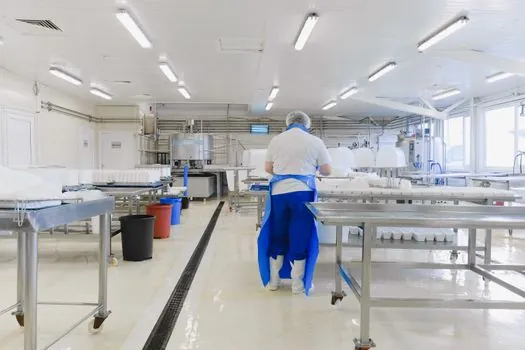
For continuous-duty conveyors: pick an inline helical (R-series) or bevel-helical unit, 96 to 98 percent efficient per stage, IP66 sealing, H1 oil, 1.5 to 3.0 kW typical for packaging conveyors [S1][S2]. For mixers and agitators with high startup torque: K-series helical-bevel (right-angle) or cycloidal, both rated for shock load, with parallel-shaft F-series for horizontal mounts [S2].
For compact, low-speed packaging screws and label feeds: worm reducers give self-locking and high single-stage ratio in a small envelope, accepting lower efficiency (30 to 90 percent) as the price [S1]. For direct food-contact washdown zones: stainless 304/316 washdown gearboxes, IP69K where hot high-pressure spray is used, with H1 lubricant and FDA-compliant shaft seals; budget 2 to 3 times the cost of a painted unit [S1].
Who this is for: plant engineers and OEM machine builders running 16 to 24 h/day food lines with daily washdown, mixer duty, or bottling and packaging cells. Who it is not for: dry bulk grain handling outside hygienic zones, where standard industrial gear reducers without H1 oil or stainless housings remain the lower-cost fit, and where the general NBR elastomer service band selection logic (for seals around those reducers) follows different criteria.
Limitations, failure modes and what to verify on a data sheet
Worm reducers run hot and lose efficiency fast above a 40:1 ratio, so in a sealed washdown enclosure with poor airflow they will thermally trip or seize long before their catalog service life [S1][S2]. Helical units are quieter and more efficient, but a single-stage helical cannot reach the 60:1 to 100:1 ratio a worm gives in one box, so two-stage or helical-bevel units must be specified where the ratio is high [S1][S2].
Stainless washdown gearboxes are not a free upgrade: their lower thermal mass means they need derating in continuous heavy-duty cycles, and their 2 to 3 times cost premium is only recovered if the line is doing daily CIP [S1]. Seals remain the weak point, and any gearbox specified for a food line should show the seal material (FKM or HNBR), the IP rating, and the lubricant grade on the data sheet, not just in marketing copy [S1][S2].
Standards relevant to this selection sit mostly in materials and hygiene: FDA food-contact compliance for lubricants and seal elastomers, USDA H1 / NSF H1 for incidental-contact oils and greases, and ISO 6336 / AGMA 2001 for gear strength and rating calculation, with 3-A sanitary standards and EHEDG guidelines referenced for hygienic design of the surrounding machine [S1][S2]. Confirm the actual data-sheet numbers (service factor, thermal rating, IP code, H1 lubricant) against the line's CIP chemistry and duty cycle before sign-off, and verify whether the OEM publishes a washdown test certificate rather than a generic IP claim [S1][S2].
Track for the next selection cycle: whether the plant standardizes one or two gearbox platforms (typically an R-series inline helical for conveyors and a K-series helical-bevel for mixers) to reduce spare parts inventory [S2]. Watch for vendor publications of extended H1 oil drain intervals above 4,000 hours and for IP69K-rated washdown gearboxes in the 0.75 to 7.5 kW range, which would let food plants standardize washdown units across both conveyor and mixer duties rather than running parallel paint-epoxy and stainless fleets [S1][S2].
Spec-level background on the components involved: pressure transmitter, and flow meter.