
Evaluating a servo motor purchase in 2026 is a system-level decision: the motor is one of four coupled variables, alongside the drive, the encoder/feedback chain, and the controller-side protocol (EtherCAT, PROFINET, EtherNet/IP, CANopen, or pulse/direction) [S1].
Ten brand families, Yaskawa, Mitsubishi Electric, Siemens, FANUC, Rockwell Automation, ABB, Bosch Rexroth, Schneider Electric, Omron, and Delta, account for the bulk of CNC, packaging, robotics, and material-handling installations, with their positioning differing more by ecosystem strength than by raw motor data [S1].
Global Brand Tier: What Each Top-10 Servo Vendor Is Actually Best At
Yaskawa is positioned for CNC, high-dynamic automation, and robotics, with its strength being the combined motor + drive + motion-control platform rather than any single component [S1]. Mitsubishi Electric targets CNC, packaging, and line integration, where its amplifier + automation coordination is the differentiator [S1]. Siemens is favoured in smart factories, material handling, and packaging, with the SINAMICS-style drive + motor + protocol stack giving it a standardization advantage [S1].
FANUC is essentially CNC-locked: motor + amplifier + CNC compatibility is the system it is built around, and it is a poor fit outside machine tools [S1]. Rockwell Automation dominates North American packaging and conveying through the Kinetix + control platform + Studio 5000 software chain [S1]. ABB covers packaging, machine automation, and global delivery, with the drive + motor + complete motion solution plus worldwide service footprint as its pitch [S1]. Bosch Rexroth is heavy in machine tools, packaging, and material handling via open-architecture integration, while Schneider Electric's Lexium platform targets packaging, handling, and multi-axis applications as a balanced mid-tier solution [S1]. Omron (1S system) is the engineering-efficiency play: EtherCAT-native, fast commissioning, and OEM-friendly. Delta rounds out the top tier as the cost-effective ecosystem option for packaging and entry-level CNC [S1].
Integrated Servo Motors: When to Pick Them Over a Separate Drive-Motor Pair
An integrated servo motor combines motor, encoder, and drive electronics in one housing, which removes the separate cabinet-mounted drive and cuts motor + encoder cabling to a single hybrid cable [S2]. The architectural payoff is real: smaller cabinets, faster multi-axis commissioning, and easier distributed motion on AGVs, collaborative robots, and compact CNC builds [S2].
The trade-off is serviceability and peak power density. Integrated units concentrate heat from the drive stage into the motor body, so continuous torque at zero speed is usually lower than an equivalent frame-size separate servo, and field-replacement means swapping the whole unit rather than a single drive module [S5]. For Indian OEM machine builders, the practical shortlist in 2026 includes HDBMotor (OEM customization, robotics/AGV focus), Yaskawa (high-precision CNC), Delta (cost-effective packaging lines), Mitsubishi (industrial/automotive reliability), and Panasonic (compact precision for medical automation) [S2].
Integrated Stepper Servo Motors: Pulse, RS485 Modbus, and CANopen Variants

Integrated stepper servo motors are a distinct sub-class: stepper + microcontroller + driver + encoder + protection in one unit, often used as a low-cost alternative to a true brushless servo where the application does not demand the highest dynamic response [S3]. Three control interfaces dominate the 2026 market: pulse/direction (drop-in for legacy PLCs and CNC controllers), RS485 Modbus RTU (multi-axis networking with parameter configuration and alarm feedback), and CANopen (direct integration into robotics, AGV, and distributed motion systems) [S3].
Closed-loop variants add an encoder that monitors shaft position and dynamically trims current, which eliminates the open-loop stepper's stall-without-warning failure mode at the cost of a small price premium [S3]. For Russian-market OEMs sourcing in 2026, JKONGMOTOR and 19 other suppliers are listed as the practical shortlist, with torque, encoder resolution, communication protocol, voltage, IP rating, customization, and long-term spare-part supply weighted more heavily than unit price [S3].
Military and Defense Servos: Rotary, Linear, Brushless, and Digital
Defense servo procurement is a separate market with its own suppliers, qualification cycles, and environmental specs [S4]. Typical 2026 military applications are rotary and linear servos, brushless DC servos, and digital bus servos in UAV flight-control surfaces, weapon-station stabilization, and turret/gimbal pointing, where high-precision torque, wide temperature range, and shock/vibration tolerance outweigh cost per axis [S4].
Defense buyers should treat the Defense Advancement supplier index as a starting point, not a ranking, and qualify each candidate against the actual MIL-STD or platform-level environmental profile the program demands, since commercial-top-tier names like Yaskawa or Siemens do not automatically carry defense-rated variants [S4].
Total Cost of Ownership: Why "Cheap" Servos Cost More in High-Precision Machines

The hidden-cost argument against low-priced servos is well documented for high-precision machines: cheaper motors typically carry lower-resolution encoders, looser torque-ripple tolerances, and weaker thermal management, which together drive higher reject rates, more frequent re-tuning, and shorter service intervals [S6].
For a 3-axis CNC or a high-speed packaging line, the realistic comparison is not motor price but cost per operating hour over a 5 to 7 year window, including encoder replacement, drive firmware updates, and unplanned downtime; on that basis, mid-tier names from the top-10 list typically outperform no-name imports on total cost even with a 30 to 60 percent higher sticker [S6].
Selection Criteria Comparison: Top Servo Suppliers Against 4 Decision Axes
Lining the leading brands against four practical axes: Yaskawa scores high on dynamic response and CNC fit, lower on global price competitiveness; Siemens scores high on protocol standardization and global service, lower on per-axis cost; FANUC scores high on CNC ecosystem integration, lower on openness to third-party controllers; Omron scores high on commissioning speed and EtherCAT integration, lower on peak torque density; Delta scores high on cost-effectiveness and packaging-line fit, lower on high-end CNC precision [S1].
For Indian and Southeast Asian OEM projects, the practical tiebreaker in 2026 is local support: Yaskawa, Mitsubishi, and Rockwell carry strong India coverage, while Omron and Bosch Rexroth lead on engineering efficiency and open-architecture integration respectively [S2]. For defence-adjacent work, plan a separate qualification track rather than reusing the commercial top-10 list verbatim [S4]. A useful adjacent read is the servo drive supplier map for 2026, which lines up the drive-side tiers these motors pair with, and the bearing manufacturing cost breakdown for the mechanical side that the servo drive chain ultimately drives.
Limitations, Failure Modes, and Sourcing Constraints
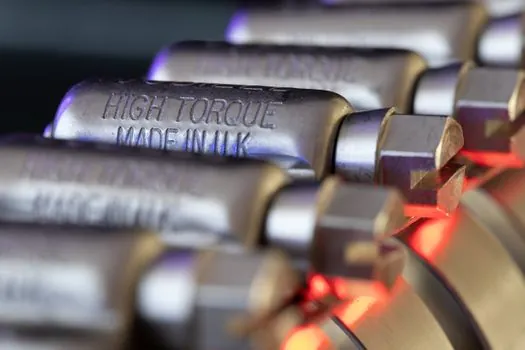
Three failure modes recur across the 2026 servo market: encoder contamination in food-grade or washdown environments, drive-motor protocol mismatch when a motor is replaced without confirming EtherCAT vs PROFINET vs pulse/direction on the controller side, and lead-time shocks on rare-frame sizes when a top-tier vendor discontinues a legacy line [S1][S5].
Integrated motors add a fourth: thermal derating under continuous zero-speed holding, which is rarely visible in a 30 second bench test but shows up after 20 to 40 minutes of indexing duty on a packaging line [S2][S5]. For AC motor upgrades on legacy lines, confirm the replacement servo shares the same shaft height, mounting flange, and feedback connector before quoting the swap, since re-machining brackets and re-pinning cables typically wipes out the energy-saving benefit of the upgrade.
Trackable signals for the next sourcing cycle: (1) whether any top-10 brand extends EtherCAT or PROFINET certification to its integrated-motor lines beyond the current flagship SKUs, (2) whether defence-rated servo variants from commercial vendors get added to the Defense Advancement index through 2027, and (3) any IEC 60079 series updates that change the certification path for integrated servos in hazardous-area installations, since the drive electronics inside the motor housing complicate the existing zone-classification logic.