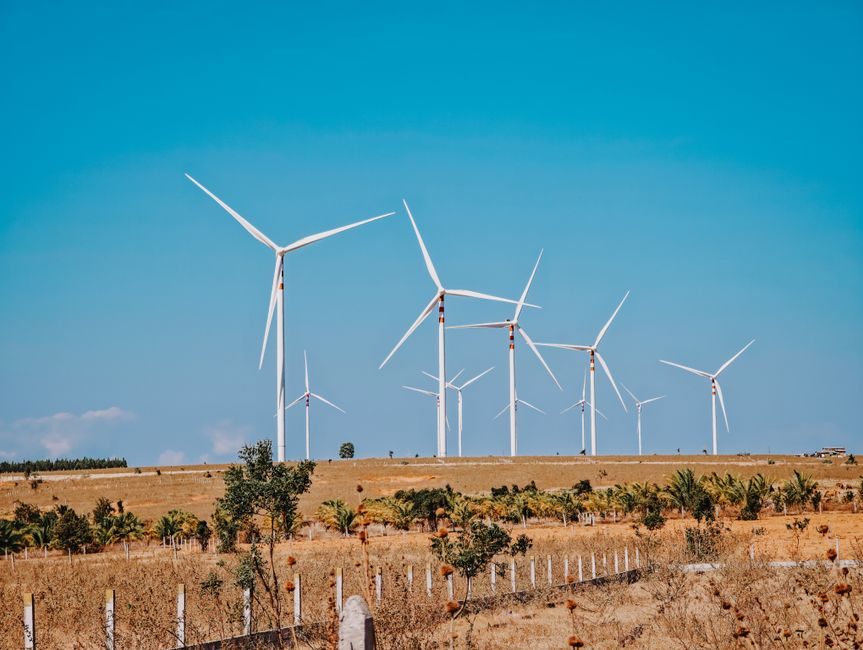
China's wind turbine manufacturing sector accounted for roughly 60% of global production capacity in 2023, even as domestic turbine prices fell about 30% under heavy domestic competition [S5].
Output is split between onshore platforms and a fast-scaling offshore segment, and the same factories feed the control electronics — master controllers, pitch systems, converters and inverters — that link each turbine to its SCADA layer, as outlined in a 2025 Baicheng City industrial plan for wind-turbine parts [S4]. For process and instrumentation readers, the wind sector is also a recurring spec driver for pressure transmitters, flow meters and industrial valves on the hydraulic and lube side of the nacelle, so a national capacity snapshot is also a signal for instrumentation order books.
National capacity share and how to read it
Chinese turbine makers held about 60% of global production capacity in 2023, the China Daily industry brief stated, while average selling prices in the domestic market fell around 30% as builders competed for project awards [S5]. That concentration is a function of installed-capture first, export second: Chinese OEMs converted rapid domestic onshore and offshore award cycles into factory scale, then pushed the same lines into overseas markets.
Outside China, the European OEMs (Vestas, Siemens Gamesa, GE Vernova) remain the second tier of capacity, and the United States, India and Spain each hold meaningful but smaller manufacturing footprints. Capacity share is a snapshot of assembly-line throughput — not a clean read on intellectual property, gearbox sub-supply, or blade-fabrication know-how, which are still distributed across Europe for large offshore platforms.
What a "production capacity" figure actually includes
A national capacity number is the sum of rated annual output of nacelle assembly lines, hub and blade plants, and tower plants a country can run at nameplate. Baicheng City's 2025 wind-turbine parts project brief lists the control-system stack as master controller + pitch system + converter + inverter, with the master controller handling turbine monitoring, automatic adjustment, maximum power-point tracking and grid compatibility [S4]. That control bill-of-materials is a good proxy for the electronics content a turbine OEM can absorb domestically versus import.
Capacity figures also hide sub-tier reliance. Tower flanges, main-shaft bearings, pitch and yaw motors, and large forgings are produced by a small set of suppliers globally; a 60% national assembly share does not mean 60% of the value chain. Buyers should read national capacity as a delivery-time and price-pressure signal, not as a sovereignty statement on critical sub-components. For reference, the wider renewables manufacturing map, including solar PV, is tracked in our Global PV Manufacturing Capacity Concentrates in China as IEA Sees 1.5 TW by 2035 coverage.
Onshore vs offshore: where the lines diverge
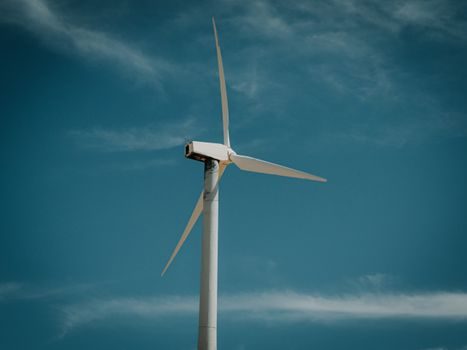
Onshore lines run at higher volume and lower unit cost, with hub heights typically 100–140 m and rotor diameters 130–170 m. Offshore lines handle larger rotors (commonly 200 m+ on recent platforms) and higher nameplates (8–18 MW per unit is the 2024–2026 norm), which raises the per-tower content of switchgear, transformers and medium-voltage cables. [S1]
The Thai 90-turbine order signed in 2017 illustrates how non-Chinese OEMs deploy larger platforms outside their home market: GE supplied 3.0-137 units on 156.5 m hybrid towers, giving a tip height of roughly 230 m — described at signing as GE's tallest installation outside Europe [S2]. The 137 m rotor and 3.0 MW nameplate placed that fleet well above typical Chinese onshore platforms of the same period, and offshore-class tip heights are now standard reference points for hub-and-tower spec sheets. Process engineers working the nacelle auxiliaries will recognise the same instrumentation patterns as in a turbine flowmeter hydraulic circuit or a yaw-drive pressure sensor loop.
Pricing pressure and what it means for procurement
The roughly 30% Chinese domestic price drop cited for 2023 is a useful calibration: bid lists for utility-scale onshore wind in 2024–2026 routinely clear at sub-RMB 1,500/kW levels, while offshore bids remain roughly 2–3x that figure. Lower turbine prices push pressure onto every tier-2 supplier — tower steel, castings, control cabinets, sensors — and on logistics, which now dominates delivered cost for export orders. [S2]
For an instrumentation buyer this matters: when a national OEM base has 60% of capacity and is cutting prices 30%, tier-2 lead times compress and spot-market availability rises, but warranty support and firmware lifecycle governance for the control stack can become uneven. Always pin the controller firmware revision, the pitch-system variant, and the converter model on the order, since these are the lines that change fastest when a factory is running at high utilisation.
Comparison: capacity share vs price competitiveness

On four decision criteria the major manufacturing bases line up as follows. (1) Assembly capacity share: China ~60% in 2023, Europe (combined) mid-20s%, US/India/Spain low single digits each [S5]. (2) Average selling price level: China lowest among large OEMs after the 30% domestic cut, Europe mid-range, US highest on offshore platforms. (3) Offshore specialisation: Europe leads on 8–18 MW platforms and floating concepts; China is scaling fast from a 6–10 MW starting point. (4) Control-electronics vertical integration: China deepens on converters, pitch systems and inverters per the Baicheng brief [S4]; European OEMs still source key converter IP from specialist suppliers.
Capacity share favours China on volume; price favours China on cost; offshore specialisation still favours Europe on technology; control-stack vertical integration is converging, with China closing the gap. The right procurement answer is country-agnostic on the turbine and country-specific on the spare-parts pipeline.
Use cases, limits, and standards that anchor the spec
Wind-turbine capacity factors — the ratio of actual annual energy to nameplate energy — typically run 25–45% onshore and 40–55% offshore in mature sites, and MATLAB Central's capacity-factor script remains a quick sanity check for any project finance team [S3]. A buyer who reads a national capacity headline as "we can always source from there" should also factor the early-2020 COVID disruption into the model: a Windpower Monthly industry survey from February 2020 showed Chinese turbine production was "returning to normal" after the initial COVID-19 outbreak [S1], a useful reminder that single-country concentration carries real shock risk.
Standards discipline matters as much as country share. Nacelle and tower designs are governed by IEC 61400 (design requirements), blade and gearboxes by IEC 61400-4, and offshore support structures by additional DNV/GL rule sets; buyers should pin the exact IEC clause on the order, not just the country of origin. Sub-tier pressure equipment — hydraulic power units, pitch cylinders, yaw drives — usually carries ASME or EN pressure-vessel pedigree and, for offshore sites, NACE MR0175 for sour-service materials. The same spec discipline that drives a good PLC I/O list drives a good wind-turbine instrumentation list.
Signals to watch in the next 12 months
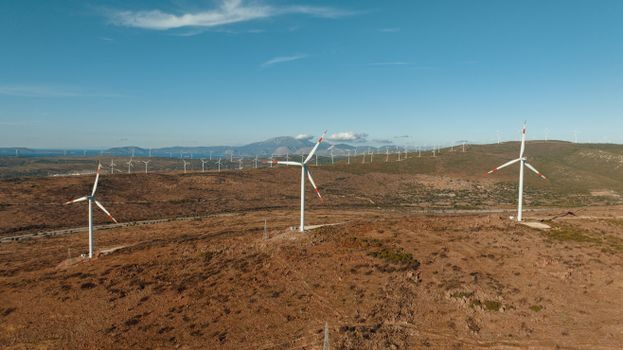
Track three verifiable nodes: (1) the share of Chinese OEM turbines in non-Chinese offshore award lists — currently rising but still under 20% globally — as the cleanest read on whether the 60% capacity share translates into offshore share; (2) average bid prices in Chinese onshore tenders, which set the floor that other OEMs must match; (3) control-electronics sourcing announcements from Chinese nacelle plants, because controller + pitch + converter + inverter is the highest-value, highest-IP part of the bill of materials and the segment where vertical integration is changing fastest [S4][S5].