
A globe valve is the default choice for throttling and flow regulation where tight shutoff and predictable control curves matter more than straight-through flow. In 2026 industrial sourcing the dominant body classes remain cast iron to PN16/25 and carbon steel to ANSI Class 150–300, with stainless 304/316 trim reserved for corrosive or hygienic service [S1][S2].
Selecting one cleanly means walking six spec gates in order: pressure class, temperature envelope, body and trim material, end connection, stem sealing, and actuation. Each gate has a finite set of standard options; misjudging any one forces a redesign later in the RFQ cycle [S1].
Pressure and Temperature Envelope: Start With the Class
Pressure class is the first hard gate because it dictates body wall thickness, bonnet bolting, and gasket selection simultaneously. DIN-flanged globe valves on the China wholesale market are stocked primarily in PN10, PN16, and PN25 ratings, with PN40 available on a custom lead time, and these ratings cover the bulk of building-services and HVAC duty [S2]. On the ASME side, Class 150 and Class 300 are the two workhorses for ANSI B16.34 globe valves in light process and steam distribution, with Class 600 typically reserved for superheated steam above 200 °C or high-pressure drop hydrocarbon service.
Temperature envelope pairs directly with pressure class because allowable working pressure derates as temperature climbs. Cast iron bodies cap out near 200 °C on saturated steam; carbon steel WCB extends to about 425 °C at Class 150; stainless CF8M (316 equivalent) reaches roughly 540 °C before the bonnet bolts lose margin [S1]. For anything above 350 °C, a bolted-bonnet with graphite spiral-wound gasket and alloy 8/8A trim is the conservative baseline; for sub-zero cryogenic service (LNG, liquid CO₂) the body shifts to austenitic stainless with extended bonnet and a cold-box-tested packing stack. Picking class first, then temperature, prevents the classic error of specifying a PN16 cast iron body for a 250 °C steam condensate line — which the body cannot hold regardless of how well the trim is built.
Body and Trim Material: Cast Iron vs Carbon Steel vs Stainless
Body material is the second gate, and the three-way trade is straightforward. Cast iron (GG25 / ASTM A126 Class B) is the cheapest option and dominates PN10/PN16 water, HVAC, and fire-service duty where temperature stays under 200 °C; the China-made DIN-pattern cast iron globe valve on Okorder's catalogue is the textbook example [S2]. Carbon steel (WCB / A216 WCB) covers the general-process and steam range up to 425 °C at Class 150 and is the default for oil & gas block-valve stations that are not sour. Stainless 304 (CF8) and 316 (CF8M) are specified when the media is corrosive — chloride-bearing cooling water, demineralised water, food-grade liquids, or pharmaceutical service — and command a 3–8× price multiplier over carbon steel on a like-for-like Class 150 flanged body [S1].
Trim (the internal wetted parts: disc, seat, stem, stem nut) can be mixed independent of body. A common 2026 build is WCB body with 13Cr stem and seat, or full 316 trim, specified by writing "13Cr" or "F6" in the trim line of the data sheet. For sour service (NACE MR0175 environments with H₂S partial pressure above 0.0003 MPa) the trim must be NACE MR0175-compliant — typically low-hardness 410 or alloy 825 — and the body carries an NACE stamp. Misalignment between body class and trim grade is the most frequent cause of in-service seat leakage: a PN16 cast iron body with stainless trim will hold shutoff, but a PN40 carbon steel body with unhardened 304 trim will gall in steam service within months.
Stem Sealing and Bonnet: Packing vs Bellows
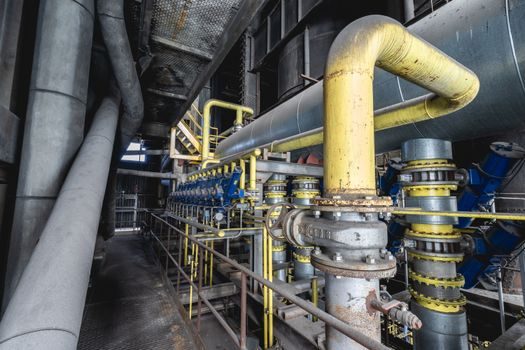
Stem sealing is the third gate and the one most often skipped on first-pass RFQs. The standard build is a graphite-impregnated PTFE or pure graphite packing stack in a gland follower, suitable for general service up to about 300 °C and for non-hazardous media [S1]. The leak path through the packing is the dominant fugitive-emission source on a globe valve, and for hydrocarbon or toxic service a bellows-sealed bonnet is specified instead — a welded metal bellows sits between the stem and the packing, so any process leak is contained even if the packing fails.
Bellows-sealed globe valves are stocked on Made-in-China as a distinct category with body material and pressure rating listed as the two main customisation levers, reflecting the way buyers actually spec them [S1]. The trade is cost and cycle-life: a bellows extends the mean time between external leak events from roughly 3–5 years (packed) to 10+ years, but the bellows itself is a fatigue-limited part rated to a finite cycle count (typically 5,000–10,000 full-stroke cycles) and is not field-repairable. For modulating duty with continuous stroking, a packed stem with live-loading and a fugitive-emission monitoring port is often the more honest spec; bellows make the most sense on isolation duty in toxic or hydrogen-rich service.
End Connection and Face-to-Face: Flanged vs Threaded vs Butt-Weld
End connection is the fourth gate and ties the valve to the piping isometric. Flanged ends to DIN PN10/16/25 or ASME B16.5 Class 150/300 are the most common on China-made stock globe valves for water, steam, and general process [S2]. Threaded (NPT or BSP) ends are used on small-bore (DN15–DN50) instrument and sampling lines; the face-to-face dimension is shorter than flanged, which is the only real advantage. Butt-weld ends to ASME B16.25 are the standard for hydrocarbon and high-pressure service above Class 600, or anywhere a zero-leak path is required at the joint.
Face-to-face length is the silent constraint that derails many RFQs. DIN-series globe valves follow EN 558-1 series 1 (F1, short) or series 2 (long) face-to-face; ANSI globe valves follow ASME B16.10 long pattern by default. Mixing a DIN-pattern body into an ANSI piping run forces flange adapters and breaks the standardised maintenance footprint. On a 2026 retrofit project, confirming the existing face-to-face series and the flange standard (DIN vs ANSI) is worth more time than re-checking the pressure class — the class is almost always right, the face-to-face is almost always wrong.
Actuation and Control: Handwheel vs Gear vs Motorised
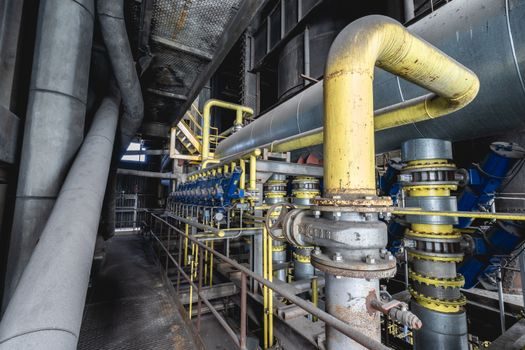
Actuation is the fifth gate. Manual handwheel is the baseline for isolation duty on small-bore valves; for DN150 and above, or for high-pressure Class 300+ service, a gear operator is added because the seating torque exceeds what an operator can reasonably apply. For modulating duty — which is where globe valves earn their keep versus a ball valve or butterfly valve — an electric or pneumatic actuator with a positioner is specified, and the equal-percentage trim characteristic is selected to match the control loop. [S1]
For a 4–20 mA or 0–10 V control signal, an electric modulating actuator with a positioner delivers 0.5–2% positioning accuracy. For faster response or fail-safe action, a pneumatic diaphragm actuator with a smart positioner (e.g. 4–20 mA + HART for diagnostics) is the standard 2026 build on control valve duty. The sizing rule of thumb: actuator thrust margin should exceed the maximum required seating torque by 25–30% to keep the actuator out of stall at the end of stroke. For isolation duty where the valve is opened or closed infrequently, a gearbox is the cheapest answer; for a throttling service with continuous stroking, the actuator is the second-largest line item after the body and is worth the spend.
Selection Comparison: Six Gates at a Glance
Below is a practical comparison of the dominant globe valve builds in 2026, mapped against the six gates above. It is the table to keep beside the spec sheet when reviewing quotes. [S2]
Cast iron DIN PN16, handwheel, flanged, graphite packing: cheapest build, for water and HVAC to 120 °C, face-to-face to EN 558-1 series 1, no NACE requirement [S2]. Carbon steel WCB Class 150, handwheel or gear, flanged to ASME B16.5, graphite packing: general process and steam to 425 °C, the default for non-sour hydrocarbon isolation. Carbon steel WCB Class 300, gear-operated, butt-weld ends: steam and high-pressure drop service, face-to-face to ASME B16.10 long pattern. Stainless CF8M Class 150, bellows-sealed, flanged: corrosive media, toxic or hydrogen service, 10+ year external leak interval, no field-repairable bellows [S1]. WCB body with 13Cr trim + NACE MR0175 stamp: sour service to NACE MR0175 limits, low-hardness trim, mandatory for H₂S-bearing hydrocarbon. WCB body with electric modulating actuator + HART positioner, equal-percentage trim: throttling control, 0.5–2% positioning accuracy, the control-valve-grade build.
Sourcing and Standards Map: What to Put on the RFQ

A clean 2026 RFQ for a globe valve lists, in order: size (DN or NPS), pressure class (PN or ASME Class), body material, trim material, end connection and standard, face-to-face standard, bonnet type, packing or bellows, actuation, and applicable codes. The four most-cited standards in 2026 datasheets are ASME B16.34 (valve design and testing), ASME B16.10 (face-to-face), EN 558-1 (DIN face-to-face), and the relevant flange standard (ASME B16.5 or EN 1092-1) [S2]. For sour service add NACE MR0175; for fire-safe add API 607 or API 6FA; for low-temperature add ASTM A350 LF2 or impact-test certification at the specified minimum temperature.
On the China wholesale market, Made-in-China lists bellows-sealed globe valves with customisable body material and pressure rating as the two primary spec levers, and Okorder lists a PN10/16/25 cast iron DIN globe valve as a stocked build with handwheel standard and actuated drive customisable on request [S1][S2]. For a 2026 procurement, treat the supplier datasheet as a starting point and pin the datasheet back to the six gates above before issuing a PO. When weighing globe versus a check valve or balancing valve for a given line, the deciding question is whether the duty is throttling control, isolation, flow balancing, or backflow prevention — each has a different optimal valve family, and the ball valve comparison cuts in only when full-bore isolation is the priority. A 2026 sourcing signal worth tracking: more Chinese mills are publishing ASTM A216 WCB + 13Cr trim globe valves as stocked PN16/25 catalogue items rather than custom builds, narrowing the lead-time gap between local and imported supply [S1].
For related coverage, see Top Heat Pump Companies 2026: R290 Suppliers, EHPA Forum, and EU Service Signals.