As of 2026-05, Guangdong-based heat-pump manufacturers on Made-in-China.com list R290 monoblock air-to-water units with CE, ISO9001, and Keymark/MCS certification targeting villa, hotel, and student-apartment loads [S2][S3], making southern-China OEMs the most visible spec-defined tier in the mid-2026 buyer shortlist.
The European Heat Pump Association has opened registration for the Heat Pump Forum & Awards 2026, scheduled for 2026-12-01 at SQUARE, Brussels — the single most concrete 2026 industry convergence date for policy, installer, and OEM channels. Residential service economics in 2026 sit in the USD 8,000–15,000 band for central heat-pump installs in U.S. listings [S5], and Bord Gáis Energy in Ireland runs an accredited air-to-water service promotion valid through 2026-05-31 [S1].
Air-to-Water Monoblock: R290 OEMs and Certified Platforms
New Energy Technology Co., Ltd. (Guangdong) lists a Sunpro-series R290 inverter monoblock covering heating, cooling, and domestic hot water, with CE and ISO9001 certification on the product page captured 2026-03-10 [S2]. The same supplier positions the unit for villa, sauna/swimming-pool, hotel, factory hospital, student-apartment, and beauty-salon duty, with a wooden transport package and a 1-piece minimum order, a useful proxy for export-ready single-pallet logistics [S2].
Across the Made-in-China inverter-water-heat-pump category, supplier certificates including CE (valid from 2024-10-21 on at least one listed seller) define the entry-level compliance bar for European re-export, with the catalogue page captured 2026-05-31 [S3]. The site also indexes an industrial heat-pump category that includes vocational-training and educational-rig variants, captured 2026-05-29, indicating that Chinese industrial-heat-pump offerings are still partly anchored in trainer/training-rig SKUs rather than only process-heat skids [S4].
For the European residential retrofit market, the policy signal that matters is the refrigerant — R290 (propane, GWP ≈ 3) is now the headline low-GWP choice on Chinese export monoblocks, displacing R410A in new SKUs [S2]. Installers comparing options should weigh R290's flammability classification (A3) against room-volume and siting rules before specifying, since these constraints — not headline efficiency — often decide tender eligibility.
EHPA Heat Pump Forum & Awards 2026: Brussels, 2026-12-01
The European Heat Pump Association's flagship 2026 event is fixed for 2026-12-01 at SQUARE – Mont des Arts, 1000 Brussels, with registration open as of the page capture 2026-06-04. EHPA positions the Forum as the meeting point for policymakers, industry leaders, and experts framing how heat pumps "support Europe's energy security," a phrase that signals grid-flexibility and industrial-heat decarbonisation as the headline 2026 themes. [S1]
Procurement teams planning Q4 European rollouts should treat the Forum as the single highest-density policy and standards update window of 2026, since EHPA coordinates directly with the European Commission on heat-pump deployment targets. The Awards track also surfaces the year's most credible installer and OEM case studies — useful as third-party validation when shortlisting suppliers beyond the Chinese OEM tier that dominates Made-in-China listings [S3].
For sourcing leads who cannot attend in person, the EHPA registration portal and the published agenda are the cleanest pre-event sourcing signals; OEM and component suppliers listed on the Forum partner page typically release new EU-skewed SKUs in the weeks that follow. That calendar alignment — December Forum followed by Q1 product launches — is the rhythm 2026 buyers should plan against.
Residential Cost Bands and Service Economics (U.S. & Ireland)

U.S. central heat-pump installed cost in 2026 sits in the USD 8,000–15,000 range for most homes, with total price varying by equipment type, capacity, and efficiency, per a 2026-04-02 pricing survey [S5]. That range is a useful baseline only — heat-pump water heaters, ducted vs ductless splits, and cold-climate inverter models each move the figure by several thousand USD within the same home, so a single mid-band number understates the spec spread [S5].
In Ireland, Bord Gáis Energy's accredited engineer service covers air-to-water heat pumps only — not air-to-air — and the promotional pricing runs until 2026-05-31, with service recommended by the manufacturer to keep warranty paths clean [S1]. The "air-to-water only" constraint is a hard filter: households with ductless splits fall outside the service scope and must self-source a competent contractor, a routine 2026 buyer-pitfall worth flagging on every Irish retrofit quote [S1].
For facility engineers sizing commercial systems, the residential cost band is a sanity-check anchor — anything quoted below USD 8,000 for a full central install in 2026 U.S. terms should trigger a refrigerant-type, capacity, and installer-certification check, not a fast acceptance [S5]. The cost spread is a leading indicator that 2026 buyer-side effort has shifted from equipment price to installer competence and after-sales coverage.
Industrial Heat Pumps: Process Heat and Trainer-SKU Overlap
Made-in-China's industrial-heat-pump category, captured 2026-05-29, mixes true process-heat skids with vocational-training and educational simulators, so the buyer's first job is to filter on the "for real plant duty" data plate rather than the listing keyword [S4]. A heat-pump expansion-valve cross-search from 2026-04-27 confirms that EEV (electronic expansion valve) components are a separately indexed category — a useful tell that mid-2026 Chinese industrial-heat-pump OEM sourcing now treats EEV selection as a distinct sub-spec, not a hidden OEM choice [S6].
Industrial buyers comparing options should score suppliers on three decision criteria that the Made-in-China listings do not surface directly: (1) disclosed maximum leaving-water temperature (industrial process-heat usually needs 70–90 °C, residential monoblocks typically cap at 55–65 °C); (2) refrigerant class (R290, R744/CO₂, or HFOs — each carries a different EU F-Gas trajectory); and (3) verified references at the same temperature lift. The broader 2026 industrial-pump market context is covered in this spec-lever piece on industrial pump smart manufacturing, which mirrors the same sourcing-discipline logic for adjacent rotating equipment.
Spec discipline matters because a residential monoblock quoted for an industrial duty is the most common 2026 over-spec we see — the unit will run, but its COP collapses at 70 °C leaving water and the lifetime cost gap dwarfs the purchase saving. Cross-checking against dedicated industrial-heat-pump coverage such as the Heat Pump Market 2026: USD 805M Industrial Upside reference helps frame the price-vs-duty trade.
Component-Level Sourcing: Expansion Valves and Refrigerant-Stage Parts
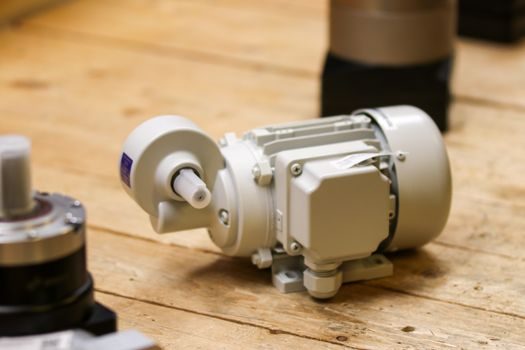
The Made-in-China heat-pump expansion-valve category, captured 2026-04-27, indexes EEV and thermostatic valves across multiple Chinese wholesalers, with the cross-category hit-rate confirming broad 2026 supply [S6]. EEV selection is the single highest-leverage spec on the refrigerant cycle: a mismatched valve costs COP and, at part-load, can push a heat pump outside its declared efficiency class. Industrial buyers running R290 or R744 skids should treat the EEV data sheet as a controlled document, not a generic accessory.
For a buyer building a 2026 shortlist, the practical filter is: (a) is the EEV rated for the specific refrigerant? (b) what is the MOP (maximum operating pressure) and what is the supplier's stated low-side charge tolerance? (c) is the valve driver protocol (0–10 V, 4–20 mA, or proprietary) compatible with the chosen controller? These three points — refrigerant, pressure, and signal — disqualify more candidates than headline MOP figures suggest, and they are the same three points that apply to EEV selection in a gear pump or hydraulic pump context, where the control-signal interface decides the integration path.
Component-tier sourcing also opens a route around full-OEM lead times: 2026 buyers report shorter delivery on EEV-and-controller kits sourced direct from the Made-in-China categories than on full heat-pump skids, useful when an installation window is fixed by site permits rather than by the OEM production calendar [S6].
Selection Criteria: Who Each Supplier Tier Actually Fits
Three supplier tiers dominate the 2026 shortlist, and they are not interchangeable. Tier 1 — Guangdong R290 monoblock OEMs (e.g., New Energy Technology) with CE/ISO9001/Keymark/MCS documentation [S2][S3] — fits villa and light-commercial retrofits where leaving-water temperature stays at 35–55 °C and after-sales is run by a local accredited installer such as the Bord Gáis network [S1]. Tier 2 — European OEMs and assembled-in-EU brands — fits projects that must demonstrate EHPA-aligned installer training, F-Gas compliance, and full Eurovent data sets; the EHPA Forum on 2026-12-01 is the highest-density channel to identify these names. Tier 3 — industrial process-heat specialists — fits factories needing 70–90 °C leaving water, where residential monoblocks under-deliver and the right answer is a dedicated R744 or high-temperature R290 skid [S4].
The cost band tells a parallel story: a U.S. central install at USD 8,000–15,000 in 2026 [S5] is a residential proxy, not an industrial one — industrial process-heat skids commonly run an order of magnitude higher once installation, heat recovery, and grid connection are added. The cheapest Tier 1 quote is therefore only comparable with other Tier 1 quotes; comparing it with a Tier 3 industrial quote is a category error that 2026 buyers should refuse at the spec stage.
For broader 2026 context on the EU policy and refrigerant shift that defines the Tier 1–2 boundary, the Heat Pump Industry 2026: Capacity Bands, R290/CO2 Shift, and EU Policy Calendar reference lays out the calendar — useful when planning tenders around 2026 F-Gas review milestones.
Limitations, Failure Modes, and 2026 Sourcing Constraints
The single biggest 2026 failure mode is refrigerant-vs-room-volume mis-spec on R290 units — the A3 flammability class imposes siting rules (minimum room volume, no ignition sources within a defined envelope) that some 2026 residential tenders still overlook, and which a Tier 1 OEM catalogue will not necessarily screen for the buyer [S2]. The second is the "industrial-heat-pump" keyword trap on Chinese B2B directories, where trainer and educational-rig SKUs sit in the same category as process-heat skids; the buyer's only reliable filter is a verified data plate and a real-plant reference [S4]. The third is service-network coverage: Bord Gáis's air-to-water-only scope, captured 2026-05-31, is a clean reminder that a service contract is not transferable across heat-pump types [S1].
Component-side, EEV sourcing from the Made-in-China expansion-valve category is broad but undifferentiated on the 2026-04-27 capture — supplier pages rarely publish full refrigerant compatibility, so expect to request data sheets per candidate rather than rely on the listing summary [S6]. That is the same due-diligence depth buyers apply when sourcing a diaphragm pump or centrifugal pump for a chemical duty: the listing is a starting point, the data sheet is the contract.
Cost-band limits: the USD 8,000–15,000 U.S. central figure [S5] excludes electrical panel upgrades, ductwork modifications, and cold-climate accessories — line items that routinely add 20–40 % to a turnkey quote and that 2026 buyers should request as explicit addenda rather than absorb into the headline number.
Standards, Certification, and 2026 Documentation Trail
Documentation is the cleanest differentiator in the 2026 shortlist. Guangdong R290 monoblock listings carry CE, ISO9001, and — on the New Energy Technology product page captured 2026-03-10 — Keymark and MCS, the latter two being the European heat-pump keymark scheme and the UK Microgeneration Certification Scheme respectively [S2]. Keymark in particular is a strong cross-EU signal because it tests to EN 14511 and EN 16147 performance and safety criteria; MCS is the equivalent for the UK domestic renewable-heat-incentive compliance route.
For industrial process-heat skids, the documentation trail extends to pressure-equipment conformity (PED 2014/68/EU for skids operating above the article-4 thresholds) and to F-Gas Regulation (EU) 517/2014 leakage-check obligations on charge sizes above 5 tonnes CO₂e, with the 2024 F-Gas revision tightening phase-down steps that 2026 buyers should check against current EHPA guidance. Buyers should not accept a generic "CE" claim on an industrial heat-pump skid without the supporting Declaration of Conformity listing the relevant directives and harmonised standards.
For service-side assurance, the Bord Gáis service page, captured 2026-05-30, ties the offer to manufacturer-recommended service intervals, a useful precedent for 2026 warranty compliance — and a reminder that the maintenance schedule itself is a deliverable, not a footnote [S1].
Closing signal: track the EHPA Forum & Awards 2026 on 2026-12-01 in Brussels as the next concrete convergence point where 2026 Tier 1, Tier 2, and component-side suppliers will publish the year's policy, awards, and product signals. A second trackable node is the 2026 F-Gas phase-down step implementation, which will reset permissible refrigerant charges for Tier 1 R290 monoblock SKUs and indirectly re-rank OEM catalogues in Q4 2026 — worth a fresh shortlist refresh after the Forum.