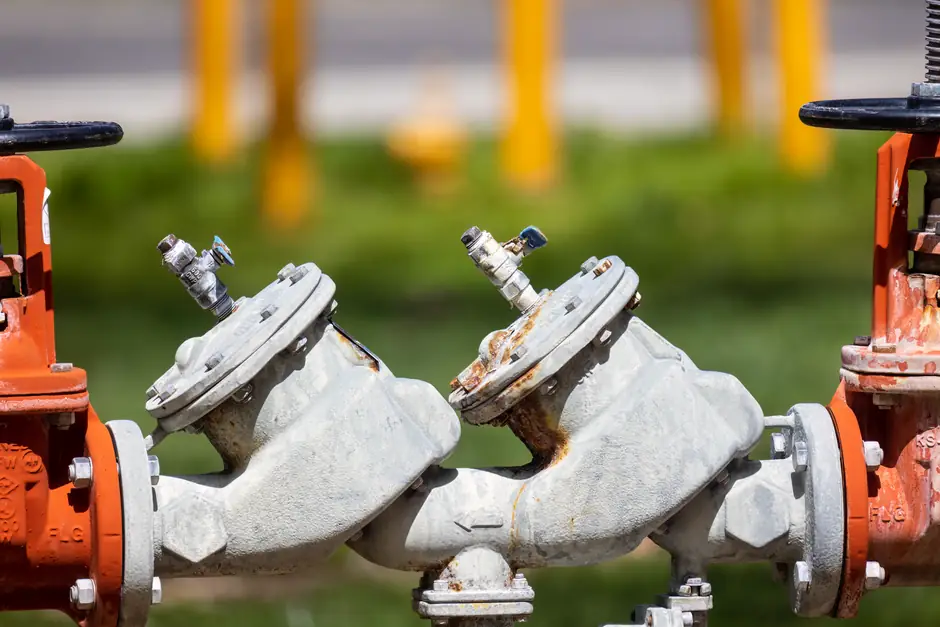
Globe valve selection requires evaluating total cost of ownership beyond initial purchase price, as factors such as installation, actuation, maintenance, energy consumption, and other lifecycle costs contribute significantly to long-term expenditure [S1].
The TCO framing is consistent across valve categories: ball, butterfly, gate, and globe are all judged on the same iceberg model, where purchase price is the visible tip and lifecycle cost is the submerged mass [S6]. For globe valves specifically, that submerged mass is heavier than for many quarter-turn alternatives, because throttling service and linear stem motion drive higher seat wear, packing replacement frequency, and actuator energy draw [S8].
Cost Driver Breakdown: Where the Money Actually Goes
Industrial valve TCO resolves into five cost buckets beyond purchase price: installation labor, actuation package, scheduled maintenance, energy consumption, and fugitive-emissions compliance, with unplanned shutdown penalty layered on top [S8]. The 8-hour avoided shutdown figure valued at $203,600 is the most common single number procurement teams use to justify a premium globe valve spec in continuous-process plants [S1].
Installation cost is a function of face-to-face dimension, body mass, and end-connection type, and the labor hours scale with valve weight and piping complexity. Actuation is the second-largest bucket: electric actuators represent the fastest-growing actuation segment at a 6.02% CAGR, a relevant data point when sizing the powered-actuator line item on a globe valve spec for throttling service [S4].
Maintenance and spares run on a different axis: globe valves in throttling duty experience seat and disc wear proportional to ΔP and cycle count, so maintenance frequency is driven by service severity rather than calendar time. Fugitive-emissions compliance, covered by ISO 15848-1 and API 624 testing protocols, is a hard cost item when the spec calls for low-emission packing and bellows seals on hazardous-service globe valves.
Globe vs Quarter-Turn: A Criteria-Based Comparison
Globe valves are not interchangeable with quarter-turn designs, and the TCO math reflects that. Compared against ball valve and butterfly valve options on four decision criteria, globes score as follows. [S1]
On throttling accuracy, globe valves deliver superior rangeability and linear flow control because the plug-and-seat geometry is designed for proportional modulation, whereas ball and butterfly valves trade that precision for faster actuation and lower seat wear in on/off duty [S3]. On purchase price per inch, quarter-turn designs typically win: a ball or butterfly valve of equivalent line size carries a lower initial invoice than a globe valve of the same pressure class. On maintenance frequency, globe valves lose: linear stem packing and seat interfaces see more wear cycles than a quarter-turn ball or disc, raising the spare-parts and labor line items. On installation footprint and mass, globe valves are heavier and taller per line size, which raises piping support, structural, and labor costs on greenfield builds [S3].
The decision tree is therefore straightforward: specify a globe valve when throttling accuracy, tight shutoff in modulating service, or high-pressure drop handling outweighs the higher purchase price and maintenance overhead. Specify a butterfly valve or ball valve when the service is on/off or isolation-only and the TCO math favors lower installed cost and faster actuation [S3].
Material and Specification Choices That Move Lifecycle Cost

Material selection is the single largest multiplier on globe valve TCO. Carbon steel bodies captured 31.50% of the broader ball valve market by material in 2025, but globe valves in corrosive or high-temperature service migrate toward stainless steel, alloy, or exotic trim, each step adding to unit price and lead time [S4]. The 1"-6" class led with 33.30% market share in 2025, the size band where most process-industry globe valves land, and units above 50" are projected to grow at 6.31% per year, relevant for large-scale power and desalination globe valve purchases [S4].
End connection type is the second material-side lever: flanged globe valves cost more in gasket, bolt, and labor than welded or threaded equivalents, but flanged joints allow removal for maintenance without cutting the line. That removable feature is the same design philosophy behind three-piece ball valves, where the center section can be serviced without disturbing pipe alignment, and the same logic applies when choosing a globe valve body pattern for a service that anticipates seat work [S5].
For procurement teams running the TCO iceberg model, a useful sanity check is the purchase-price ratio: if the globe valve quote is more than 3x the equivalent ball or butterfly valve at the same pressure class and size, the maintenance and energy savings over the service life must clear a high bar to justify the premium [S1][S3].
Failure Modes and Limits That Inflate TCO
Globe valve TCO inflates fastest through three failure modes: seat erosion under high ΔP, packing leakage on the rising or non-rising stem, and actuator sizing shortfall in modulating service. Seat erosion is the most expensive: a worn seat in a control loop degrades process stability long before it leaks to atmosphere, and the symptom shows up as process variability rather than a maintenance ticket, which delays the repair and compounds the cost [S1].
Packing leakage is the second failure mode and the one regulators care about: in hydrocarbon and chemical service, fugitive emissions from valve stems trigger API 624 and ISO 15848-1 compliance costs that include monitoring, repair campaigns, and potential shutdown orders. Specifying bellows-seal globe valves for hazardous service is the standard mitigation, with a documented price premium but a measurable reduction in lifetime emissions-related cost.
Actuator sizing shortfall is the third: undersized electric or pneumatic actuators on globe valves in high-ΔP modulating service stall or overshoot, accelerating packing wear and driving premature replacement. Procurement teams that buy the valve and the actuator from separate suppliers without a matched-torque calculation often absorb this cost years later, and it is one of the hidden items the TCO iceberg model is designed to surface [S6].
Who Should Run the TCO Math, and Who Can Skip It

The TCO exercise is mandatory for continuous-process plants where unplanned downtime runs into five or six figures per hour, and for any globe valve in modulating or high-cycle service where seat and packing wear are guaranteed cost items over a 10-15 year service life [S1][S8]. It is also mandatory for any spec that includes exotic materials, low-emission packing, or actuator integration, because each of those line items multiplies the purchase price and must be defended against lifecycle savings [S7].
The TCO exercise can be skipped or compressed for utility-service globe valves in non-critical isolation duty, where the cheapest qualified valve is usually the right answer. For a more detailed spec-driven map of globe valve types and classifications, the engineering reference at Globe Valve Types and Classifications gives the body-pattern, stem-sealing, and material-grade axes that feed the TCO model.
For procurement teams sourcing from Asian fabricators, the supplier-verification gate at China Industrial Valve Sourcing 2026 outlines the spec-compliance checks that prevent a low-quote globe valve from inflating TCO through hidden material substitution or missing pressure-test documentation.
Trackable signals for the next planning cycle: monitor stainless-steel and alloy surcharges as a leading indicator of globe valve price movement, and watch the fugitive-emissions regulatory tightening in Middle East and EU jurisdictions, both of which directly move the maintenance and compliance line items on the TCO iceberg [S4][S8].