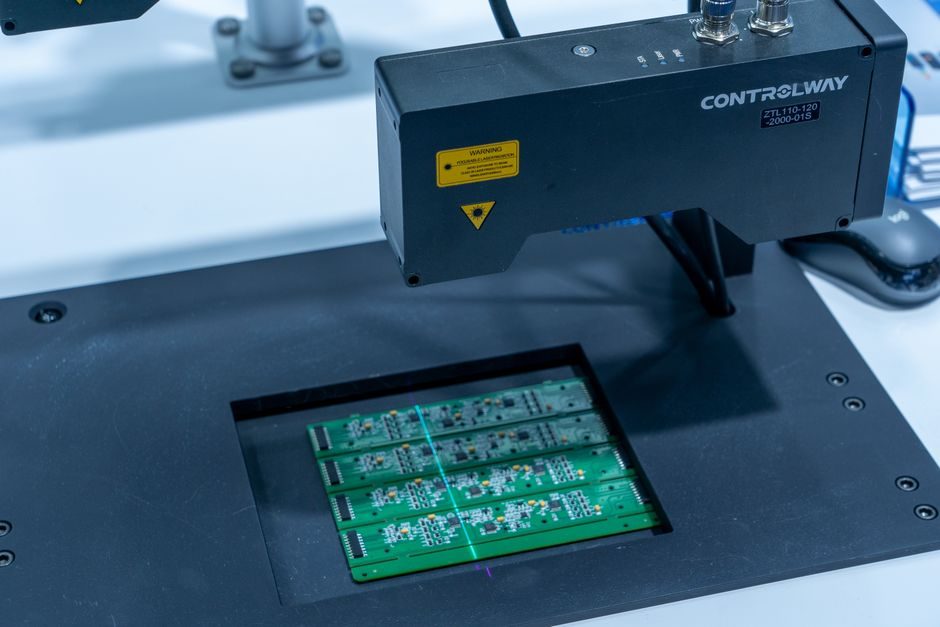
The GPU supply chain is structurally split: the silicon die is fabricated at a single foundry (TSMC for current AMD and Nvidia lines, with UMC listed historically for some parts [S3]), while quality variation between retail brands is created downstream at the board partner.
AMD/Xilinx's public Manufacturing Quality page defines its supplier quality programme as "monitoring manufacturing stability and robustness, material conformance to specifications, process and quality system audits, quality metric reviews and driving continuous improvement," with an explicit shared goal of "achieving zero quality excursions" [S1]. Nvidia-equivalent OEM guidance is not in the source set, so the AMD statement stands as the documented reference baseline for fabless accelerator QA.
Where Quality Is Actually Created in the GPU Stack
The GPU die itself is a commodity output of one foundry: forum-recorded industry observation in 2007 already noted "the GPUs from ATi/AMD and nVIDIA are all made from TSMC and some from UMC" and that differentiation is added by board partners [S3]. The same split still governs current accelerator lines such as AMD Instinct and Nvidia data-center parts, where the die source is concentrated in a small number of leading-edge fabs.
Board-level quality variation is created by five documented levers: (a) bin selection of GPU samples capable of higher stock clock, (b) custom PCB design versus the IHV reference layout, (c) proprietary or third-party cooler sourcing (e.g. Thermalright, Zalman-class vendors), (d) VRM and decoupling component selection such as solid-state capacitors, and (e) memory sourcing across DRAM vendors [S3]. For hyperscaler buyers, lever (a) and (d) dominate the procurement spec; for gaming SKUs, (c) and bin-grade determine the user-visible spec band.
AMD's Supplier Quality Framework as the Reference Baseline
AMD's published framework explicitly enumerates four controls: manufacturing stability and robustness, material conformance to spec, process and quality system audits, and quality metric reviews feeding continuous improvement, with zero quality excursions stated as the shared goal [S1]. Supplier selection covers wafer fabrication, bump, assembly and test services, indicating the QA umbrella spans front-end wafer, mid-end packaging, and back-end test, not just the die alone [S1].
In Cpk terms, "manufacturing stability and robustness" maps to capability indices Cpk ≥ 1.33 for existing processes and Cpk ≥ 1.67 for new or safety-critical lines, the de facto industry bands for semiconductor back-end assembly, though AMD's own threshold value is not numerically disclosed in the source page. Material conformance typically means incoming AQL sampling against the component spec sheet, while audits follow a risk-based cadence — annual for strategic suppliers, semi-annual or quarterly for high-risk process steps such as bump reflow and substrate laminate.
Selection Criteria for Accelerator-Grade GPU Procurement
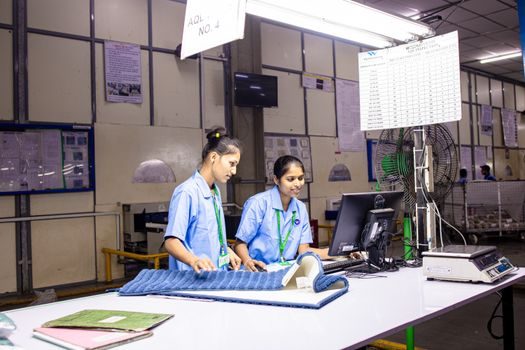
For a 2026 procurement spec, the four criteria that matter are die pedigree, VRM/component quality, thermal solution class, and bin-grade disclosure. Die pedigree is a foundry attribute (TSMC N5, N4, N3 process node for current accelerator generations) and is set by the IHV, not the board partner, so brand-level QA cannot rescue a bad node choice. VRM and decoupling quality, by contrast, is set at the board level and is where solid-polymer capacitors, inductor current rating, and phase count separate server-grade SKUs from consumer-grade reworks. [S1]
Thermal solution class is the second board-level lever: reference coolers are validated against the IHV's thermal design power (TDP) envelope, while partner coolers (e.g. triple-fan, vapor-chamber, or AIO-class designs) must be qualified against the same TDP with a defined acoustic and case-temperature budget. Bin-grade disclosure is the third lever: partners may order higher-clocking samples from the foundry, but quality is the absence of out-of-spec parts, not the headline boost clock. The fourth lever, memory vendor and speed-bin, traces back to the same fabless model and is controlled by JEDEC-compliant DRAM validation at the board level, a discipline that overlaps with industrial instrument flow-meter traceability thinking more than with consumer-electronics QA.
Comparison of Quality Levers Across the Supply Chain
The four main QA levers line up against ownership and control as follows. Foundry process control (node, defect density, wafer sort yield) is owned by TSMC and audited by the IHV; brand-level buyers cannot influence it. Bump and substrate quality is shared between OSAT (e.g. ASE, Amkor, JCET) and the IHV's packaging team, with audit rights flowing through AMD-style supplier programmes [S1]. Board-level component quality is owned by the AIB partner, and is where most of the spec-sheet differentiation lives [S3]. Final test and burn-in is split: ATE (automatic test equipment) coverage is set by the IHV, but burn-in time and temperature profiles are set by the AIB partner, creating real variation in infant-mortality rates between same-die SKUs.
In procurement language: foundry QA is "given," bump/substrate QA is "managed," board-component QA is "specified," and burn-in QA is "negotiated." A 2026 sourcing RFQ should score AIB partners on at least the last three layers because the first is non-negotiable, mirroring the spec-band logic used in industrial procurement playbooks such as the 2026 GPU capacity planning guide.
Failure Modes and Documented Risk Bands
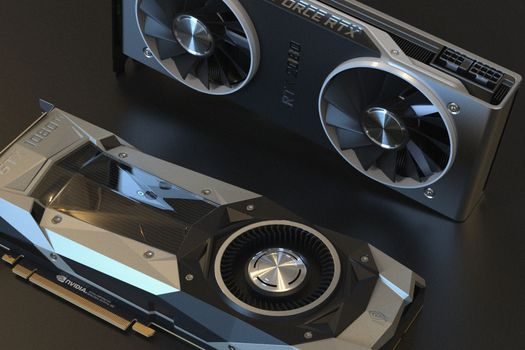
The five failure modes that recur in GPU field returns are (1) VRM phase failure from insufficient inductor rating, (2) solder-joint fatigue at BGA sites under thermal cycling, (3) thermal interface material (TIM) pump-out, (4) VRAM bit errors from inadequate decoupling, and (5) fan-bearing wear on reference cooler designs. Each maps to a specific QA lever: VRM and decoupling are component-selection (lever d in the board-partner list [S3]), BGA fatigue is bump and substrate QA, TIM pump-out is cooler-class selection, and fan wear is a mechanical-life spec.
For data-center SKUs the dominant reliability spec is the FIT (failures in time) rate, typically quoted under 10 FIT per chip for accelerator-class parts at 55 °C ambient, with MTBF targets in the 1–2 Mh range. These thresholds align with JEDEC JESD22 stress-test methodologies and with industrial-instrument reliability conventions familiar to process engineers who also specify pressure transmitter MTBF in similar bands. Gaming-class SKUs tolerate higher FIT rates because end-of-life replacement is a consumer choice, not a process safety event.
Standards, Audits and Cross-Industry Anchoring
Three standards anchor GPU supplier QA. ISO 9001 governs the general quality management system, IATF 16949 governs automotive-grade electronic component manufacturing, and JEDEC JESD22 governs environmental stress and qualification of solid-state devices. AMD's stated audit, conformance and Cpk-style monitoring [S1] maps to ISO 9001 clauses 7.1.5 (monitoring and measurement resources) and 9.1 (monitoring, measurement, analysis and evaluation). For data-center accelerators, additional layers from IEC 60079 (hazardous areas) are not directly applicable to the GPU die itself, but apply to the chassis and industrial valve-class cabling in refinery or chemical-plant deployments.
For 2026 sourcing, the audit checklist should include: IATF 16949 or ISO 9001:2015 certificate validity, JEDEC JESD22 qualification report for the die, OSAT process audit (bump, substrate, singulation), AIB partner component-spectificate list, and a burn-in profile matching the target TDP envelope. Mining and rare-earth inputs upstream of the fab are also a documented risk vector, with the 2026 rare-earth sourcing guide covering the material-band logic that flows into wafer production chemistry and substrate raw inputs.
Trackable 2026 Signals
Three signals to monitor over the rest of 2026: (1) AMD/Xilinx publication of any revised Manufacturing Quality page revision after the 2024-01-03 snapshot [S1], which would indicate tightened Cpk thresholds or expanded OSAT audit scope; (2) emergence of new AIB partner-specific burn-in disclosures tied to FIT-rate, mirroring data-center accelerator procurement specs; (3) any JEDEC update to JESD22 environmental stress methods affecting BGA and bump qualification, which would force a refresh of the supplier-audit cadence for both fabless IHVs and board partners.