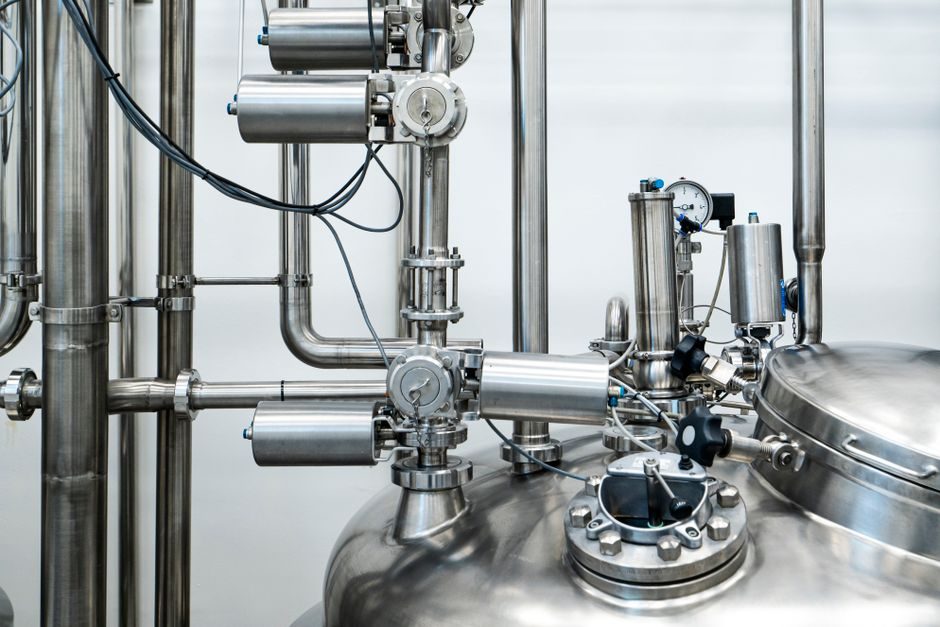
An industrial pump is a casting, a rotor, a seal stack and a test certificate bolted together — production technology is the chain that holds those four artefacts to spec, and the chain is governed by ISO 9001:2015 quality systems [S1] from order intake to hydrostatic release.
Across chemical, sewage, submersible, self-priming, pipeline centrifugal and oil-pump lines, factories such as Zhejiang Kaicheng Pump & Valve run on 5,000 m²+ shop floors in Oubei Town, Zhejiang [S2], while European suppliers like Verder Liquids ship peristaltic and dosing units into process plants worldwide [S3]. Same four stations, different fluid ends.
Casing and Impeller Production: Casting Route vs Machined-from-Bar
Investment casting plus CNC finish is the default for stainless and duplex pump casings because it holds 0.1–0.3 mm wall tolerance on parts weighing 5–80 kg [S2]. For chemical pumps in 304/316/L or duplex, foundries pour at 1,520–1,560 °C, shake out, sand-blast, then mill the register faces flat to 0.05 mm. Impellers follow the same route; vane profile is checked against a 3-D printed master on a CMM, with ±0.2 mm on the OD and ±0.5° on the vane angle, otherwise head and NPSH drift outside ISO 9906 tolerances. Smaller chemical pump batches (under 200 units/year) often move to bar-stock CNC machining instead of casting — slower per part, but no tooling cost and faster lead time on small-lot OEM builds [S2].
Submersible and sewage pump housings are typically grey iron or ductile iron (ASTM A48 Class 30 / A536 65-45-12) cast in green-sand or resin-bonded moulds, then machined at the bearing housing and seal faces only; volute interior is left as-cast because surface finish has a negligible effect on hydraulic efficiency in solids-handling service [S2]. Verder-style peristaltic pumps sidestep metal casings entirely — the "fluid end" is a hose, and the production technology reduces to elastomer extrusion plus roller-race machining [S3].
Shaft, Bearing Frame and Rotor Assembly
Shaft material is usually 420 stainless or 17-4 PH for chemical service, 1045/4140 for clean-water frames, turned and ground to 0.02 mm runout on the seal journal. Bearing frames are machined from cast iron or fabricated plate, with a spacer-sleeve design that lets the engineer set the impeller-to-casing clearance to 0.3–0.5 mm on end-suction frames and 0.5–0.8 mm on vertical cantilever units. Rotor balance is the production gate: at 3,600 rpm a 50 kg impeller running at G6.3 must be trimmed to under 60 g·mm/kg residual unbalance — a single 1 mm drill hole on the back shroud typically removes 8–20 g, so balancing is a controlled subtraction process, not a finishing touch. [S1]
Assembly is paired with the seal stack. Mechanical seals are dry-set, faces wiped with isopropyl, then the pump is run uncoupled for 5 minutes on the assembly floor to verify free rotation before coupling alignment. For self-priming units the air-separation chamber is leak-tested at 0.5 bar for 10 minutes — a leak rate above 5 mL/min sends the unit back to the seal station [S2]. This gate is what separates ISO 9001-tracked production [S1] from a job shop running on tribal knowledge.
Seal, Coupling and Driver Integration
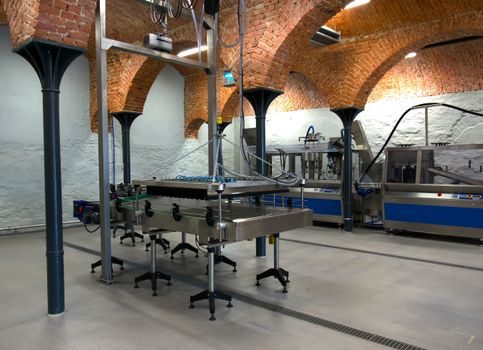
Seal-chamber dimensional control is the hidden hard part: bore concentricity within 0.05 mm, seal-face flatness within 0.0007 mm, and a controlled 0.5–1.0 mm axial float. A mis-machined chamber makes even a premium cartridge seal run hot and fail inside 2,000 hours. Couplings are aligned with laser or dial indicators to 0.05 mm offset and 0.05°/100 mm angular — looser alignment is the most common field-failure root cause and is fully preventable on the production floor. [S2]
Driver integration covers motor flange match (IEC 80–355 frame footprints), coupling spacer length, and the soft-foot check before the coupling is bolted. For chemical pumps sold through Zhejiang-style OEM channels [S2], the motor is often a separate purchase and matched to the pump at assembly with a coupling selection chart, not a pre-engineered package. European OEMs more often ship close-coupled or monobloc units where the motor face is machined to the pump bracket and the alignment is set by the assembly fixture [S3].
Hydrostatic Test, Performance Run and ISO 9906 Acceptance
Every centrifugal pump leaves the test bed at 1.5× design pressure (minimum 2 bar for low-pressure frames) for 10 minutes with zero leakage at the casing joint, seal housing, and pipe connections. After hydro, the pump is performance-tested against a calibrated test rig: flow measured on a venturi or magnetic flow tube to ±2%, head read on a calibrated transducer to ±1%, and power on a calibrated motor or torque pad. Acceptance grade is ISO 9906 Grade 1 (≈ ±3% on flow, ±2% on head) or Grade 2 (≈ ±5% / ±3%); chemical and oil-pump orders almost always call Grade 1, while sewage and irrigation frames ship Grade 2 by default [S2].
Submersible pumps add a wet-test step — the unit is run immersed for 30 minutes at rated duty, insulation resistance checked at 500 V DC, and cable entry seal verified at 0.3 bar for 5 minutes [S2]. Positive-displacement units (peristaltic, gear, screw) follow API 676-style test logic: flow versus speed and pressure at three points minimum, with a 30-minute run-in to bed the hoses or gears before the witnessed test. Comparing the three main fluid-end routes on the four criteria that drive capex and lead time:
Centrifugal (chemical, oil, pipeline) — investment-cast 304/316/duplex casings, G6.3 balancing, ISO 9906 Grade 1 test — widest spec coverage, longest tooling lead time, moderate unit cost. Submersible/sewage — cast iron, dynamic balancing on enclosed impeller, wet test plus insulation check — robust and cheap, but sealing system is the lifecycle constraint. Peristaltic / positive-displacement — elastomer hose or machined gear rotors, no dynamic seal, hose life is the wear limit — best for abrasive and shear-sensitive fluids, lowest installed cost on dosing service [S3].
Standards, Traceability and Shop-Floor Quality Systems
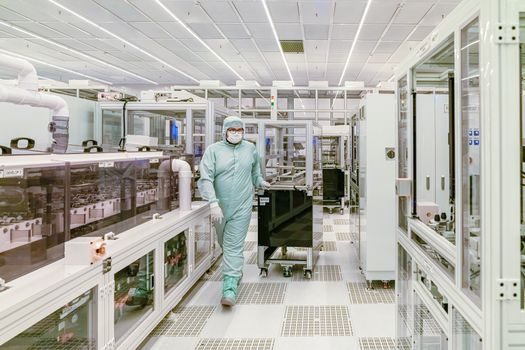
ISO 9001:2015 is the floor for production management [S1]; it forces the mill cert, casting cert, balancing report, hydrostatic test report and performance curve to travel with the serial number. Material traceability under EN 10204 3.1 is required for any pump into chemical, oil and gas, or pharmaceutical service — a paper-trail check that cheap job-shop builders often fail. NACE MR0175 / ISO 15156 applies to wetted parts in sour service, locking the metallurgical option list to specific grades of 316L, duplex and super-duplex. Castings for nuclear or high-pressure boiler-feed service add ASME BPVC Section II / IX qualification on welds, separate from the pump standard.
For dosing and metering skids the underlying standard set is ISO 5199 (process centrifugal) and ISO 2858 (end-suction dimensional), with API 610 covering heavy-duty refinery pumps where every dimension, bolt count and baseplate tolerance is fixed. Buying a pump outside its standard envelope is the single most expensive mistake on a process line — spares do not interchange, alignment fixtures do not match, and field service is bespoke. Manufacturing scale is shaped by this: a 5,000 m² Chinese plant can run chemical, sewage, submersible, self-priming, pipeline centrifugal and oil pumps on overlapping lines [S2], while European builders stick to narrow product families and depth in metallurgical options [S3].
Production Workflow and Bottlenecks
The throughput bottleneck on most pump lines is the test bed, not the machine shop. A hydrostatic + ISO 9906 performance test takes 30–60 minutes per unit including rig setup; a wet test on submersibles adds 30 minutes; a full performance curve at 10 points is closer to 2 hours. That is why an ISO 9001:2015-tracked plant that runs two test beds can ship 25–30 centrifugal pumps a day per shift, and a single-bed shop runs half that with the same floor area [S1]. Casting lead time is the second bottleneck — investment castings run 4–6 weeks from pattern to rough casting, plus 1–2 weeks of finish machining. Machined-from-bar routes trade that for 1–2 weeks of CNC time per part, attractive for low-volume chemical OEM work [S2].
For adjacent process coverage on the shop floor, the same five-station logic — print review, rough forming, finish machining, assembly, performance test — applies to CNC machine production technology, where the test-bed equivalent is the laser calibration pass. Additive methods sit further upstream, with 3D printing production technology now used for prototype impellers and hydraulic test loops before the production tooling is cut.
Next signal to track: a wider move to API 610 12th-edition and ISO 5199:2016 alignment on chemical and refinery pumps, and a slow rotation of self-priming and sewage pump lines onto resin-bonded sand lines and automated CMM inspection — both visible on the industrial coating side of the shop as well, where automated spray booths are replacing hand lining on cast-iron housings. Watch for the next quarterly plant audit release from the major Indian and Zhejiang OEM groups for capacity-shift data [S1][S2].
For component-level specifications, see industrial adhesive, and industrial borescope.