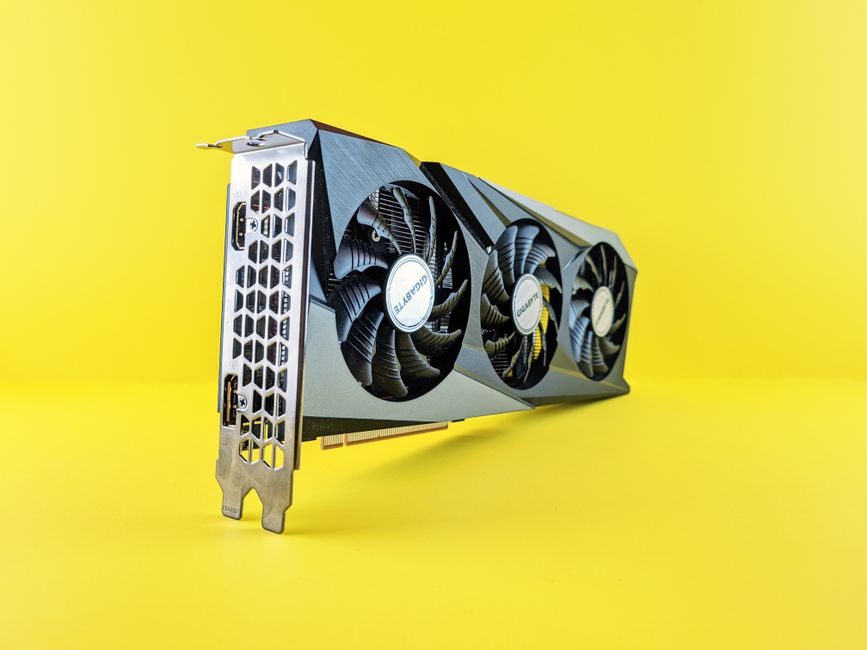
GPU allocation in 2026 is governed by three upstream gates: TSMC's CoWoS-S / CoWoS-L advanced packaging, SK hynix / Samsung / Micron HBM3e stacking throughput, and the 300 mm wafer pull at TSMC N3 / N3E nodes feeding both Nvidia Blackwell (B100/B200/GB200) and AMD MI300X / MI325X accelerators [S4].
For industrial buyers outside hyperscaler contracts — factory-edge inference, machine-vision compute nodes, robotics controllers — the practical reality is order-to-delivery windows of 26-40 weeks on flagship parts, with allocation PO lead times negotiated per quarter rather than per SKU [S1].
Where the Bottleneck Sits: CoWoS-L Packaging, Not Wafer Starts
The binding constraint on Nvidia Blackwell-family and AMD MI series shipments is no longer wafer output at the foundry: TSMC's CoWoS-S and the newer CoWoS-L panel-based advanced packaging lines cap finished die throughput per quarter, with interposer area (mm² per reticle-equivalent) being the unit the industry is actually short of [S4].
Industrial system integrators building switching power supply racks around 8-way GPU nodes report that even after silicon is fabbed, the 12-Hi HBM3e stack attach step adds a separate 6-10 week queue in front of system integration, because HBM base-die supply from SK hynix and Samsung is itself capacity-rationed into the same packaging line [S4].
HBM3e Stacking: Three Vendors, Different Risk Profiles
HBM3e qualification in 2026 is split across SK hynix (leading volume on 12-Hi stacks, ~8 Gbps/pin class), Samsung (qualified second-source, narrower yield window on 8-Hi), and Micron (ramping 12-Hi at the slowest of the three on HBM-CMOS logic-die pairing) [S4].
Wafer Pull: 300 mm N3/N3E is the Hidden Queue

300 mm wafer allocation at TSMC N3 and N3E feeds every accelerator die in 2026, and merchant 300 mm pull is the upstream pressure valve for the whole AI chip supply chain — see the silicon-wafer merchant-capacity breakdown for the broader picture in Silicon Wafer Supply Chain 2026: Merchant Capacity, 300 mm Pull, and Sourcing Levers. [S1]
Each Blackwell B200 die consumes a non-trivial share of an N3P reticle, and the wafer-start allotment is set by NVIDIA, AMD, and the hyperscalers (Microsoft, Meta, Google, AWS) before any industrial-system OEM sees an allocation slot. Foundry-wide capacity has expanded year-on-year, but die-per-wafer for a 700-800 mm² accelerator GPU is the ratio that dictates effective throughput — not raw wafer count [S4].
Downstream: Where Industrial / Edge Buyers Actually Lose
For non-hyperscaler buyers, the supply chain pain point is the Tier-1 system integrator queue: a standard 8-way B200 server pre-build drops to an OEM (Dell, Supermicro, Lenovo, Quanta, Foxconn), who already holds the GPU allocation; the integrator's customers then queue behind the OEM's hyperscaler-favored book of orders [S1].
Two practical counter-moves: (a) standardize the rack-side design around the AMD MI300X / MI325X second source, which carries a shorter allocation queue and a more elastic CoWoS pipeline for non-flagship memory configs; (b) lock the conveyor chain-like rack-fabric reference design at the 8-way node, so a single silicon swap re-uses the same PSU bus, roller chain of liquid-cooling distribution units (CDU), and BMC telemetry stack — this halves requalification time when allocation shifts between vendors [S4].
Standards and Spec Anchors to Watch
Three standards-shaped specs govern the rack-level envelope, and a buyer should pin all drawings against them before PO: (1) OCP ORv3 (Open Rack v3) baseline 48 V / 277 V distribution, with the GPU sled sized for 1.3-1.5 kW per accelerator slot; (2) NVIDIA MGX modular reference, which forces a common mechanical, power, and fabric interface across H100 / B100 / B200 / GB200 — useful for keeping the supplier list fungible; (3) NVLink-H2 / NVLink Switch fabric contract, where the 1.8 TB/s aggregate cluster bandwidth sets the cooling budget and CDU sizing [S4].
For the industrial-control side — where a GPU might be embedded into a vision-inspection or robot-controller cell — the relevant upstream-cap story overlaps with the broader AI Chip Maker Map 2026: GPU, NPU, ASIC and Foundry Stack, which maps NPU and ASIC alternatives when the GPU queue is structurally closed to small-volume buyers.
Oracle Supply Chain CVE-2024-20956: A Reminder for GPU-Buyer ERP Hygiene
Unrelated to silicon flow, a CVSS-class denial-of-service vulnerability in Oracle Supply Chain Products Suite versions earlier than 6.2.4.2 (CVE-2024-20956) lets an unauthenticated attacker gain unauthorized update / insert / delete / read privileges and crash the application — relevant to GPU buyers running Oracle SCM for allocation, where downtime on the planning system directly stalls PO release into the CoWoS queue [S3].
Oracle published the upgrade patch in its January 2024 Critical Patch Update; any industrial procurement team still running Oracle SCM pre-6.2.4.2 should treat the upgrade as a prerequisite to running 2026 allocation workflows, because the upstream silicon lead time is unforgiving of any planning-system downtime [S3].
Decision Criteria: When to Stay on GPU vs Pivot
A four-axis comparison frames the choice for industrial compute: (1) Throughput-per-watt — Nvidia B200 with FP4/FP8 Transformer Engine is the throughput ceiling, but the dollar / token is the highest; (2) Lead time — B200 is 26-40 weeks, MI325X is 18-26 weeks, GB200 NVL72 rack-scale is 40+ weeks; (3) Software stack lock-in — CUDA ecosystem still leads, ROCm is the credible second source; (4) Allocation fungibility — MI series can usually drop into a more elastic queue when Blackwell is fully allocated [S4].
If the workload is factory-floor inference (vision, predictive maintenance, robotics planner), the MI325X path usually wins on lead time and dollar / token, and the ROCm port is mature enough for production. If the workload is large-language-model training or frontier inference, Blackwell-class parts are unavoidable and the buyer should pre-commit to allocation contracts 2-3 quarters ahead and standardize the rack envelope via MGX / ORv3 references [S4].
Trackable signals to watch through the rest of 2026: SK hynix 12-Hi HBM3e yield curve disclosures; TSMC CoWoS-L monthly interposer-equivalent output; AMD MI325X ramp into the same CoWoS pipeline; and Oracle SCM patch status for any procurement-side planning systems still tied to pre-6.2.4.2 versions [S3][S4].