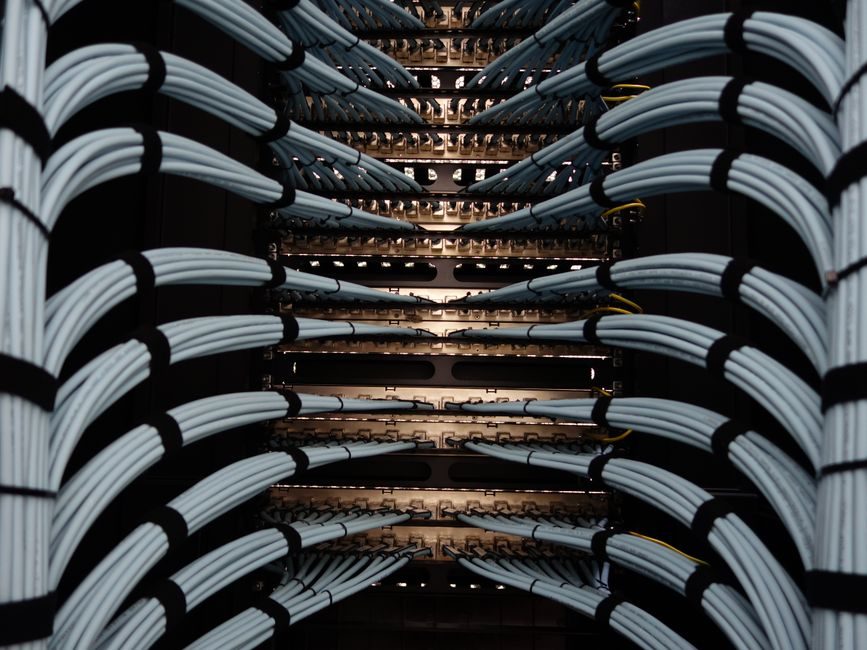
TIEON (Shenzhen Ontech Energy) lists the PBS-110/48-3 parallel DC power system and the GQH-Tm fully integrated AC/DC supply as two of the 2026 mainstream rectifier/PDU-class platforms shipping from south China, with 48 V DC bus architecture the default for hyperscale compute racks [S1].
Made-in-China carries 4 verified data-center-class manufacturers under the "Contact Center/Server Room" header and 12 catalog SKUs as of September 2023, while the broader "Data Centre" category returns 1 piece MOQ rows priced US$10,000.00–12,000.00 from Diamond-tier OEM Shanghai Shenglin M&E Technology (Hubei/Wuhan base) [S3][S4]. Tracking these clusters alongside the server hardware supplier stack is the practical starting point for any data center build-out sourcing plan.
Three OEM clusters you will actually quote
Cluster 1 — DC power conversion: 48 V rectifier modules, parallel N+1 frames, integrated AC/DC cabinets. PBS-110/48-3 from Ontech/TIEON and similar units are 19-inch rack-mount, support hot-swap parallel operation, and target the 110 VDC / 48 VDC bus range typical of Tier-III/IV hyperscale white space [S1]. A redundant 48 V plant scales by adding identical 3 kW–6 kW rectifier modules; the cabinet itself holds the controller, AC input breaker and DC distribution.
Cluster 2 — environment & monitoring: temperature/humidity sensors, LoRa wireless telemetry, solar GPS locators and small-form PLCs. Made-in-China lists manufacturers running their own R&D and trading arms in this segment, and the pricing granularity runs to individual sensor SKUs rather than full-rack assemblies [S5]. For the pressure transmitter and flow meter instrumentation that sits on the cooling-water side of a data center, the same vendor tier typically cross-sells into HVAC plant rooms, so treat it as the same pool when auditing qualified suppliers.
Cluster 3 — full facility packages: raised floor, containment, CRAC, UPS, DC plant, integrated cabinets. Virtual Data Center SKUs on OKorder and the Hubei/Shanghai "Data Centre" category on Made-in-China bundle these into single-vendor quotations, MOQ 1 piece, with the US$10,000–12,000 entry-point covering a small prefabricated server-room kit (single rack, basic cooling, integrated PDU) rather than a hyperscale hall [S2][S4].
Decision criteria for shortlisting
Power density: 48 V DC plants from the Ontech/TIEON class publish around 110 V nominal input and 48 V output at 3 kW–6 kW per module — a number worth confirming on the datasheet because the same SKU is often sold in a 220 VAC input variant for European sites [S1]. Cooling-loop spec: environment-monitoring vendors must support both Modbus RTU/TCP and LoRa if the site is large enough to justify wireless rooftop air-handler telemetry; sensor-only vendors rarely do both [S5].
Compliance footprint: full data center cabinet vendors that sell into EU projects need CE-EMC and a CE-LVD declaration; 48 V DC rectifier modules that go into a hazardous-area battery room additionally need ATEX zone-rated certification, which is a different supplier pool entirely. Lead-time: full facility packages on Made-in-China list 30–60 day build windows for a 1–4 rack solution; rectifier modules from stock ship in 2–4 weeks [S2][S4].
Main options lined up against selection criteria

For a 50–200 rack hyperscale build the credible OEM types are: (a) dedicated 48 V DC rectifier OEMs (Ontech/TIEON and direct competitors) for power, (b) server-grade white-box OEMs (covered separately in the server hardware supplier map) for compute, (c) bundled facility-package vendors such as Shanghai Shenglin M&E for one-line-room delivery [S4].
For a 5–20 rack edge site, the same China pool is viable but the optimal stack shifts: environment monitoring (LoRa + temp/humidity) and a single 48 V DC plant from Cluster 1 cover the critical path; full facility-package vendors become overkill on price. For a 1–3 rack micro-edge, a single integrated AC/DC supply such as the GQH-Tm with built-in controller, plus a small environment sensor cluster, is the lowest-MOQ entry at sub-5 kW scale [S1][S5].
Limits, failure modes and what the catalog does not tell you
The Made-in-China "Data Centre" and "Contact Center" categories are sparse — 4 verified suppliers under one, 12 SKUs under the other — so the catalog is not a saturated market, it is a directory of a few full-facility OEMs and a long tail of component vendors [S3][S4]. Lead-time risk is high during Q3–Q4 because rectifier module capacity in south China overlaps with telecom and EV-charger demand, and parallel DC plants need matched firmware revisions across modules for N+1 to work cleanly [S1].
What the SKUs typically do not publish: actual 96th-percentile efficiency at 30 % load, real MTBF on the fan-cooled rectifier module, and the parallel-current-share accuracy at module count above 8. Those three numbers decide whether the cabinet will go into a Tier-III hall or stay at the edge. Buyers should ask for the test report (not the marketing datasheet) and, if the plant is going onto a generator-backed bus, ask for the generator-step-load compatibility curve separately [S1].
Sourcing levers and how to read the listing pages
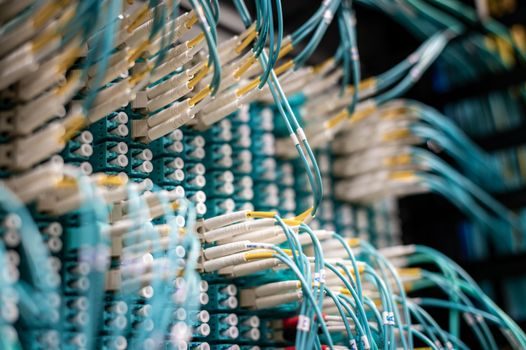
On OKorder, "Virtual Data Center" SKUs are mostly complete-room kits — confirm whether the cooling and UPS are included or referenced as third-party; on Made-in-China the "Data Centre" category under Hubei/Wuhan returns the Shanghai Shenglin M&E listing at US$10,000.00–12,000.00/1 piece MOQ, which is the cleanest entry-point to benchmark full-room pricing [S2][S4]. Always cross-check the "Diamond Member" tier and the listed business type (Manufacturer/Factory vs Trading Company): a Trading-Company listing under a 1-piece MOQ will not give you a factory FAT slot.
For the instrumentation that rides alongside the plant, the data logger tier from the same Made-in-China "environment monitoring" pool covers temperature, humidity and access logging; PLC and industrial valve SKUs for cooling-water make-up and humidifier control come from adjacent but distinct vendor pools. The up/down stream picture — power, cooling and fiber into the data center — is mapped in the upstream/downstream 2026 stack article.
Where the China supply base overlaps with adjacent industries
Data center rectifier demand competes with telecom central-office power, EV fast-charger DC plant and rail signaling power on the same 48 V / 110 V DC module platforms, so the supplier overlap with the PV supplier map and the lithium battery supply chain is real — the same bus capacitor, the same IGBT module, the same firmware stack [S1]. That is a sourcing lever, not a coincidence: if the data center slot is 26-week, the rail-signaling lead time is usually a fair bellwether because the volume is larger and the data is more public.
For cooling-water instrumentation the flow meter and pressure transmitter pool also feeds LNG receiving terminals and aerospace ground-support loops, so a multi-industry supplier that already has ATEX/IECEx zone coverage is a stronger pick for a battery-room retrofit than a pure data-center specialist.
Trackable signal 1: the next 90 days will show whether the PBS-3-class parallel DC platforms add a 240 VDC / 380 VDC high-voltage bus option to keep pace with 800 VDC rack architectures being piloted for AI compute halls. Trackable signal 2: Made-in-China verified-supplier count under the "Data Centre" category — currently 1 listed row in Hubei/Wuhan at US$10,000.00–12,000.00 — is a fair proxy for the long tail of full-room vendors expanding into the export market, and that count is worth re-checking quarter over quarter [S4].