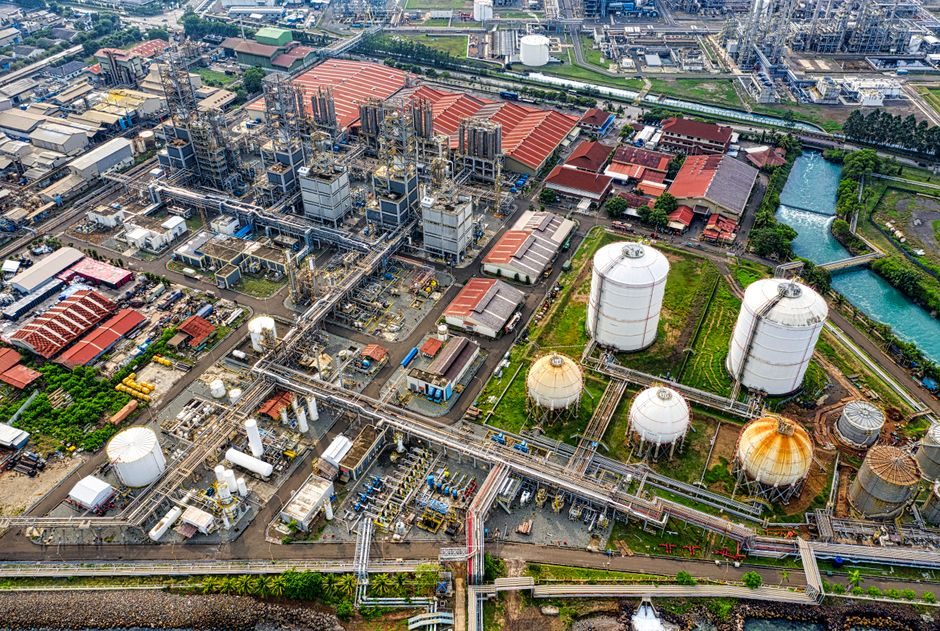
Liquefied natural gas moved through a 2025–2026 expansion wave that pushed global liquefaction nameplate above 460 Mt/yr on additions in the US Gulf and Qatar's North Field, with pressure transmitter inventories on LNG modules sized against ANSI/ISA-12.27.01 dual-seal and SIL-2/3 loops per IEC 61511.
Upstream covers wellhead separation, CO2/H2S removal, NGL recovery and pre-cool; midstream is the liquefaction train (mixed-refrigerant or AP-X/H-MR), storage at -162 °C in 9% Ni steel or full-containment tanks, and shipping in 174,000 m³ membrane or Moss-type carriers; downstream covers regasification FS(R)U, satellite peak-shaver tanks, flow meter skids for send-out, and petrochemical cracking fed by ethane/LPG co-product.
Wellhead and Pre-Treatment Spec Levers
Feed-gas CO2 must drop below 50 ppmv and H2S below 3.5 ppmv before mixed-refrigerant exchangers, otherwise tube-side hydrate formation fouls the main cryogenic heat exchanger (MCHE) brazed-aluminium core within hours; molecular sieve 13X/4A towers paired with an active carbon bed are the standard guard, and the regeneration gas heater is one of the largest fired heaters on site at 8–18 MW thermal input per train. [S1]
Acid-gas removal (Amine/ADIP/Sulfinol-M) and the mercury guard bed (sulphur-impregnated carbon, 1–5 kg per MMscmd) precede the cold box; instrument air is dried to -40 °C pressure dewpoint (ISO 8573-1 Class 2) so pneumatic industrial valve positioners do not ice-up at the cooldown ramp of about 30 °C/h to operating cold box temperature.
Liquefaction Train: Modular, Electric and Sourcing Pressure
ConocoPhillips Optimized Cascade, Air Products AP-X (C3MR/AP-SMR) and Black & Veatch PRICO dominate the 2026 built roster, with electric-drive (e-LNG) pilots using 30–75 MW motors and VFD line-ups over a 6.6–13.8 kV bus eliminating the gas-turbine driver; Air Products' Louisiana Clean Energy Complex (US$7 bn, three e-LNG trains) is the most-watched reference plant, with first-train start-up guided to 2027–2028. [S2]
Modularisation compresses site work: a 5 Mt/yr train now ships in 150–200 skids, but the compressor-driven MCHE cold box remains too large to module-mount and arrives in 80–120 t sections; main cryogenic heat exchangers carry 18–24 month lead time and 3–5 qualified fabricators globally, a pinch point similar to the lithium-battery upstream and downstream chain spec map bottleneck on foil and active material.
Cryogenic Valves, Pumps and Material Limits
[S3]
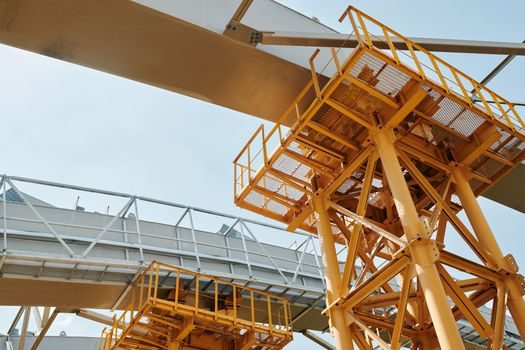
Submerged LNG pumps on carrier or tank applications run 1500–4500 m³/h at 80–150 m head with a canned motor in LNG as the lubricant; bearing life is rated 20,000–50,000 hours and the pump vault nitrogen-purged to <2% O2 to keep the canned motor windings in a non-condensing atmosphere, an arrangement mirrored in the desalination supply chain spec map where ERDs and high-pressure RO pumps carry similar cavitation-risk caveats.
Shipping, Storage and Bunkering
[S4]
Onshore storage still defaults to full-containment 180,000–270,000 m³ tanks (9% Ni inner, pre-stressed concrete outer, 0.5–1.0 m perlite/polyurethane insulation), while inland satellite peak-shaving uses 5,000–50,000 m³ single-containment tanks; BOG compressors at 6–8 bar discharge size on 5–15 t/h send-out, and IMO IGF Code applies to all LNG-fuelled ships above 500 GT on bunkering operations in port.
Regasification, Send-out and Power Pairing
[S1]
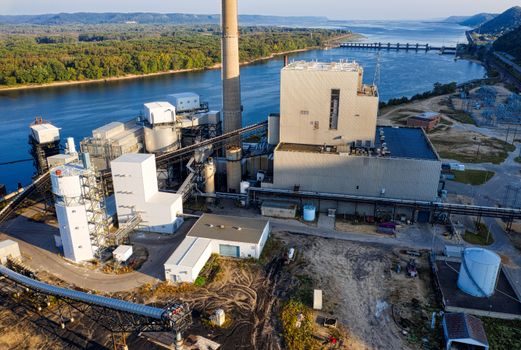
LNG-to-power pairing uses H-class turbines running on 200–300 MW class combined-cycle blocks with heat rates around 6,200 kJ/kWh; floating power barges (Karadeniz Powership model) carry 125–500 MW in 8–24 gas engines and pair with an FSRU moored alongside, a topology that has become the fastest deployable grid-add solution for 2025–2027 commissioning windows in emerging markets.
Downstream Petrochemical Coupling
[S2]
Small-scale LNG (below 0.5 Mtpa) and bio-LNG hubs use mixed-refrigerant or single-screw expander liquefiers in 10–200 tpd containers; the control layer runs on a redundant PLC pair with SIL-2 safety PLC on the ESD-1 path, mirroring the architecture described in the industrial CPU supplier map 2026 where control and safety processor pools are kept physically separate.
HSE, Standards and the 2026 Sourcing Levers
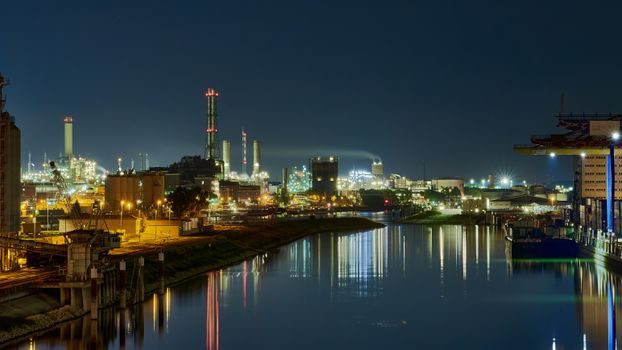
Hazards are dominated by cryogenic burn, flammability envelope 5–15 vol% in air, and brittle fracture of carbon steel below its NDTT; LNG facilities sit under NFPA 59A (US), EN 1473 (EU), and the IGC Code for ships, with electrical area classification defaulting to Zone 1 Group IIA T3 inside tank domes and Zone 2 in process modules per IEC 60079-10-1. [S3]
Pipeline materials in CO2-bearing service are gated to API 5L X65/X70 sour service with NACE MR0175 hardness limits, while subsea tiebacks push to 345 bar design pressure and 7-inch–24-inch linepipe diameters; sourcing watchers should track three signals: a) module-yard slot allocation at Aker, Kiewit and Saipem for 2027–2028 trains, b) IMO CII trajectory on dual-fuel newbuilds, and c) FIDs on Phase 2 of Qatar's 49 Mtpa expansion, with servo-motor lead times on cryogenic pump-turbine inlet guide vanes already extending past 14 months for Q2 2026 deliveries.