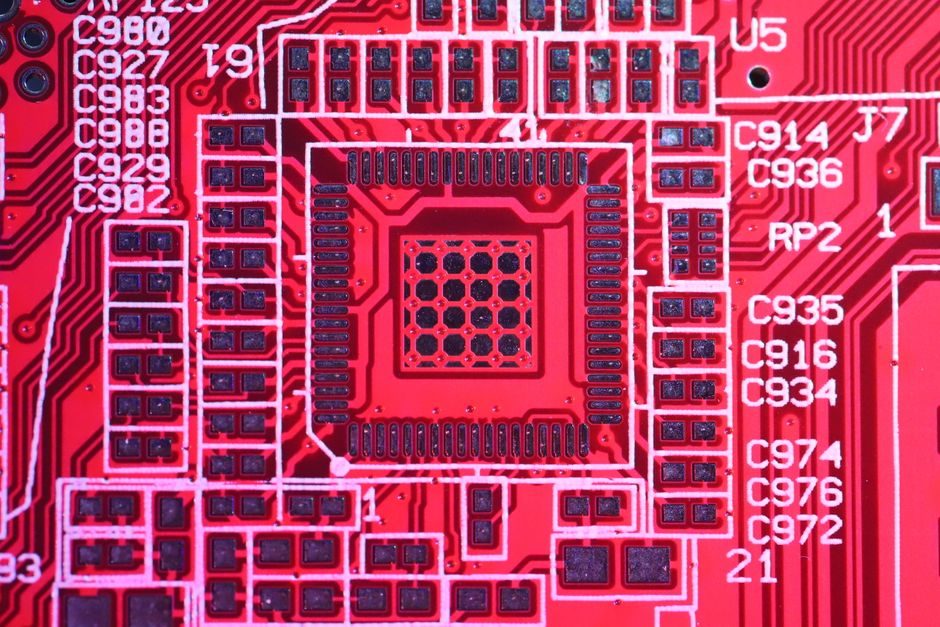
NVIDIA, AMD, Intel, Qualcomm and a maturing China stack of Huawei, Cambricon, Hygon, Biren, Moore Threads and Iluvatar CoreX define the 2026 AI accelerator supplier landscape, with merchant foundry capacity at TSMC's 3 nm/5 nm nodes setting the wafer bottleneck [S4].
Enterprise buyers sourcing accelerators, training GPUs, edge NPUs and inference ASICs in mid-2026 face a five-axis decision: vendor roadmap, HBM memory generation, process node, software stack (CUDA / ROCm / CANN / oneAPI), and export-control classification (US ECCN 3A090, EU dual-use, China Unreliable Entity List) [S4].
Frontier GPU and Datacenter Accelerator Suppliers
NVIDIA's datacenter H-series, B-series and the newer GB200 NVL72 rack-scale system remain the most specified accelerator family for hyperscale LLM training, with the company positioned as the global leader in accelerated computing and a key driver of multi-trillion-dollar datacenter capex [S4]. AMD's Instinct MI300X and MI325X compete on HBM3E capacity per package and on ROCm software maturity, with Chinese resellers listing MI-series SKUs at unit prices around US$ 385 on multi-supplier catalogs [S2].
Intel's Gaudi 3 and the Falcon Shores line target cost-per-token efficiency rather than peak FP8 throughput, and ship with oneAPI/SYCL as the programming surface [S4]. For buyers routing procurement through tier-2 distributors, the industrial sensor ecosystem provides a useful parallel: SKUs cluster around a few silicon vendors, with pricing variance set by HBM stack height and PCIe vs. NVLink topology rather than by brand alone.
China-Domiciled AI Silicon: Training, Inference and Workstation
Domestic Chinese AI accelerator supply, consolidated in the 2024-era list of "AI十大品牌," splits into three groups: Huawei Ascend (910B/910C) for training and inference on the CANN software stack; Cambricon (MLU370/MLU590) for vision and NLP inference; and Hygon (DCU series) for HPC and x86-compatible compute [S4]. Newer entrants Biren, Moore Threads and Iluvatar CoreX focus on training-class hardware with HBM2e/HBM3 stacks, though their foundry access is constrained by the US Entity List and updated extraterritorial controls on advanced lithography.
Buyers pairing AI silicon with plant-level control can pull common procurement levers from the PLC and industrial valve categories: pin the form factor (PCIe card, OAM module, MGX sled), the HBM generation, the software API and the host CPU (x86 vs. ARM) before shortlisting vendors. Huawei Ascend's Atlas 300I/800I inference cards and Cambricon's SIUM290 edge cards remain the most stocked SKUs on China B2B platforms.
Edge NPU, Mobile and PC Copilot Silicon
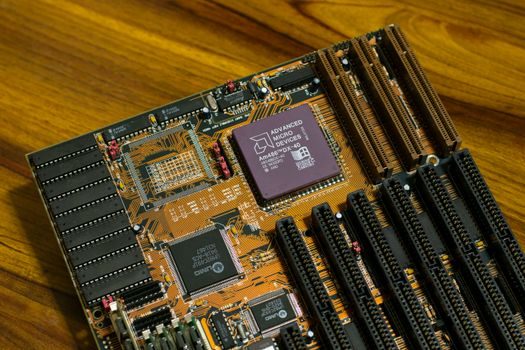
Qualcomm's Hexagon NPU on the Snapdragon X Elite / X2 Elite platforms and Apple's M-series Neural Engine dominate the 2026 PC Copilot+ and on-device LLM category, with 45 TOPS-class NPU throughput as the entry threshold for Windows Copilot+ certification [S4]. MediaTek's Dimensity 9400/9500 family, with its APU 790, targets mid-range smartphone GenAI, while Samsung's Exynos 2400 integrates an NPU for Galaxy on-device features.
Industrial buyers evaluating edge inference for flow meter telemetry, vision-based quality control and predictive maintenance typically specify 10-30 TOPS NPUs with 8-16 GB LPDDR5X, with Hailo-8, Axelera Metis, SiMa.ai MLSoC and Synaptics Astra as the specialist NPU suppliers outside the Qualcomm/Apple/AMD orbit. Lead times for edge NPU modules sit in the 12-16 week range on European and North American distributor channels.
Foundry, HBM and the Packaging Bottleneck
Wafer supply is concentrated at TSMC's N3/N3E and N5/N4P nodes for the leading AI GPUs and NPUs, with Samsung Foundry's 4LPP/SF3 and Intel Foundry Services 18A as the second-source options. HBM3E capacity at SK hynix, Micron and Samsung remains the tightest upstream constraint: HBM3E 8-Hi and 12-Hi stacks are pre-allocated to NVIDIA, AMD and a limited set of hyperscaler customers, with lead times stretching into late 2026 for new entrants. [S1]
Advanced packaging — CoWoS-S, CoWoS-L and TSMC's SoIC-X — is the binding constraint behind every shipped AI accelerator, with TSMC's CoWoS monthly output scaling through 2026 but still trailing demand by an estimated 20-30% [S4]. For buyers routing accelerator procurement through industrial channels, this packaging gap is the same structural squeeze documented in the silicon wafer supply chain coverage.
Sourcing Levers: Channels, Pricing and Risk
AI accelerator procurement splits into three channels: direct OEM (NVIDIA Enterprise, AMD Pro, Huawei Enterprise) for fleet standardization; authorized distributor (Ingram Micro, TD Synnex, Avnet, SiliconExpert) for 1-50 unit pulls; and B2B platforms (Alibaba, Made-in-China) for legacy SKUs, evaluation units and refurbished cards [S1][S2]. B2B catalog listings on Made-in-China show AMD chip SKUs at US$ 385 unit MOQ for selected MI-series and Ryzen SKUs, with diamond-member audited suppliers dominating the long tail [S2].
Export-control classification is the second lever: ECCN 3A090 covers the highest-performing AI chips destined for China, with 3A090.z covering the full set as of late 2024 US Commerce updates, and parallel EU dual-use export lists now aligned to total processing performance and HBM density thresholds. Buyers should pre-clear shipments against US EAR, EU dual-use, China Unreliable Entity List, and Japan/METI foreign-exchange-list classifications before issuing POs. Compare the main options on four decision criteria below.
Comparison: Main AI Chip Categories on Buyer Criteria
Four buyer criteria separate the 2026 AI chip options: (1) Peak FP4/FP8/FP16 throughput per watt, with NVIDIA Blackwell GB200 and B200 leading at 4-5 PFLOPS FP4 per package; (2) HBM capacity and bandwidth, where HBM3e 8-Hi/12-Hi (192-288 GB, 8-10 TB/s) is the 2026 norm; (3) Software stack maturity, with CUDA + TensorRT-LLM at the top, ROCm + vLLM next, and CANN / oneAPI / SynapseAI behind; (4) Export-control status, with US ECCN 3A090 restriction covering the highest-performing China-destined SKUs and a 50/100/500 TFLOP threshold structure [S4].
For buyers with industrial control workloads, the pressure transmitter and servo motor procurement guides provide adjacent patterns for tier-1 vs. tier-2 vendor qualification.
Limitations, Failure Modes and What Not to Buy
For hyperscale buyers, the second-order risk is fab capacity: any single TSMC N3 earthquake event, CoWoS yield slip, or HBM3e allocation cut cascades into 6-12 month lead-time slippage. The same concentration risk shows up in adjacent infrastructure — the data center upstream/downstream coverage documents the parallel squeeze on power, cooling and fiber plant.
Verifiable Next Signals to Track
Three nodes are worth tracking into late 2026: (1) NVIDIA Rubin series and AMD MI400 series sampling dates, both of which will reset the HBM4 supply chain; (2) China foundry progress at SMIC N+2 / N+3 for domestic AI silicon, which determines whether Huawei Ascend 920 and Cambricon next-gen SKUs ship at HBM3 or below; (3) US Commerce 3A090 threshold revisions, with industry expecting the 50/100/500 TFLOP tiers to tighten to 30/70/300 TFLOPs by year-end. The adjacent supply-chain maps for hydraulic systems and bearings follow the same tier-1 / tier-2 vendor split that now governs AI accelerator sourcing. [S2]