
Grid-scale battery energy storage systems sized for the 2026 build cycle cluster around 4-hour duration LiFePO4 containerized blocks ranging from 2.4 MWh to 50 MWh per unit, scalable to 100 MWh+ on a 1000V or 1500V DC architecture with sub-20 ms frequency-response capability [S2][S9].
Delivery cadence has compressed to roughly 9 months from purchase order to commercial operation in the Nordic market, and a 14.2 MWh two-unit build at NTRN Energy Park reached commercial operation in February 2026, illustrating how modular procurement now leads utility-scale grid reinforcement [S1].
Power and energy envelope: 2 MW to 50 MW, 4 MWh to 50 MWh per unit
Grid-scale battery energy storage solutions in 2026 are sold as parallel-ready units, with system power 2 to 25 MW and system capacity 4 to 50 MWh per cluster, allowing Nx combinations to reach 100 MWh+ in containerized form [S1][S2].
The Veridian utility-scale range, for example, is published at 10 MWh to 100 MWh+ energy, 5 MW to 50 MW power, 1000V/1500V DC, response time under 20 ms, round-trip efficiency above 95%, and 20+ year design life [S2]. By contrast, single-container offerings such as the 40-foot Zonyue unit target 2.411 MWh at 768 V rated, while the DC5000 container from DC Group targets 5000 kWh at 1000 to 1460 V with 3450 kVA AC-side rating, transformer-isolated at 0.69 kV / 37 kV [S3][S9]. Procurement teams should treat the 2 to 5 MWh container, the 5 MWh modular block, and the 10 to 50 MWh cluster as the three standard procurement tiers, not a continuum.
Cell chemistry and cycle life: LFP at 6000 cycles as the baseline
LiFePO4 (LFP) cells are the default chemistry in every containerized 5 MWh-class product surveyed, with rated cycle life of 6000 cycles, 3.2 V nominal cell voltage, and 280 Ah to 314 Ah large-format cells [S3][S5][S6].
State of Health (SoH) planning is the first capacity decision: usable energy is gross energy minus the depth-of-discharge (DoD) reserve, which for LFP utility installations is typically held at 80 to 90 percent to manage calendar fade. The Sunny Powercore 5.016 MWh ZC314 system quotes continuous charge/discharge of at least 2 hours, 1164.8 V to 1497.6 V nominal, 6000 cycles, and 3-year warranty as the entry commercial envelope [S5]. DC Group's DC5000 lists BMS communication on Ethernet with Modbus TCP, three-layer overcurrent protection, IP54 enclosure, and certified to CE, UN38.3, GB/T 36276, GB/T 34131, and GB/T 34120 [S3]. For project finance, a published cycle count and a DoD limit are the two numbers that translate directly into capacity fade assumptions and into LCOS, which is why battery storage cost stacks for 2026 need to be read alongside the cycle and DoD sheets rather than the headline kWh figure.
Thermal management and site envelope: liquid cooling, IP54/IP55, 3000 m altitude
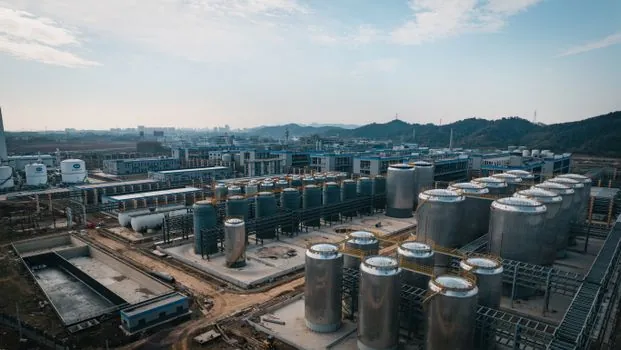
Liquid cooling is now the default thermal path for 5 MWh-class containers, with operating temperature range commonly quoted as -30 to 50 degrees C with derating above 45 degrees C, and IP54 to IP55 outdoor ratings [S3][S5].
Altitude tolerance is published at up to 3000 m for the DC5000 and up to 4000 m for the ZC314, with relative humidity 0 to 95 percent non-condensing and converter cooling via temperature-controlled forced air [S3][S5]. Fire safety on these containers is engineered in layers: fused sprinkler heads plus NFPA 69 explosion prevention and IDLH-gas ventilation on the DC Group unit, and aerosol suppression plus ducted sprinklers plus perfluorohexanone on the Sunny Powercore unit [S3][S5]. When planning a site, the binding constraints are usually the 45 degrees C derating knee and the IP rating, because the inverter room, transformer pad, and the storage rack layout for the cell frames are all sized off the thermal headroom, not the nameplate kWh.
Power conversion and grid code: 690 V AC, 50 Hz, black-start capable
AC-side integration is dominated by 690 V low-voltage step-up to 37 kV medium voltage, 50 Hz grid frequency (45 to 55 Hz operating window), power factor above 0.99 at nominal power, and reactive power adjustable over -105 to +105 percent [S3].
DC current injection is held below 0.5 percent of nominal and current THD below 3 percent at nominal, which matters for interconnector compliance in the UK and EU markets [S3]. Grid-forming inverters with black-start capability and comprehensive grid support functions are now a baseline marketing claim for utility-scale offerings, and at the NTRN Energy Park the 5.5 MW / 14.2 MWh twin-unit build participates in FCR-N, FCR-D, and aFRR reserve markets as well as Nord Pool intraday and day-ahead markets [S1][S2]. Cybersecurity is the other hidden spec: the Cactos Spine control stack is published as compliant with IEC 62443, and that is increasingly a hard requirement for critical infrastructure projects rather than a marketing line [S1].
Sizing logic: 4-hour duration, power-to-energy ratio 0.5P, and stacking limits
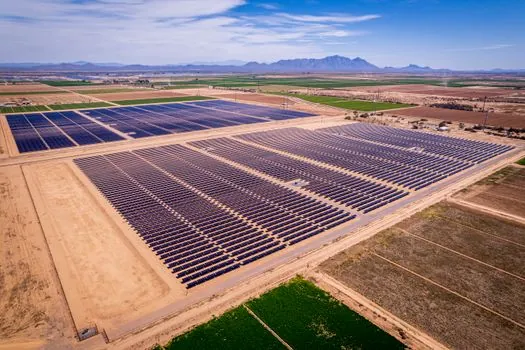
Utility-scale BESS sizing is governed by two coupled numbers, the energy capacity in MWh and the power rating in MW, with a 0.5P rate (2-hour duration) and a 0.25P rate (4-hour duration) as the most common utility points [S3][S4].
The Eszoneo sizing guide frames this as: pick the duration, then set the energy capacity, then verify the power rating can deliver the energy fast enough at the peak discharge, with a typical grid-tied reference point of 2 MW power against 4 MWh energy [S4]. For capacity planning, this means a 100 MWh / 50 MW 2-hour system and a 100 MWh / 25 MW 4-hour system are NOT equivalent: the 4-hour system needs a larger cell stack relative to its inverter, which changes the floor footprint, the storage handling requirement during module replacement, and the cell count under each PCS. Stacking more than 4 parallel PCS units on a single MV transformer starts to require transformer derating studies, so most published product sheets top out at Nx 5 MWh containers per MV skid.
Selection criteria: who buys what, and the realistic procurement envelope
The decision is not which vendor, but which procurement tier matches the use-case duration and revenue stack, with 4-hour arbitrage and 2-hour frequency regulation as the two anchor use cases in 2026 [S1][S2][S4].
For pure ancillary services (FCR, aFRR, FFR), the 0.5P to 1P 2-hour block at 2.4 to 5 MWh per container is the right buy, and the Finnish reserve-market examples show why: 5 MW / 14.2 MWh and 5 MW / 10.3 MWh systems are both clearing the Fingrid FCR-N, FCR-D, and aFRR stacks [S1]. For renewable integration and 4-hour energy shifting, the 10 to 50 MWh cluster with 0.25P to 0.5P discharge is the right buy, and the 100 MWh+ containerized build with grid-forming inverters is the utility procurement default [S2]. LFP at 6000 cycles is the consensus choice, and the electronic scale used for module kWh acceptance testing, the crane scale used for container lift planning, and the bench scale used for electrolyte QC are now standard line items in the BOS rather than optional extras. Residential and small commercial projects do NOT belong in this procurement tier; they should buy stackable rack-mount LFP from the Shenzhen-class supply chain instead, and try to use the storage cage standard for indoor cabinet deployment [S6].
Two signals worth tracking into Q4 2026: the GB/T 36276 and GB/T 34131 certification cycle on Chinese LFP containers, which determines EU and UK grid-code acceptance, and the next Cactos delivery slot out of Kempele, which is the cleanest published benchmark for order-to-COD lead time in the European ancillary market.