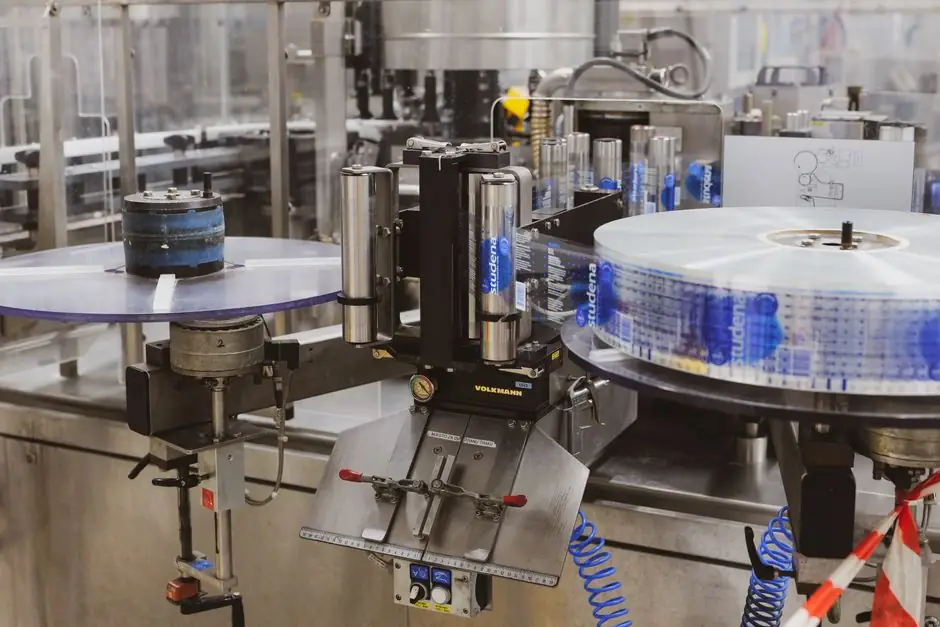
Grid-scale battery energy storage system (BESS) manufacturing equipment is a multi-stage production stack, spanning electrode coating, calendaring, cell stacking, formation cycling, module PACK assembly, BMS PCBA, and the UL-listed power conversion system (PCS) that ties the finished cabinet to the grid [S2].
Sizing on the line is expressed in kW power and kWh energy, with reference product lines scaling from 7 kW / 13.8 kWh residential cabinets through 60–150 kVA AC at 100–500 kWh commercial nodes, up to 633–2,280 kWh industrial modular racks [S2]. For a process-side view of how the BMS, PCS, and PPC layers sit on top of this hardware, see BESS process control and instrumentation.
The eight spec metrics every BESS line must hit
The standard BESS technical-specification framework lists eight primary metrics: power capacity, power capability, C-rate, energy (conversion) efficiency, round-trip efficiency, service life, self-discharge rate, and operating temperature range [S2]. C-rate defines charge and discharge current relative to nameplate kWh: a 1C system drains its rated kWh in one hour, a 0.5C system in two hours, and a 0.25C system in four hours, which determines whether a finished cabinet behaves as a power asset or an energy asset [S2].
Round-trip efficiency for commercial Li-ion BESS typically sits in the mid-80s to low-90s percent band, and operating temperature range is constrained by cell chemistry, generally requiring controlled ambient conditions around 15–30 °C for optimal calendar life [S2]. These are not marketing numbers; they are the values a specifier has to pin on a Section 48 17 13 purchase document before a vendor can quote a build [S2].
What a BESS factory actually builds, station by station
A complete BESS manufacturing line comprises electrode coating machines, calendaring rolls, cell stacking or winding units, electrolyte filling, formation cycling cabinets, module pack assembly, BMS PCBA, rack integration, and the power conversion system (PCS) station [S2]. Coating and calendaring determine electrode loading uniformity in g/m² and porosity, while stacking or winding defines cell format across prismatic, cylindrical, and pouch constructions [S2].
Formation cycling is where cells receive initial SEI formation through controlled charge and discharge cycles, often the longest single step in days, and the PCS station must carry a UL 1741 listing for grid interconnection [S2]. Material handling between stations is itself a spec gate: precision casting, CNC machining, and specialized forging are used in creating the production equipment itself, with a typical service life exceeding 10 years under proper maintenance [S5].
Standards and codes that gate a US grid-tied build
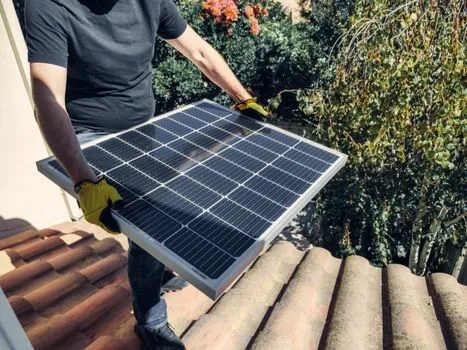
Every grid-tied BESS shipped into a US project must satisfy UL 9540 for the system, UL 9540A for thermal-runaway fire propagation test data, UL 1741 for the inverter and charge controller, and IEEE 1547 for interconnection, per the US DOE BESS technical specification template [S2]. At the cell level, lithium-ion cells and modules should carry UL 1973 recognition, while transport must follow UN 38.3 for shipping classification [S2].
For a project specification document such as Section 48 17 13, the specifier must also reference applicable state and local codes, plus the local fire marshal sign-off for siting and suppression [S2]. Bidirectional kWh metering and revenue-grade accuracy, typically 0.2% or 0.5% class, apply on the DER side, and the same energy meter reference class is used across industrial metering of the inverter and EMS test path [S2].
Prismatic PACK line: a worked example of throughput and footprint
A reference prismatic PACK assembly line is built for 50–314Ah prismatic cells in 8S1P and 8S2P module configurations, with a maximum pack dimension of 1,000 × 600 mm and a maximum pack weight of 500 kg [S4]. The line combines automatic testing, CCD inspection, laser cleaning, laser welding, and conveyor transfer with flexible manual assembly workstations, and lands at 6–8 PPM production capacity with a first-pass yield ≥98% and final yield after rework ≥99.5% [S4].
Single-machine failure rate is held to ≤2% with utilization ≥98%, changeover time ≤4 hours, total line power approximately 50 kW on a three-phase five-wire 380V ±10% / 50Hz supply, compressed air at 0.5–0.8 MPa, ground load capacity ≥650 kg/m², operating temperature 15–35 °C, relative humidity 40–85% RH, footprint approximately 18,800 × 3,570 mm, and equipment height approximately 2,560 mm [S4].
Robotic PACK automation: what a modular line actually delivers
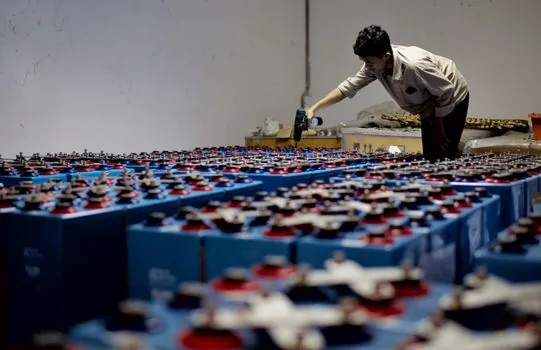
A high-end prismatic PACK line integrates robotic automation, vision systems, and thermal management to target large-format 280Ah+ cells used in stationary storage, solar farms, and heavy-duty transport [S3]. Robotic sorting, welding, and inspection hold ±0.02 mm alignment accuracy, and a modular design supports 3P12S to 4P10S battery architectures for rapid scalability [S3].
Built-in pressure relief valves and explosion-proof enclosures are sized to meet UL 9540A thermal-runaway test data, and integrated EL imaging, X-ray, and laser cleaning systems target 99.8% defect-free output [S3]. Cycle time lands at 3–15 seconds per module, configurable to the product mix, and AGV plus gantry systems cut manual intervention to slash production cost by roughly 40% on the same line [S3].
Comparison: residential, commercial, and industrial line tiers
Residential BESS lines target 7 kW / 13.8 kWh cabinets, 8-hour backup durations, and a single-format Li-ion build, while commercial lines deliver 60–150 kVA AC outputs at 100–500 kWh per cabinet with multi-rack modularity [S2]. Industrial-tier lines scale individual modular nodes to 633–2,280 kWh, often built around prismatic 280Ah or 314Ah cells in 8S1P and 8S2P pack configurations [S2][S4].
On tolerance and quality, robotic prismatic lines hit ±0.02 mm alignment accuracy and 99.8% defect-free output at 3–15 second module cycle times, while reference semi-automated lines run 6–8 PPM at first-pass yield ≥98% and final yield ≥99.5% with ≤4-hour changeover [S3][S4]. Industrial lines also demand heavier factory floors, ≥650 kg/m² ground load capacity, against lower residential-tier requirements [S4].
Selection rules for a 2026 grid-scale line buy

Selection comes down to four hard gates. First, cell format: prismatic 280Ah and 314Ah are the dominant stationary-storage format, with line footprints and welding fixturing sized to the 173.2 × 71.4 × 207.2 mm cell envelope at roughly 5.5 kg per cell [S4]. Second, certifications: UL 9540, UL 9540A, UL 1741, IEEE 1547, and UL 1973 at cell level are non-negotiable for a US grid-tied cabinet [S2].
Third, throughput: target 6–8 PPM for a reference semi-automated line, 3–15 seconds per module for a fully robotic line, with changeover under 4 hours to keep product-mix change cost down [S3][S4]. Fourth, factory fit: total line power near 50 kW, compressed air at 0.5–0.8 MPa, ambient 15–35 °C, and a 18.8 m × 3.57 m footprint set the HVAC and utility spec before the first cell is loaded [S4]. Buyers mapping adjacent tooling and storage flow into a new battery plant should also plan their linear guide and storage rack sizing in parallel, since the same plant floor carries module buffering and AGV lanes.
Trackable next signals: monitor any 2026 Q3–Q4 vendor announcements on higher-throughput prismatic PACK lines above 8 PPM, and watch for revised DOE BESS specification template updates that tighten UL 9540A cell-level test reporting on 280Ah+ formats. Procurement teams should also flag any new state fire marshal guidance on Section 48 17 13 siting, which can shift suppression spec inside an already-purchased line.
For the relevant spec sheets and selection criteria, see additive manufacturing material.