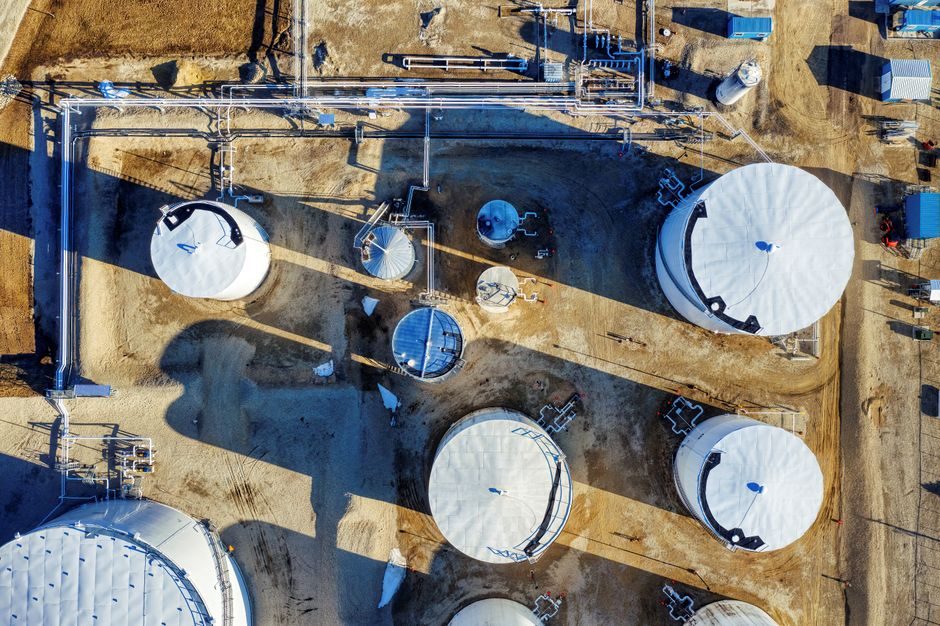
Tesla's Megapack unit stores more than 3.9 MWh per enclosure, and a cluster of 200 Megapacks holds 1 GWh — enough to power San Francisco for six hours, per coverage of the company's Shanghai Lin-gang megafactory project [S1].
IndustryArc projects the grid-scale battery market to reach $24.5 billion by 2030, compounding at a 22.6% CAGR from 2024, with renewable integration, frequency regulation, and capacity-market participation driving capex across the chain [S5].
Upstream Chain: Lithium, Cathode, and Cell Packs
Upstream of a grid battery is the cathode-active and cell-pack supply chain — lithium carbonate and hydroxide, nickel-cobalt-manganese precursors, graphite anodes, electrolyte, and separator film. Tesla's 2023 energy-storage deployments totalled 14.7 GWh with profit nearly quadrupling year on year, signalling that cell-pack volume, not just raw-material spot price, is the binding constraint on Megapack output [S1]. A working reference for the mid-2026 lithium and spinel-cathode sourcing map is laid out in this energy-storage supply-chain brief, which tracks Li price floors, LFP vs NMC pack share, and PV-bundled procurement.
Lithium iron phosphate (LFP) has become the chemistry of choice for stationary storage because of its thermal stability, longer cycle life (typically 6,000-10,000 cycles to 80% capacity at 1C/1C), and freedom from cobalt. For Asian LFP gigafactories outside the US, the cell is the bill-of-materials lever; for US projects, IRA Section 45X production credits and FEOC sourcing rules are the dominant cost driver.
Mid-Stream: PCS, BMS, and Containerised Skid Assembly
The mid-stream converts cells into a sellable plant. A grid battery system breaks down into the battery management system (BMS), the power-conversion system (PCS — bidirectional inverter/rectifier, typically 1,500 V DC architecture for new builds), thermal management (liquid cooling has displaced air cooling above ~2 MWh per container), fire suppression (aerosol or water-mist, sized to UL 9540A test data), and the medium-voltage transformer / switchgear skid. UL 9540 is the systems-level safety standard for energy storage; UL 9540A is the cell-to-rack thermal-runaway test method that underwrites it. [S3]
Mass production at the Shanghai Lin-gang plant is scheduled for the first quarter of 2025, with construction beginning in May 2024, on a site designed as Tesla's first energy-storage super factory outside the United States [S1]. For projects receiving cells on a storage rack subassembly, factory acceptance test (FAT) witness windows and container IP55 / NEMA 3R ratings are the two practical pinch points that drive EPC schedules.
Downstream: Grid Services, EPC, and Owner-Operator Models
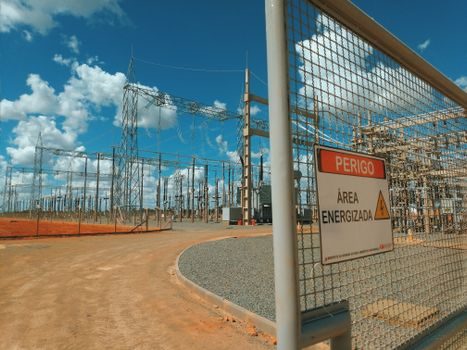
Downstream of the factory is the developer / EPC / asset-owner stack. Eelpower, self-described as the first UK company to construct, own and operate grid-scale batteries, builds its value proposition around grid stability and the balance of supply and demand from intermittent renewable generation [S3]. Revenue stacking at the plant level typically combines the capacity market (e.g. GB CMU, ERCOT, CAISO RA), ancillary services (frequency response, FFR, spinning reserve), and wholesale arbitrage via day-ahead and intraday markets.
US utility-scale battery capacity tripled in 2021 alone, per EIA generator-level survey data on plants of 1 MW or greater of combined nameplate capacity [S6]. For EPC contractors, the binding mid-stream constraint at multi-hundred-MWh sites is not the cells but the storage cage and racking installation rate, the MV transformer lead time (often 40-60 weeks), and HV substation energisation slots. The owner's commissioning checklist for a BESS typically follows IEC 62933 series for safety and performance, with grid code compliance against G99 (GB), IEEE 2800 (US), or VDE-AR-N 4110 (DE) as applicable.
Comparison: Cell-Chemistry and Architecture Choices
Selection of the upstream-to-downstream stack breaks down to four decision criteria: (1) chemistry — LFP vs NMC, where LFP dominates stationary due to cycle life and thermal stability while NMC retains higher energy density for space-constrained sites; (2) DC architecture — 1,500 V vs 1,000 V, with 1,500 V now standard for new builds above 50 MWh because it reduces current and copper losses; (3) thermal management — liquid cooling vs air cooling, where liquid is now the default above 1C continuous and for any site in ambient above 35 °C; (4) integration model — DC-block vs AC-block, with AC-block accelerating EPC because the PCS and transformer ship from one OEM under a single warranty. [S3]
For the electronic scale and hopper scale bill-of-materials upstream, cell-throughput measurement is itself a controlled process — gravimetric dosing of electrode coating is a hidden but real part of cell cost. For weighbridge acceptance at the BESS site, crane scale verification of pad-mount transformer lifts is standard practice on sites above 50 MVA.
Use Cases, Limits, and Failure Modes

Grid-scale batteries serve three primary use cases: renewable-firming (PV and wind smoothing with 2-4 hour duration), transmission and distribution deferral (peak shaving on constrained feeders, typically 1-2 hour duration), and system inertia / fast-frequency response (sub-second to minutes). The Victorian Big Battery — 300/450 MWh in Geelong, Australia, built from 210 Tesla Megapacks — exemplifies the renewable-firming use case in a high-coal-transition grid [S1].
Limits and failure modes are concrete: cell-to-cell thermal runaway propagation is the dominant safety risk, mitigated by cell-level fusing, module-level firewalls, and the UL 9540A cell-to-rack test; state-of-health drift after 4,000-6,000 cycles forces augmentation revenue modelling; grid-code non-compliance (ride-through, reactive current injection) is the most common cause of curtailment penalties in GB and EU markets. Ancillary chemistry options — flow batteries (vanadium, zinc-bromine) and high-temperature sodium-sulphur — remain niche but relevant for 8-hour-plus duration where lithium capex is uneconomic. For R&D-stage suppliers, Ambri raised $35 million in 2014 from Khosla Ventures, Bill Gates, Total, and others to commercialise a liquid-metal-antimony chemistry aimed at the same grid-scale market — useful history for any spec engineer comparing chemistries today [S4].
Sourcing Signals and Tracking Nodes
Two verifiable signals to track through the rest of 2026: (1) the Shanghai Lin-gang Megapack line's actual mass-production rate against the Q1 2025 target, which is the single largest data point on global cell-pack supply [S1]; (2) EIA Form 860 updates on US utility-scale battery additions, which historically have shown triple-digit-percent year-on-year capacity growth and remain the best public proxy for downstream project commissioning [S6]. For spec engineers, the bench scale test data published by Tier-1 cell makers on cycle life at 1C/1C and 2C/2C is the most useful input to augmentation-cost modelling.