
Cell and system lead-times for utility and C&I energy storage in 2026 are stretching past 12 months, with 160 kWh commercial stacks built from four high-voltage cabinets and 32 modules now a standard deployment unit (2 x 30K inverters + 4 x 8-battery cabinets = 160 kWh) [S1].
Concentration of cell capacity at a handful of vendors — CATL positioned around whole-life cost, cell-level consistency, and frequency/peak modulation for grid-side projects [S2] — and parallel mid-tier integrators (Suzhou Hengdian shipping PowerWall, Power Cube, rack-mount, and containerized LiFePO4 form factors) [S3] is leaving downstream OEMs and EPCs exposed to allocation rather than price.
What "Supply Shortage" Actually Means in 2026
Across the 2025–2026 case-study trail, 160 kWh commercial installations pair two 30 kW Sol-Ark inverters with four high-voltage cabinets, each holding eight batteries, indicating that even mid-scale C&I buyers now buy at the multi-cabinet scale rather than the single-cabinet scale [S1].
The same pattern shows up in residential: Pytes V16 × Solis 16K systems combine four V16 batteries, a 16 kW hybrid inverter, and 17.44 kW of PV for self-consumption plus backup [S1]. When the unit-of-sale jumps from a 5 kWh wall battery to a 64+ kWh multi-pack, the upstream cell allocation behaves like a utility transformer order book, not a consumer-electronics PO. The constraint is no longer panel watts; it is matched-cell batches from a single LFP line.
Where the Bottleneck Sits: LFP Cells, BMS, and Cabinet Integration
Cell-level consistency and BMS computing power are the named engineering levers for large-format systems: CATL markets "high-level consistency of cells and powerful computing of BMS" as the prerequisites for stable grid output, solar/wind curtailment reduction, and frequency/peak modulation on transmission corridors [S2].
When those levers are not under the system vendor's direct control — for example, when an integrator sources cells from a merchant LFP line and uses a third-party BMS — warranty exposure grows in proportion to cycle count. Engineers specifying new builds should pin cell chemistry (LFP vs NMC), module voltage window, and BMS firmware revision in the PO; Suzhou Hengdian's public catalog spans rack-mount, stacked, outdoor all-in-one, and 20/40 ft containerized form factors on a single LiFePO4 platform, which is a useful sanity check on what is actually shippable today [S3].
Selection Criteria: Who the Shortage Hits Hardest
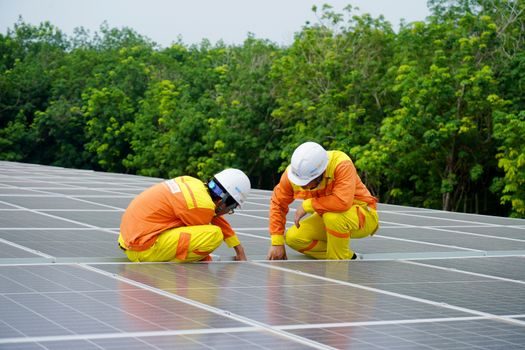
For utility-scale developers, the 2026 shortage primarily hits DCS-style supervisory control and DC power supply build-out, because every MW-class BESS site needs matched auxiliary cabinets, not just the cells. [S1]
For C&I buyers in the 50–500 kWh range, the binding constraint is industrial UPS and rack-mount cabinet lead-time, since they often share the same LFP cell allocation tier as small data-centre UPS builds. For residential integrators under 50 kWh, the storage rack and wall-mount energy meter lead-times are usually the gating item, not the cells themselves — a useful triage rule when sourcing. Engineers who pre-specify all three — cells, BMS firmware, and the switching power supply inside the PCS skid — can re-quote quickly when allocation opens; those who spec only kWh end up waiting.
Decision Matrix: How Main Storage Form Factors Compare in 2026
Across the publicly cataloged options, four form factors dominate the 2026 buy: PowerWall (5–15 kWh, single-phase residential), Power Cube / stacked batteries (20–60 kWh, three-phase C&I), rack-mount cabinets (50–200 kWh, container-fed C&I), and containerized BESS (1 MWh+, utility) [S3].
On four decision criteria: (1) cell lead-time is shortest for PowerWall and longest for containerized BESS because the cell allocation tier scales with batch size; (2) cabinet integration risk is highest for containerized systems where PCS + master control + HVAC are bundled, and lowest for wall-mount; (3) cycle life is set by LFP chemistry across all four, but thermal management quality diverges sharply — containerized and rack-mount typically get active liquid cooling, stacked and PowerWall usually get convection or fan-only; (4) the storage cage and seismic anchoring requirement applies primarily to rack-mount and containerized form factors, not to wall-mount, which is a hidden cost-of-installation line item often missed at RFQ stage.
Real Use Cases Showing Up in the 2025–2026 Field Data
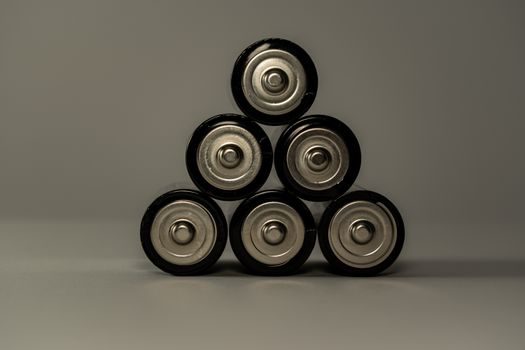
Pytes' July 2026 case log shows V5 batteries backing a veterinary clinic in Anapoima, Colombia with a hybrid inverter, where the explicit buyer goal was protecting medicine refrigeration and cutting electricity costs by up to 90% [S1].
The June 2026 Costa Rica case uses V16 batteries with Sol-Ark inverters for off-grid flower processing — a load profile dominated by daytime motor start and packaging-line surges rather than steady draw [S1]. A Puerto Rico Hato Rey residence running four V16 batteries with a 17.44 kW PV array and a Solis 16K hybrid inverter demonstrates the residential side of the same shortage, where module count (not cell chemistry) is the gating spec [S1]. For broader market context, the related coverage of Energy Storage 2026: Lithium-Ion Lead, Long-Duration Catch-Up, Concrete Spec Boundaries and the Energy Storage Supply Chain Mid-2026: Lithium, Spinel Cathode, and PV-Bundled Sourcing work threads the same lithium allocation narrative across long-duration and PV-bundled procurement.
Limits, Failure Modes, and the Engineering "Don'ts"
The first hard limit is cabinet-count allocation: 4-cabinet (32-module) commercial builds like the Mexico installation [S1] are the unit-of-sale that cell makers prefer, and sub-2-cabinet orders are getting deprioritised in 2026 allocation windows. The second is the PCS + Master Control integration lock-in: Suzhou Hengdian's catalog explicitly pairs its containerized BESS with proprietary PCS and master control blocks [S3], meaning substitution at the skid level voids the BMS warranty.
Common failure modes reported in the field (and inferred from the case-study load profiles) include inverter clipping on the 30 kW Sol-Ark units when solar peak exceeds 30 kW per inverter, BMS cell-balancing drift when cabinets from different production weeks are mixed, and thermal runaway propagation risk in stacked form factors lacking active cooling. Engineers should reject any RFQ that does not name the cell maker, the cell production date window, the BMS firmware revision, and the cabinet UL/IEC certification number — a missing field here is almost always a sign of allocation-slot reselling, not a discount.
Sourcing and Standards: What to Pin in the PO
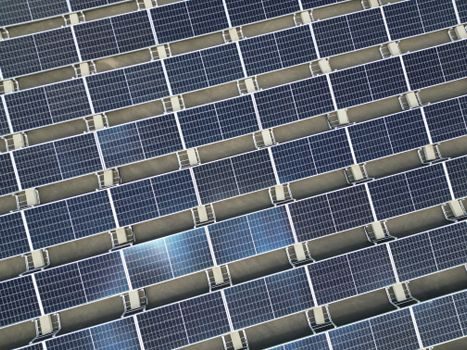
For grid-side projects, CATL's published positioning around system inertia, frequency modulation, and peak modulation on transmission corridors [S2] maps to grid-code compliance work that is non-negotiable in most ISO/RTO markets; engineers should treat those four functions as PO checkboxes, not as marketing copy. The German NEIS 2023 conference on sustainable energy supply and energy storage systems (Hamburg, Helmut Schmidt University) remains a useful reference node for European-side grid integration and DC-grid operation standards [S4], although it predates the 2026 allocation squeeze.
For module- and pack-level specs, the Suzhou Hengdian LiFePO4 catalog across PowerWall, Power Cube, stacked, rack-mount, outdoor all-in-one, and containerized form factors [S3] is a useful cross-check when sanity-checking a vendor's "LFP" claim — vendors who cannot map a specific model number to one of those six form factors are usually repackaging someone else's cells.
Track these two signals over the next two quarters: (1) whether mid-tier Chinese integrators open a second LFP cell allocation slot outside the top-two cell makers — the alternative-supply hinge for C&I projects under 1 MWh; (2) whether 4-cabinet 160 kWh commercial orders, now the standard unit on the Pytes case-study trail [S1], start shifting to 5- or 6-cabinet configurations, which would indicate cell-supply loosening at the upper end of the C&I band.