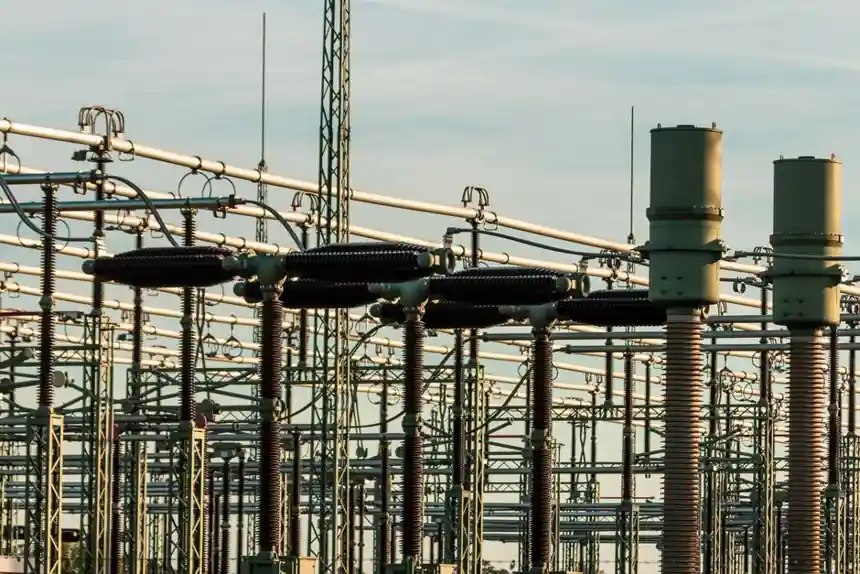
Active and passive harmonic filter suppliers in 2026 cluster into three tiers: global OEMs (ABB, Schneider Electric, Siemens, Eaton), specialised power-quality firms (TCI, Schaffner, Reinhausen with the GRIDCON portfolio), and regional manufacturers (Influx Power, Green Power, SinaVa) [S1][S3][S4][S6].
Metoree's 2026 ranking lists 32 manufacturers, headed by Green Power Co., Ltd and Staco Energy Products Co., while Spherical Insights' 2024-2035 competitive analysis names ABB, Schneider Electric, Siemens, and Eaton as the top four players by global market position [S4][S6].
Topology Split: Active vs Passive vs Hybrid
Active harmonic filters (AHF) use IGBT inverters to inject compensating current and commonly target up to the 50th harmonic order, with some Pune-built units claiming up to 97% harmonic reduction from the 2nd to 50th order [S5]. Passive filters use L-C tuned traps and detuned reactors, typically offered at 5% or 7% impedance (HGP, HSD, HG7 in TCI's line-up, HSE for ECM-style loads) [S2].
Reinhausen groups its offering under GRIDCON, supplying both passive and active filters for compliance on power networks across all voltage levels, including HVDC and MSCDN plants where clean grid integration is critical [S3]. The fundamental tradeoff is response time (active: sub-cycle, typically under 1 ms; passive: instantaneous but only at tuned frequencies) against capital cost and losses (passive units lose 1-2% of throughput, active typically 3-5% at full compensation).
Selection Criteria and THDi Targets
For 6-pulse VFD-dominated panels on 400-480 V / 60 Hz or 380-415 V / 50 Hz systems, the IEEE 519 5% TDD limit at the PCC is the dominant spec driver, pushing buyers toward either detuned passive filters with 5-7% reactors or active units sized at 30-100% of drive kVA [S2][S5]. A 50 Hz-specific build (TFR-series, Schaffner, or Reinhausen GRIDCON) is required for European and Asian installations, while TCI also offers a 50 Hz global-solutions line alongside its 60 Hz US catalog [S2].
For plant engineers mapping the decision, the harmonic filter selection guide frames the four-axis trade: topology, THDi target, dynamic behaviour, and footprint. A practical comparison passage: passive traps (lowest cost, 5% THDi typical, no self-generated heat beyond I²R losses, but resonance risk on weak grids); active filters (THDi under 5% achievable, dynamic load following, modular 50-600 A frames, 2-4x passive cost); hybrid (active on top of passive, for very high VFD density above 80% of transformer rating).
Who It Is For (and Who It Is Not)
Passive filters suit stable process loads with fixed harmonic spectra (HVAC fan VFDs, pump skid drives, oil and gas compressor packages) where 5-8% THDi is contractually acceptable; TCI's HGP and HSD lines are aimed at this segment [S2].
Active filters suit variable-torque crane and hoist lines, data-centre UPS inputs, semiconductor fabs, and welding shops with rapidly fluctuating loads, where the Influx Power-style AHF can handle harmonic orders up to 50 in a single modular chassis [S5]. For plants running a harmonic reducer on the motor shaft combined with a line-side filter, the active choice is usually the safer default because it tolerates changing load profiles without re-tuning.
Neither topology is a good fit for pure 50/60 Hz motor protection on long VFD lead cables beyond 50 m, where a sine-wave or dV/dt filter (TCI KMG, MSD, V1K) is the correct device [S2]. Specifying an active harmonic filter for a long-cable VFD installation is a category error: the symptom is a reflected-wave voltage overshoot at the motor terminals, not a current-quality problem.
Supplier Comparison by Decision Criteria
ABB, Schneider, and Siemens push broad electrification portfolios where the harmonic filter is one module inside an Active Front End drive; Eaton and TCI specialise in retrofit on existing drives; Schaffner and Reinhausen target the substation and transformer-coupled network (with GRIDCON covering EHV levels) [S3][S4][S6]. Staco Energy Products and Green Power lead the India and Asia regional tier per the Metoree 2026 ranking [S4].
Decision criteria compared across the four main options: (1) Cost per amp: passive L-C is the lowest, hybrid mid, active highest. (2) Footprint: passive is bulky due to reactor mass, active is dense at 50-100 A per 19-inch module. (3) THDi floor: passive delivers 5-8% at PCC, active drops to 3-5%, hybrid under 3%. (4) Lead time: regional Asian suppliers (SinaVa, Green Power, Influx) quote 4-6 weeks on stock modular units; global OEMs typically 10-16 weeks for built-to-order panels [S1][S4][S5][S8].
Use Cases by Industry
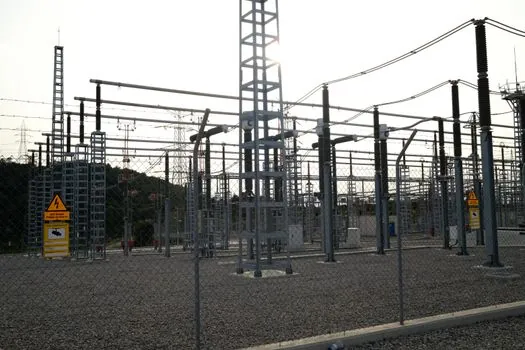
Data centres and UPS systems are the single largest growing segment for active filters, driven by the high inrush of double-conversion UPS rectifiers and the strict IEEE 519 5% TDD contract terms now standard in hyperscaler leases [S5]. Reinhausen positions MSCDN and HVDC projects as grid-side filter applications, with examples including a 1,100 kV HVDC line in China and clean-power-grid high-frequency filter retrofits [S3].
On the process side, oil and gas compressor packages, water/wastewater lift stations, HVACR chiller rooms, and irrigation pump panels dominate the passive-filter demand, with TCI's HGP, HSD, and HGL (low-capacitance) lines specifically mapped to these industries [S2]. For construction machinery and equipment and welding-line applications, dynamic response of the AHF (compensation within one cycle, less than 5% THDv at the PCC) is the decisive spec [S5].
Failure Modes and Sourcing Constraints
The most common passive-filter failure is capacitor de-tuning from grid impedance drift, leading to parallel-resonance at the 5th or 7th harmonic and amplification of background distortion rather than attenuation; a properly chosen 7% detuned reactor instead of 5.67% avoids the worst resonance band on 50 Hz systems. Active filters fail mainly on IGBT module wear, DC-link capacitor aging, and CT-clipping issues, with typical service life 8-10 years before a lamp fitting or indicator module swap. Sourcing constraint in 2026: large IGBT modules (3.3 kV and 6.5 kV class) remain tight, pushing active-filter lead times out 6-10 weeks on higher-voltage models. [S2]
Standards Governing the Spec
For equipment used in explosive atmospheres, ATEX 2014/34/EU and IEC 60079 series apply when harmonic filter cabinets are installed in classified zones. EN 50545-1 covers active harmonic filter EMC immunity. Buyers specifying on a 50 Hz basis must confirm the supplier offers a 50 Hz variant (TCI global line, Schaffner FN series, Reinhausen GRIDCON all qualify) rather than a re-rated 60 Hz unit [S2][S3].
For lighting equipment and electric lamps plant projects co-located with harmonic filter rooms, the same 5% TDD target applies because LED drivers with active PFC are themselves nonlinear loads that can be misread as filter-side improvements.
Trackable signals to watch next: (1) any IEC 61000-3-12 amendment that tightens 2nd-to-50th order limits, and (2) the next quarterly update to Spherical Insights' competitive ranking, which currently places ABB, Schneider, Siemens, and Eaton in the top four [S6]. For plant specs that pair a reactive power compensation panel with an active filter, request factory witness test data showing both 5% THDi and 0.95 leading-to-unity PF under simultaneous load steps.