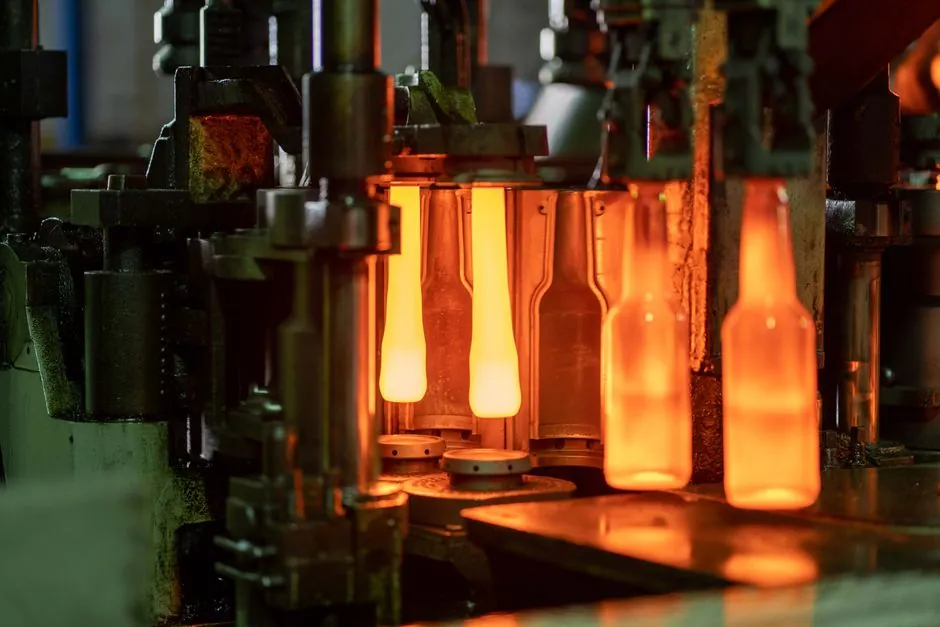
Heat pump manufacturing equipment breaks into four functional work cells: copper-brazing furnaces or induction brazers for heat-exchanger headers, vacuum evacuation and refrigerant-charging stations, leak-test and NDT rigs, and final electrical-safety plus performance test benches. Across the active Chinese OEM base, air-source and water-source heat-pump units are commonly rated from 30°C up to 120°C process-side (scroll-type air-cooled units, per Xiecheng's published product line) [S6].
Who builds this kit? Foshan Clitech Air-Conditioning Equipment Co., Ltd. (registered 2010, ISO 9001 + ISO 14001, Foshan), Guangdong Tili Refrigeration Equipment Co., Ltd. (registered 2007, ISO 9001, Guangzhou), Guangzhou Jinlun Electric Equipment Co., Ltd. (registered 2010, ISO 9001, Guangzhou), and an OEM/ODM bath-heat-pump factory in Guangdong all sit on the Made-in-China supplier directory and list heat-pump manufacturing as a primary business [S1][S3][S5][S7].
Core work cells and what they actually do
A heat pump is a refrigeration cycle in a box, so the manufacturing line mirrors a domestic refrigerator line with higher-pressure brazed heat exchangers and larger scroll or screw compressors. The four work cells map directly to: (1) heat-exchanger production (tube + fin coil, brazed plate heat exchanger, or shell-and-coil water-side heat exchanger); (2) compressor and refrigerant-circuit assembly including copper-brazed header joints; (3) vacuum drying, refrigerant charging with an A2L or A1 refrigerant, and NDT leak testing; (4) final assembly plus performance and electrical-safety test [S1][S6].
For industrial hot-water and process-heat units, scroll-type air-cooled heat-pump modules specified 30–120°C now coexist with traditional hot-water-only and swimming-pool units on shared lines, so a single factory in Guangdong can run air-source, water-source, and geothermal variants with the same copper-brazing fixture set and a swappable control board at end-of-line [S6][S7]. Compressor selection is the major variant point, and Guangdong Tili explicitly lists compressors alongside heat pumps and heat-pump solutions, indicating integrated compressor manufacturing or sourcing as part of the BOM [S3].
Selection criteria: match the line to the product mix
Specifying a greenfield heat-pump line starts with the product matrix: domestic hot water only (DHW, typically 55–65°C), swimming pool (28–32°C), space heating (35–55°C radiator, up to 75°C for older European radiators), or industrial process (up to 120°C in the Xiecheng range) [S6]. The higher the leaving-water temperature, the higher the compressor discharge pressure and the tighter the brazing and leak-test requirements on the heat-exchanger cell.
Three decision criteria are non-negotiable for industrial-grade kit. First, certification: ISO 9001 is the baseline, ISO 14001 is now common in Foshan (Clitech holds both), and IEC/EN 60335-2-40 governs the safety of electrical heat pumps with refrigerant charge above the A2L lower flammability limit; the line test bench must run the 60335-2-40 production-line dielectric and earth-continuity checks [S1]. Second, refrigerant compatibility: A2L mildly flammable refrigerants (R32, R454C) require leak-test sensitivity below 5 g/yr per joint per IEC 60335-2-40, while legacy R410A systems use F-Gas-grade leak checks at 10 g/yr or looser. Third, capacity: a typical Chinese OEM listed in the directory operates 3–5 heat-pump product lines with overlapping core components, so a single copper-brazing fixture serves multiple SKUs [S1][S3][S5].
A useful comparison: a low-cost DHW-only line uses a single-vacuum pump (10–20 m³/h), a 5 g/yr helium-snoop leak test, and a 30 kW end-of-line performance rig. An industrial 120°C process-heat line adds a higher-pressure brazed plate heat exchanger fixture, a 60+ m³/h two-stage vacuum pump to reach the deeper vacuum needed for low-pressure-side moisture, a mass-spectrometer helium leak test rated below 1×10⁻⁹ Pa·m³/s, and a high-temperature water-loop performance test bench rated to 120°C flow and return [S6]. Bosch's published 100 million euro heat-pump investment focuses on this kind of decarbonised heating, which in practice means moving European spec from R410A legacy platforms to R290 and R454C and tightening the production leak test by roughly an order of magnitude [S4].
Who this equipment is for, and who it isn't
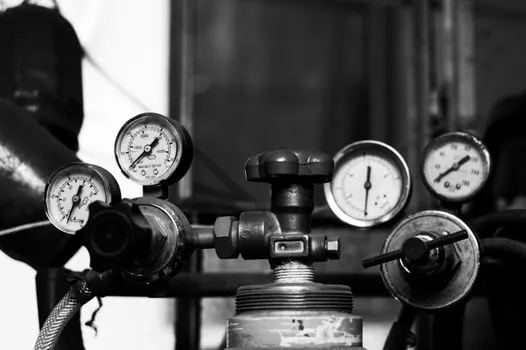
Heat pump manufacturing equipment is built for HVAC OEMs, refrigeration brands expanding into hot-water and process heat, white-goods manufacturers adding heat-pump water heaters, and industrial process-heat integrators replacing gas boilers. Guangdong Jinlun lists air-source, water-source, and ground-source heat pumps plus heat-pump water heaters and pool units, which is the typical mix for a domestic-Heating OEM serving both residential and light-commercial customers [S5].
It is not the right kit for: (a) chiller-only plants that never cross 0°C evaporator operation, since a heat pump line needs reverse-cycle valves, defrost controls, and a cold-weather performance test step; (b) district-cooling-only operators who do not need leaving-water temperatures above 50°C; (c) very small batch producers (under 5,000 units/year) where shared commercial vacuum pumps and NDT rigs from an existing refrigeration line can cover leak testing without capital expenditure on dedicated heat-pump gear [S6][S7].
Standards and certification anchors
Three standards govern most of the spec. ISO 9001 is the universal quality-system baseline; Clitech, Tili, and Jinlun all list it on their directory entries, and Clitech adds ISO 14001 for environmental management [S1][S3][S5]. The product safety standard for the appliance itself is IEC 60335-2-40, which mandates the refrigerant-charge limits, flammability test methods, and the production-line electrical tests referenced above. For the brazed heat exchangers, ASME BPVC Section IX is the conventional qualification for the welding/brazing procedure and operator performance, regardless of where the factory is located; EN 13134 is the European equivalent referenced in some EU-shipping bills of material [S1].
For end-of-line performance verification, EN 14511 defines the COP and heating-capacity test conditions (A7/W35, A2/W35, A-7/W35) used to print the nameplate rating. A factory that exports to Europe will run EN 14511-rated calorimeter rooms in addition to the standard 35°C/55°C test points, while a domestic-China line may only need GB/T 21362 for the equivalent test method [S6]. On the process side, IEC 60079-10-1 and the related area-classification rules apply only to refrigerant charge above the A2L thresholds in classified hazardous areas, not to standard domestic heat pumps installed in plant rooms [S1].
Failure modes and common line-side defects
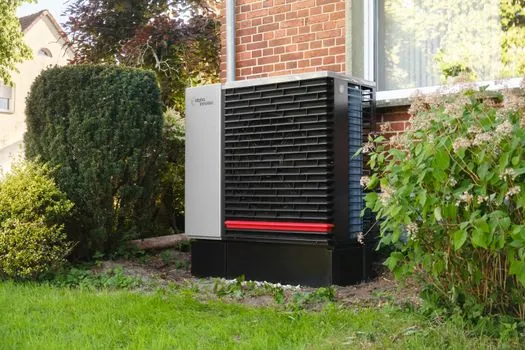
The four most common field defects in newly manufactured heat pumps all trace back to specific work cells. Insufficient vacuum (above 200 microns after pump-down) is the leading cause of compressor burn-out, and it is fixed at the vacuum station by adding a 60+ m³/h two-stage rotary vane pump plus a nitrogen purge cycle before the second evacuation [S6]. Brazed-joint leaks at the suction/discharge header account for the majority of warranty compressor replacements in the first two years, and they trace to flux residue or inadequate purge-gas coverage during induction brazing. A third class, water-side fouling in brazed plate heat exchangers, traces to insufficient leak-test sensitivity, and a fourth, control-board miswiring in reverse-cycle units, is caught only by a 30-minute reverse-cycle run-in at the end-of-line bench [S1][S6].
For the leak-test cell specifically, the operational rule of thumb used by Guangdong-based OEMs is helium-snoop at 5 g/yr sensitivity for residential R32 units, and a full helium vacuum-spray leak test for industrial R454C units that ship with charge above 1.5 kg. Under that threshold, sniffer-only is fine and a mass spectrometer is unnecessary capital [S1][S7].
Capital intensity and a trackable 2026 signal
A new heat pump line at Chinese-OEM scale (10,000–50,000 units/year) is typically a 30–60 million CNY investment including the copper-brazing fixtures, vacuum and charging station, leak-test rig, and end-of-line test rooms, with Bosch's published 100 million euro commitment to heat pumps sitting at the high end of multi-site OEM expansion across its European footprint [S4]. For process-engineers sizing a single site, the per-line equipment budget commonly lands in the 1.5–3 million USD range once the building shell and chiller test loop are excluded [S1][S5][S6].
Two trackable signals to watch from August 2026 onward: (1) wider A2L (R32, R454C, R290) rollouts tightening the leak-test spec from 10 g/yr toward 5 g/yr on residential production lines, and (2) Bosch's R290 platform scaling in Europe, which will pull along Chinese contract manufacturers already running R290-compatible brazing and vacuum cells for export to Bosch-tier OEMs [S4]. Buyers who are sizing equipment in 2026 should be aware that heat-pump manufacturing equipment categories and process instrumentation for refrigerant charging are the two spec pages most often referenced during line acceptance testing; related NDT and leak-test guidance is in our NDT equipment reference. Buyers also looking at adjacent lines should compare notes with OEM/ODM heat-pump production and peristaltic pump selection, where the same spec-first approach applies.
For the relevant spec sheets and selection criteria, see additive manufacturing material.