Peristaltic pump selection is driven by five binding specs: tubing inner diameter (ID), flow range, number of channels, drive interface, and pressure rating, with the fluid touching only the tubing so chemistry compatibility is set by elastomer choice [S3][S6].
Across the catalog range surveyed, flow spans 1.5 microliters per minute for micro-bore 0.5 mm ID tubing on a 0.1-100 rpm drive [S8] up to 1100 mL/min per channel on 6.4 mm ID tubing [S1], and pressure tops out at about 16 bar for reinforced industrial hose per the Engineering360 classification [S3].
Tubing ID and Flow Range Form the First Decision Gate
Tubing ID sets flow: an L100-1FS drive at 0.1-100 rpm with 0.5 mm ID x 0.8 mm wall tubing delivers roughly 1.5 microliters per minute minimum to 1.5 mL/min maximum, with 1.5 microliters per minute resolution [S8].
Harvard Apparatus Pump 66 uses 1.6 mm and 3.2 mm ID tubing at 0.01-210 mL/min per channel, while the larger Pump 77 uses 3.2 mm and 6.4 mm ID tubing at 0.01-750 mL/min per channel, both at 3-roller rotary architecture with plus or minus 1% accuracy and reproducibility [S1]. MPII mini pumps cover 0.38-2.4 mm ID at 0.02-1100 mL/min per channel, depending on the model 720 pump head pairing [S1].
Channel Count, Roller Count, and Pulsation Trade-Off
Channel count and roller count set smoothness: the MPII supports 1-2 channels with 4 rollers, the 66 and 77 are single-channel 3-roller, and Cole-Parmer L/S precision drives support multi-channel gentle-pump-head configurations [S1][S4].
More rollers reduce pulsation and provide a smoother flow, while more channels let you run parallel streams from one drive, which is the lever for high-throughput screening or multi-analyte metering [S3]. Cole-Parmer L/S precision drives list plus or minus 0.25% speed regulation accuracy with 1 RPM resolution (0.1 RPM across 1-100 RPM), ETL, cETL, CE, and RoHS approvals, IP33 rating, and 0-40 degrees Celsius operating range [S4].
Drive Interface: RS-232, TTL, Analog, and Field Power
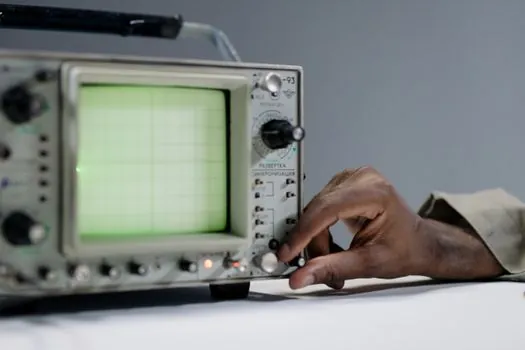
Drive interface separates lab automation from field deployment: Harvard Pump 66 and Pump 77 expose RS-232C chained dual bi-directional ports, TTL on a 9-pin connector, a 5-digit display with 10 LED indicators, and selectable baud rates of 300, 600, 1200, 2400, with step rates from 27.3 seconds per step down to 416.7 microseconds per step [S1].
Geotech GeoPump Series I and Series II target field work: 12-18V DC at 70 watts or 90-260V AC at 47-65 Hz, AC cord 8 feet (2.4 m) and DC cord 15 feet (4.6 m), Series I 60-350 rpm stepless, Series II station 1 at 30-300 rpm and station 2 at 60-600 rpm, with reversible flow for back-flushing and 29 feet (8.8 m) suction lift at sea level [S2]. The Series II doubles the pumping stations and is piggybackable for multi-station sampling, a common configuration for low-flow purge-and-sample groundwater work [S2].
Pressure Class: Lab Grade versus Industrial Grade Hose
Pressure class maps to tubing construction: lab-grade peristaltic pumps with non-reinforced casings and roller compression are limited to low-pressure duties like IV and chemical metering, while high-pressure industrial peristaltic pumps use reinforced tubes rated up to 16 bar and lubricant-lined casings for aggressive sewage and slurry service [S3].
Back-pressure on Harvard Pump 66 and 77 is capped at 30 psi (about 2 bar) maximum, consistent with lab-grade hose design [S1]. For a sense of contrast, diaphragm pumps typically reach higher pressures than peristaltic at the cost of valves and diaphragms that contact the fluid, and gear pumps trade lower pulsation for tighter clearance on abrasive slurries; for a side-by-side on positive-displacement variants, the diaphragm pump reference covers the pressure and isolation trade-off directly, while the gear pump entry covers the pulsation and viscosity trade-off.
Tubing Material Sets Chemical Compatibility, Not the Pump

Tubing material, not the pump mechanism, sets chemical compatibility: silicone, PVC, and specialized elastomers each cover a different chemistry window, and tubing durability and flexibility control pump performance and service life [S6].
Peristaltic flow is typically pulsatile, can be smoothed with more rollers in the pumping head, and the tube isolates the fluid from the rest of the pump, eliminating contamination risk and making peristaltic the default for aggressive, corrosive, viscous, and abrasive media [S3]. As a general rule of thumb, schedule tubing replacement before efficiency decays and replace the hose routinely because hose wear is the dominant failure mode; this is also why peristaltic pumps are widely used in shear-sensitive fluid and bioprocess duty [S3][S7].
Who Peristaltic Fits, and Who It Does Not
Peristaltic fits lab bioprocess, pharmaceutical metering, food and cosmetic shear-sensitive dosing, environmental low-flow groundwater sampling, and chemical metering where isolation and contamination control are mandatory [S2][S3][S7].
Peristaltic does not fit high-pressure hydraulics (use a hydraulic pump or centrifugal pump instead), high-flow clean-water circulation where a centrifugal dominates on cost per liter, or precise high-pressure chemical injection where a metering pump is the conventional pick. For a broader look at the positive-displacement family, the peristaltic pump encyclopedia entry is the anchor reference, and the centrifugal pump entry covers the high-flow end of the trade-off.
Spec Comparison: Three Realistic Configurations
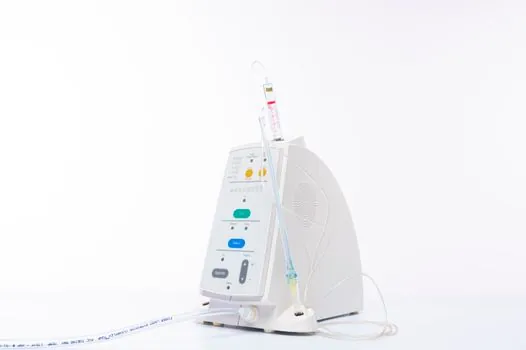
Three configurations line up against the main selection criteria in the table below; numbers are taken directly from the cited datasheets, not estimated. [S4]
Configuration A (lab micro-fluidics): L100-1FS drive, 0.1-100 rpm, 0.5 mm ID x 0.8 mm wall tubing, 1.5 microliters per minute to 1.5 mL/min flow, 1 channel, RS-232 control, plus or minus 1% accuracy class [S8]. Configuration B (bench bioprocess): Cole-Parmer L/S precision drive, plus or minus 0.25% speed regulation, 0-40 degrees Celsius operation, IP33, ETL/cETL/CE/RoHS, multi-channel gentle-pump-head, 9.2 kg shipping weight [S4]. Configuration C (field groundwater): Geotech GeoPump Series II, 12-18V DC at 70 watts or 90-260V AC at 47-65 Hz, station 1 at 30-300 rpm and station 2 at 60-600 rpm, 29 ft (8.8 m) suction lift, reversible flow, 1-year warranty, cold-rolled-steel rotor [S2]. On the duty axis, A wins on minimum flow and resolution, B wins on regulation accuracy and compliance approvals for lab automation, and C wins on field portability, dual-station throughput, and back-flush reversibility.
Failure Modes, Maintenance, and Trackable Signals
The dominant failure mode is tubing wear, which decreases efficiency over time and can cause leaks, and intermittent or pulsed flow at low roller counts is a design property, not a fault, so smooth-flow applications should specify higher roller counts [S3].
Track three signals on a new install: tubing replacement interval versus hours run (vendor-stated hours are the baseline), flow drift at a fixed rpm across the first 100 hours, and back-pressure delta at the rated maximum. For broader spec-driven selection logic that also touches SCADA at remote pump stations, the SCADA software certification checklist maps the controls-side requirements that pair with this hardware pick.