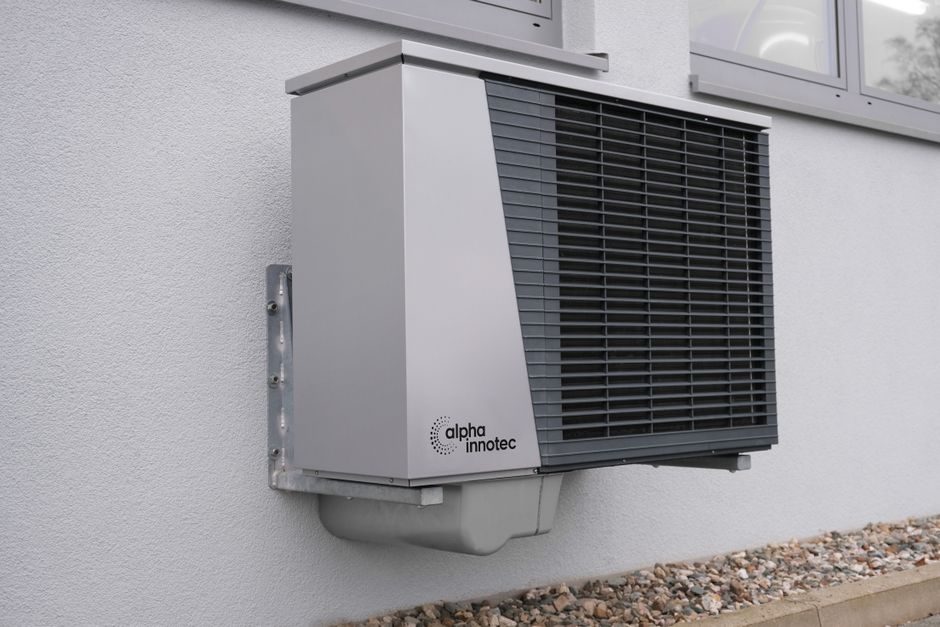
A heat pump is a vapour-compression refrigeration cycle run in reverse, and modern residential and light-commercial units routinely deliver a coefficient of performance (COP) of about 3 — roughly 3 kWh of heat per 1 kWh of electricity [S2]. The same thermodynamic loop also drives the heat-treatment furnace family on the industrial side, which is why the compressor-refrigerant-expansion architecture is now standardised across HVAC and process heating.
Production volumes are concentrated in China, where a national Action Plan issued in early 2025 named heat pumps as a strategic clean-heating technology for the first time at central-government level [S5]. Manufacturing output covers three source variants — air-source (ASHP), water-source (WSHP) and ground-source (GSHP) — each with its own evaporator geometry but sharing the same compressor-condenser-expansion-valve backbone.
Vapour-Compression Cycle and the Four Hardware Blocks
The IEA-ETSAP and IRENA Technology Brief E12 (January 2013) defines a heat pump as a thermodynamic refrigeration device that uses a working fluid and electrical (or thermal) input to upgrade low-temperature heat to useful temperature [S6]. The cycle has four building blocks: evaporator (collects heat from air/water/ground at low temperature), compressor (raises refrigerant pressure and temperature), condenser (rejects heat to the building or DHW loop), and expansion valve (drops pressure back to evaporator conditions). A reversing valve lets the same hardware switch between heating and cooling modes, which is why engineers treat a heat pump as a reversible air conditioner [S1].
For residential systems the compressor is almost always a hermetic scroll type; inverter DC drive varies capacity between roughly 20 % and 100 % of nameplate to match building load, replacing the on/off staging of legacy fixed-speed units [S6]. The reversing valve, accumulator and liquid-line filter-drier are brazed into a single refrigerant circuit that is leak-tested at the end of the production line, typically to a 3 g/yr sensitivity on R290 units.
Refrigerant Choices: R290, R32 and the GWP Pivot
Chinese OEM lines such as Kolant now run R290 (propane, GWP ≈ 3) and R32 (GWP ≈ 675) refrigerant platforms in parallel, with R290 dominating the European export mix where F-Gas regulation has tightened since 2024 [S8]. R290's flammability (A3 classification) forces a 150 g refrigerant charge cap on factory-sealed monobloc units sold in the EU, which constrains the evaporator heat-exchanger area and has driven a wave of redesigned fin-and-tube coils. R32 sits in the A2L mildly-flammable band and allows larger charge sizes, so it remains the default for split-system ASHPs above 9 kW.
China's 2025 Action Plan is silent on which low-GWP refrigerant families should be prioritised, leaving manufacturers to maintain dual platforms and retool depending on export destination [S5]. Process engineers reading the policy should track the A2L charge-limit roadmap, not just the headline subsidy numbers, because it sets the upper bound on single-unit capacity.
Source Variants: Air, Water, Ground and EVI Low-Ambient
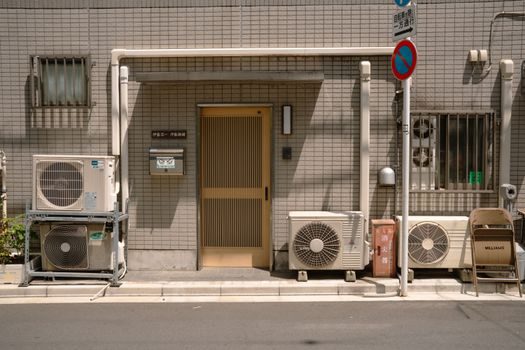
Air-source units are the volume leader — Samsung Climate Solutions, Stiebel Eltron and Chinese suppliers Hetapro and Outes all anchor their commercial ranges on ASHPs for residential and light-commercial loads [S3][S4][S7][S9]. The defining production challenge is frosting: at outdoor temperatures below about 0 °C, moisture in the airstream freezes on the evaporator and the unit must periodically reverse to defrost, which costs COP.
Enhanced Vapour Injection (EVI) is the dominant 2024-2026 lever to push heating operation down. Kolant's EVI-equipped ASHPs claim continuous heating at -35 °C outdoor temperature, versus a typical -15 °C to -20 °C limit on first-generation inverter units [S8]. EVI adds a mid-stage vapor injection port to the scroll compressor, a second expansion device and a plate heat exchanger; production-wise it adds two brazed joints and a refrigerant line, which is why EVI units carry a 10-15 % price premium over single-stage designs.
Water-source and ground-source (geothermal) units use a plate or shell-and-plate heat exchanger as the source-side component, fed either from a ground loop (typically a 32 mm or 40 mm HDPE pipe in a vertical borehole or horizontal slinky) or a raw-water well. Stiebel Eltron's product range includes dedicated geothermal and water-source models for new-build and retrofit European housing [S7]. Because the source temperature is more stable than ambient air, WSHP/GSHP units achieve higher seasonal COP, but installation cost is dominated by the ground loop rather than the factory-built heat pump module.
Specification Levers Procurement Should Track in 2026
Four numbers do most of the work when comparing OEM data sheets. First, heating capacity at A7/W35 (7 °C outdoor, 35 °C flow) — the EU standard rating point — typically 6-16 kW for residential monoblocs. Second, heating capacity at A-7/W35, the cold-climate rating, where EVI units can hold 70-80 % of their A7/W35 output [S8]. Third, SCOP (seasonal COP) for the EU climate zone; values above 4.3 unlock the A+++ energy label class. Fourth, sound power level, where premium residential monoblocs now hit 35-40 dB(A) at 1 m thanks to inverter-driven fans and rubber-isolated compressor cradles.
Side-by-side on selection criteria, the three source variants line up as follows. ASHP: lowest installed cost (typically £8,000-£14,000 in the UK after the £7,500 Boiler Upgrade Scheme grant) [S2], simplest siting, but lowest SCOP in cold climates. GSHP: highest SCOP (often 4.5-5.0), stable year-round source temperature, but highest installed cost dominated by borehole drilling. WSHP (raw water or lake loop): highest steady-state efficiency where a clean water source is available, but water-quality filtration adds a maintenance line item.
Materials and standards to pin on the datasheet: EN 14511 for performance rating, EN 14825 for seasonal efficiency, EN 12102 for sound, and IEC 60335-2-40 for electrical safety of refrigerant circuits. ATEX zoning only enters the picture for industrial heat detector-equipped plant rooms where a refrigerant leak could reach a flammable atmosphere — residential ASHPs sit outside ATEX scope.
Production Process Map: From Coil to Crated Unit
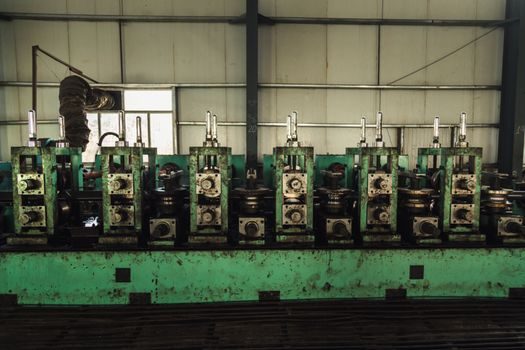
A residential ASHP line runs in this order: copper tube expansion and fin stamping for the outdoor coil, brazing of the refrigerant manifold in a nitrogen-purged tunnel furnace, compressor and inverter board mounting on a sub-base, vacuum dehydration to roughly 50 Pa absolute for at least 30 minutes, refrigerant charging (R290 monoblocs are charged before leaving the line; R32 splits are charged at site), and a final run-in test where the unit cycles between -10 °C and +45 °C ambient to verify EVI valve operation and defrost logic [S8]. Hetapro and similar Tier-1 Chinese suppliers publish production capacity in the tens of thousands of units per year, with Outes claiming 11 consecutive years as a leading heat-pump air-conditioner brand in China [S4][S9].
For context on the broader industrial production landscape, the stator-rotor-magnet process map covered in electric motor production technology is the upstream feeder for the inverter compressor and fan motors in every modern heat pump — a useful cross-reference when auditing compressor supply chains.
Failure Modes and Maintenance Windows
Four failure modes dominate field service data. Compressor failure from liquid slugging after a defrost cycle (mitigated by accumulator sizing and crankcase heaters). Water-side fouling in GSHP loops when fluid chemistry is not controlled (prevented by glycol mix and annual filtration checks). Sensor drift on the source-side temperature sensor, which makes the defrost cycle misfire and erodes SCOP by 10-20 % in cold weather. [S1]
Stiebel Eltron's domestic range is built in German production facilities designed for serviceability, with modular heat-pump modules that can be swapped in a single site visit [S7] — a design philosophy worth specifying when total cost of ownership, not first cost, drives the procurement decision.
2026 Signals Worth Tracking
Watch the China State Council and the European Commission DG CLIMA feeds; both have set Q3-Q4 2026 milestone dates historically, though specific revision dates are not confirmed in the current research window.
For component-level specifications, see centrifugal pump.