
Heat pumps are marketed as low-material technologies, and the JRC assessment for the European Union confirms they require limited critical raw materials and few components that cannot be manufactured domestically [S9]. The British Geological Survey foresight study (Zils, Einarsson and Hopkinson, 2024) nonetheless flags that heat pump technology will require undisrupted supply of raw and refined materials, with many of these materials sourced from jurisdictions carrying poor ESG ratings [S3].
The dominant bill-of-materials load sits in copper tubing for the heat exchanger coil, aluminium for fins and casings, carbon and stainless steel for the compressor shell, and engineered plastics or elastomers for sealing. Procurement teams building a sourcing playbook for 2026 should weight the refrigerant decision and the rare-earth magnet question before chasing headline "critical mineral" lists.
Core metals: copper, aluminium, steel volume benchmarks
Copper is the single highest-mass metal in most residential and light-commercial heat pump units, and it is also the most volatile line item on a sourcing dashboard. Aluminium follows for fin stacks and outdoor unit chassis, where weight reduction and corrosion resistance justify a cost premium over galvanised steel for premium units. [S4]
Steel and stainless still dominate the compressor scroll or scroll-housing assembly and the mounting baseplate, while copper-nickel or stainless brazed plate heat exchangers appear in commercial and high-temperature industrial models. Engineers weighing scrap-content or recycled-content claims should be aware that copper alloy 122, C110 and C122 are typical phosphorous-deoxidised choices for refrigerant lines, with soldered joint compatibility to ASME B16.22 or local equivalents the practical procurement constraint. A plate heat exchanger selection discussion typically quantifies the metal-volume trade-off between brazed-plate and shell-and-coil architectures on a kg per kW basis.
Refrigerants: the highest-leverage material decision
The refrigerant is by mass a tiny share of the bill of materials, yet it is the highest-leverage decision in any 2026 sourcing strategy because of regulatory phase-down timing and OEM platform alignment. R-410A has been the residential incumbent for years but sits in the high-GWP band targeted for accelerated phase-down in the EU F-Gas Regulation and in the US AIM Act, pushing air-source and ground-source product lines toward R-32 and R-454B on the medium-GWP side, and toward propane (R-290) and CO2 (R-744) on the low-GWP side. [S4]
Industrial and high-temperature process heat pumps, which the Renewable Thermal Collaborative's screening tool targets for applications above 100 degC [S5], increasingly spec R-744 transcritical loops or R-1234ze for waste-heat recovery where flammability class A2L constraints govern. Procurement should track not only GWP but also ASHRAE 34 safety classification (A1, A2L, A3), IEC 60335-2-40 charge limits for A2L and A3 refrigerants in occupied spaces, and the OEM's specific platform release roadmap before locking a multi-year supply contract.
Magnets, electronics and the rare-earth question
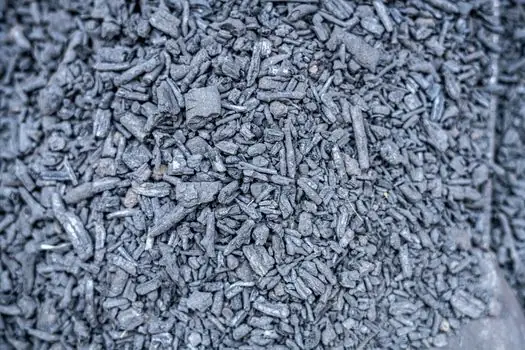
Variable-speed compressors use permanent-magnet motors, and neodymium-iron-boron (NdFeB) magnet content is the rare-earth line item most buyers ask about. The JRC report finds that on the system level, heat pumps require limited critical raw materials relative to other clean-energy technologies [S9]; the British Geological Survey report qualifies this, noting that permanent magnets in inverter compressors do still link the supply chain to neodymium and dysprosium [S3].
Practical mitigation paths for 2026 procurement are ferrite-assisted synchronous reluctance motors, magnet-free switched-reluctance designs, and bonded NdFeB with reduced heavy-rare-earth content. Buyers specifying inverter-driven units should request the magnet type and heavy-rare-earth (Dy, Tb) loading per kg of magnet on the motor data sheet; this single line is the most actionable ESG signal in the bill of materials and a strong indicator of price exposure to Chinese export controls.
ESG jurisdiction mapping and supply-chain traceability
The BGS foresight study explicitly warns that the raw and refined materials required for heat pump technology are often sourced from jurisdictions with poor ESG performance, creating reputational and continuity-of-supply risk for European and North American OEMs [S3]. Copper concentrate, refined copper, rare-earth oxides and the high-purity nickel used in brazed-plate exchangers are the most jurisdictionally concentrated lines.
For a defensible 2026 sourcing policy, procurement should require mill test certificates (EN 10204 3.1) for copper and steel lots, conflict-mineral declarations consistent with OECD Due Diligence Guidance, and disclosure of refinery or smelter origin through the Copper Mark, the Nickel Institute's ESG reporting or the RMI mineral disclosure registry. Where industrial heat pumps share supply chains with battery and EV manufacturing, the same traceability playbook discussed in BESS supply chain traceability coverage applies and is worth lifting wholesale rather than reinventing.
Comparison of leading material decisions for 2026 procurement

Four material decisions dominate the procurement matrix for 2026 builds. On copper for the refrigerant coil, ETP copper C110 and DHP copper C122 both work, with C122 preferred for brazed joints and the recycled-content share on offer typically 30-50 percent for mill-certified lots. On aluminium for the outdoor coil and chassis, AA3003 and AA5052 are common, with AA3003 dominating fin stock and AA5052 for welded chassis. On refrigerant, R-32, R-454B and R-290 are the three platform choices, with R-32 lowest cost in 2026, R-454B the US AIM Act-compatible middle path, and R-290 the lowest GWP but constrained by IEC 60335-2-40 charge limits. On magnets, bonded NdFeB, sintered NdFeB, and ferrite-assisted synchronous reluctance (FASR) split the field, with FASR carrying the lowest ESG-jurisdiction risk and the highest efficiency penalty in the 5-10 percent range at part load. [S5]
Against cost, refrigerant and magnet choice move the unit price most; against ESG and supply continuity, the same two lines also dominate; against thermal performance, copper volume and aluminium fin geometry dominate; against recyclability, the steel-copper mix scores higher than any plastic-rich alternative. Sourcing teams that anchor contracts on these four decisions, rather than on a generic "critical minerals" list, will track real risk better.
Quality, standards and installation-side material exposure
Installation, not the factory, drives a meaningful slice of field material demand: ground-source heat pump loops add high-density polyethylene (HDPE) or cross-linked polyethylene (PEXa) ground loop pipe, propylene glycol heat-transfer fluid, and stainless or thermoplastically lined header components [S1]. The CEE air-source installation guidance stresses that duct retrofit decisions, weatherization upgrades and distribution-system selection each carry their own material streams (sealing, insulation, new ductwork) that should be planned against the heat pump's delivery lead time [S4].
For residential air-source units, the Natural Resources Canada overview identifies two common thermal sources (outdoor air and exhaust air) and two common sinks (indoor air and a hydronic distribution) that together determine the bulk of the install-side material kit [S6]. Industrial users planning a heat pump project should also review the advanced material selection criteria when specifying high-temperature heat exchangers, since alloys such as 254 SMO or titanium-clad plates are now routinely offered for aggressive process streams and dramatically change the cost-per-kW of installed capacity.
Watch-list for the next procurement cycle
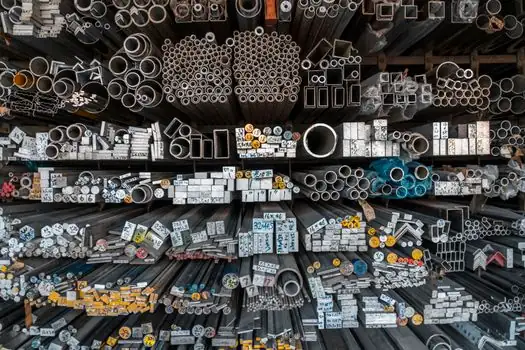
A further reference point for spec-driven material selection across adjacent process equipment is the industrial heat treatment furnace material and alloy discussion, which overlaps on nickel, stainless and refractory sourcing for high-temperature process heat pumps. [S3]