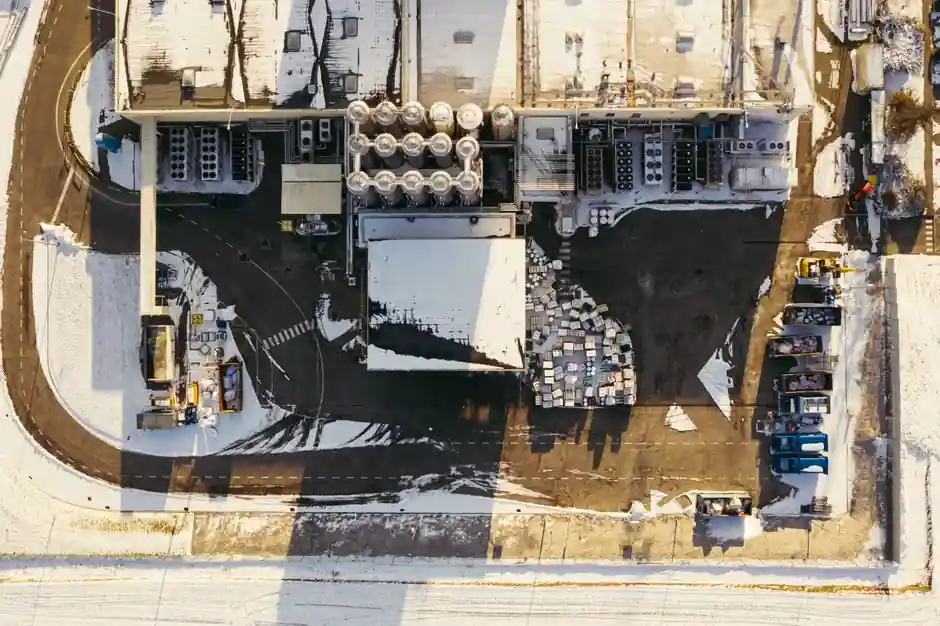
A battery energy storage system reaches a project site through a five-stage chain: upstream raw materials, cell production, module and rack assembly, system integration, then logistics and commissioning, with lithium-ion dominant and sodium-ion emerging as a single-facility US pilot in 2024 [S2][S4].
Each stage hands off to the next, and the weakest link in 2026 is not cell price, which fell materially through 2024-2025, but audit-grade traceability of active material, firmware and sub-tier suppliers across borders [S1][S3].
Stage 1: Raw Materials and Active Materials
The chain starts in the mine: lithium (spodumene, brine), nickel, cobalt, manganese, graphite, plus copper and aluminium foils, electrolyte salts (LiPF6), separators, and binder solvents. Lithium carbonate equivalent (LCE) concentrate flows from Australia, Chile, Argentina, and increasingly from African hard-rock and Chinese brine projects into converters in China and Korea that produce battery-grade lithium hydroxide and lithium carbonate [S3][S10].
Downstream of converters come cathode active material (CAM) plants, typically NMC (nickel-manganese-cobalt) or LFP (lithium iron phosphate) for stationary storage, and anode plants producing synthetic or natural graphite. LFP has become the default chemistry for grid-scale BESS because of thermal stability, longer cycle life at high state-of-charge, and exemption from cobalt and nickel price shocks, at the cost of lower volumetric energy density than NMC [S2][S6].
Critical risk in this stage is concentration: a handful of processing hubs handle most battery-grade lithium refining, and graphite anode active material is dominated by Chinese production. A detailed walk-through of where vanadium, lithium and graphite flows sit today is in this vanadium and battery-plays roundup and in this lithium cell price and GWh outlook.
Stage 2: Cells, Modules and Racks
Cathode, anode, separator and electrolyte are wound or stacked into cylindrical, prismatic or pouch cells, with prismatic LFP dominating new utility-scale BESS lines. Cells are graded by capacity, internal resistance, and self-discharge before being welded, bolted or laser-welded into modules, then stacked into racks with integrated battery management system (BMS) boards, fusing, contactors and a rack-level controller [S2].
A typical 20-foot ISO-equivalent BESS container in 2026 holds between 3 MWh and 6 MWh of nameplate energy, depending on cell format and DC voltage architecture, with rack DC voltages commonly in the 1000-1500 V class so that the power conversion system can run at higher efficiency. For a closer look at the container interior, see this BESS bill-of-materials and sourcing map.
Module-to-rack yield and consistency, more than headline cell cost, is the operational variable that drives project-level LCOS today. Mismatched cells force the BMS to throttle the weakest string, so integrators increasingly specify kWh-graded, X-rayed cells with traceable cell-level test data, rather than commodity LFP [S2][S10].
Stage 3: System Integration and BOP
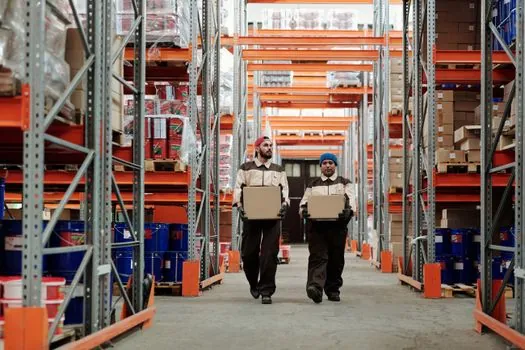
System integrators combine DC battery racks with the power conversion system (PCS, bi-directional inverter), medium-voltage transformer, switchgear, thermal management (liquid cooling for newer builds, HVAC air cooling for legacy), fire suppression (aerosol, clean agent, or water mist), and the energy management system (EMS) that controls dispatch, SOC limits, and grid services [S2][S6].
The BOP (balance of plant) and the control stack often cost more than the cells on a $/MWh basis in 2026, because enclosure, HVAC, fire, transformers and EMS do not scale with cell price declines. Skid-level pre-assembly at the integrator's yard cuts on-site labour but introduces new logistics constraints, as described in this BESS factory-to-field logistics note.
A consistent OEM criticism is that firmware provenance is the least audited line item: cell firmware, BMS firmware, PCS firmware, and EMS software can all originate in different jurisdictions, and a complete software bill of materials is rarely contractually demanded [S1][S2].
Stage 4: Logistics, Hazmat Transport, and Site Commissioning
Completed BESS containers are Class 9 hazmat shipments under UN3480 (lithium-ion batteries) or UN3536 (lithium-ion batteries installed in equipment), with state-of-charge limits and thermal monitoring required in transit. Sea freight from Asian cell and module hubs to North American or European project sites has lead times of 30-60 days, with port drayage, over-the-road permits for overweight containers, and lay-down yard staging as common bottlenecks [S3][S9].
On-site commissioning ties together DC string validation, insulation testing, PCS synchronisation, transformer energisation, and EMS point-to-point with the plant controller or ISO/RTO API. Acceptance tests typically follow IEEE 1547 for grid interconnection and IEEE 1188 for maintenance and testing of stationary batteries, with capacity tests at the rated C-rate and round-trip efficiency measured at the AC point of common coupling [S2].
For context on related grid hardware lead times, this hyperscaler capex and supply chain note shows how transformer and switchgear queues are now a shared bottleneck across data centres and BESS sites.
Stage 5: Who the Chain Is For, and Where It Breaks
This chain is for utility-scale developers, IPPs, and C&I customers who need firm capacity, ancillary services, or renewable time-shifting, and who can absorb 12-30 month procurement cycles and multi-vendor warranty stacks. It is not for projects under ~10 MWh that cannot justify a dedicated supply contract, and it is not a fit for buyers who assume cell price is the only variable: BOP, EPC labour, and interconnection queue lead time now dominate delivered cost [S2][S10].
The chain's structural failure modes in 2026: thermal-runaway propagation between cells in a rack (the dominant failure cause in post-mortems of grid-scale events), connector and bus-bar loosening under cycling, HVAC sensor drift, and the lack of an enforced domestic-content or traceability standard that spans sub-tier suppliers. Only one sodium-ion BESS manufacturing facility was operating in the US as of mid-2024, with roughly two dozen energy storage manufacturing facilities announced for the US market, leaving lithium-ion as the de facto default [S2][S4].
Procurement teams that succeed in 2026 are the ones who treat the chain as a qualification problem, not a price problem: they qualify multiple cell vendors, demand cell-level test data, separate the BOP contract from the DC block contract, and require a software bill of materials with named firmware versions for every controller in the skid [S1][S4].
Comparison of Main BESS Supply Options
Three sourcing models dominate, each with a different risk profile: (1) Direct cell-plus-rack purchase from an Asian cell maker, lowest cell cost and longest lead time, weakest domestic-content credit. (2) US-assembled DC block with imported cells, moderate cost, strong IRA domestic-content credit, and faster BOP integration. (3) Full turnkey container from a US or European integrator with all-BOP included, highest $/MWh, shortest delivery, and a single point of warranty [S2][S4][S10].
Across four decision criteria, direct Asian cell-plus-rack leads on cell cost, turnkey integrator leads on schedule risk and warranty simplicity, and US-assembled DC block leads on policy credit and tariff exposure, while none of the three leads on software transparency today [S1][S2].
Standards, Testing, and Trust Anchors
The minimum standards envelope for a utility-scale BESS in 2026 includes UL 9540 for the complete system, UL 9540A for cell-to-rack-to-container thermal runaway propagation testing, IEEE 1547 for grid interconnection, IEEE 1188 for battery maintenance and testing, and NFPA 855 for installation spacing and fire protection. UN 38.3 covers transport testing, and IEC 62619 covers secondary lithium cells for industrial applications. Origin and certification of the active material is not yet standardised by any single document, which is why major buyers now require their own traceability audits [S2].
Traceability, per DNV's supply-chain analysis, is the most limited resource in the current BESS boom: even when tier-1 vendors are well documented, sub-tier suppliers of cathode precursor, electrolyte salt, and firmware are not, and the audit depth must be specified in the procurement contract, not assumed [S1].
The BESS supply chain works in 2026, but works best when buyers treat traceability and BOP as first-class deliverables. Watch for two signals over the next two quarters: how many of the ~24 announced US energy storage manufacturing facilities actually reach commercial operation, and whether any major utility contract publishes a full software bill of materials in the RFP [S2][S4].
Detailed specification references: energy management, energy meter, and storage cage.