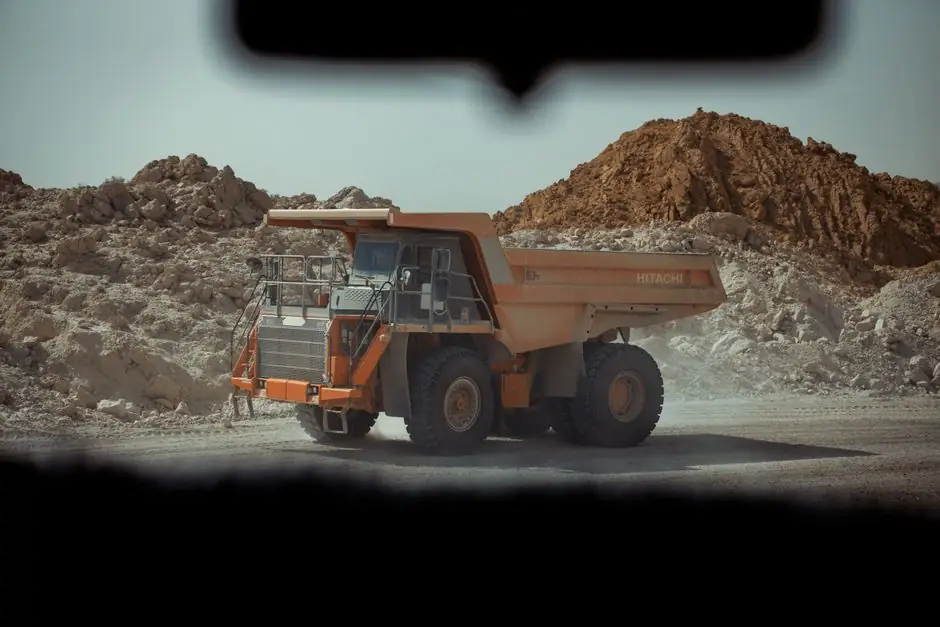
Heavy-load automated guided vehicles purpose-built for die and mold handling now span a published payload range of roughly 6 t to 500 t, with 20 t-class units sitting in the middle of a market that also includes 1-150 t rail-guided and trackless mold transfer carts from Chinese suppliers [S4][S5].
The 20 t class is not a single product line but a configuration tier: a standard 20 t rated-load unit, a 20-25 t mould transfer cart with 0-20 m/min stepless speed, and custom-engineered vehicles that face 30+ t static loads when an injection mold is being supported during changeover [S3][S4].
Payload tiers and what each one is actually for
Three payload bands cover most automotive and metal-form die handling: 1-10 t for smaller stamping dies and injection molds, 15-40 t for large automotive press dies and injection mold changeover, and 40-500 t for press-line dies, steel coils, and aluminum coils in heavy stamping and forging [S2][S4][S6].
A 6 t AGV (model AGV, 2000x1530x500 mm, battery power, 0-20 m/min) is the entry-level mold transport unit from BEFANBY, targeted at auto parts processing and die-casting workcells with moderate mold weights [S5]. A 35 t RWP-35T die transfer cart from Remarkable (5600x3200x900 mm, 8 press-fit solid rubber wheels, electromagnetic brake, 1.2 safety load factor, maintenance-free lead-acid battery, laser obstacle avoidance) illustrates the upper end of the standardized catalog range before full customization kicks in [S4].
For automotive plastic-parts plants, a customized HENSEN heavy-duty AGV handled molds of approximately 15-16 t per unit, with a static load exceeding 30 t during the changeover step, on a closed-loop route from a centralized mold warehouse through shared aisles to multiple injection molding machines [S3]. The same vendor family also builds a 2200x1200x500 mm high-temperature-proof AGV on a high-strength cast-steel spliced frame, aimed at foundries where ambient heat rules out standard electronics packaging [S8].
Navigation, drive, and structural choices that decide fit
Die and mold AGVs come in three navigation flavours: magnetic-tape or QR-guided AGVs for fixed routes in clean press shops, rail-guided (RGV) and trackless transfer carts for plants that already have or can install guide rails, and SLAM/laser-based AGVs for plants that need route flexibility without floor modifications [S4][S5][S7].
Standardized 35 t-class carts from Chinese suppliers typically run on press-fit solid rubber wheels with electromagnetic braking, hydraulic steering, and electric button control for turning, with a published maximum climbing slope of 2 degrees on cement, epoxy, or asphalt floors [S4]. Higher-payload custom builds shift to polyurethane or steel-wheeled bogies, hydraulic lift platforms, and dual-motor differential drives because rubber wheels alone cannot sustain the point loads above ~40 t without floor damage.
For 20 t-class mold transport, the structural minimum is a welded high-strength steel frame (Q345B is the common Chinese grade), a large load wheel assembly with heavy-duty bearings, a V-type guide rail and guide wheel centering system for press alignment, and an optional hydraulic device for mold lifting or leveling [S4]. Cast-steel spliced frames appear on the high-temperature variants where the AGV body sits close to hot castings and the deck has to resist radiant heat as well as load [S8].
Safety integration for shared aisles and press-line traffic
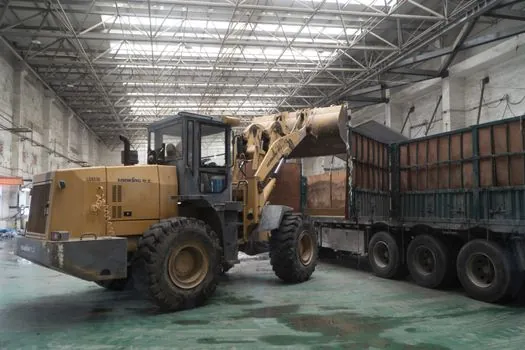
AGV safety in a die and mold cell is a layered system, not a single sensor: vehicle-level (laser scanners, bumpers, e-stops, audible/visual alarms), route-level (barrier gates at intersections, traffic-light control), and fleet-level (dispatching software that holds the vehicle in a safe zone while a press is in a die-clamped state) [S3][S4].
The HENSEN case study documents barrier gates at critical route intersections, sound alarms before and during AGV movement, projected warning paths on the floor, and anti-tipping support frames added to the deck because the tall flat molds could shift under acceleration and braking [S3]. Catalog 35 t carts ship with dual braking, collision avoidance, overload protection, an emergency stop button, and an audible/visual alarm lamp as standard protective equipment [S4].
Plants running a 20 t AGV in the same aisle as forklifts and operators should plan a 1.5-2.0 m lateral safety margin on each side, keep travelling speed at or below 20 m/min through shared zones, and force the AGV into a controlled stop whenever its laser scanner detects an obstacle inside the configured warning field. These numbers are typical values cited in supplier documentation rather than a single binding standard, so they need to be confirmed against the integrator's site risk assessment [S3][S4].
AGV vs rail-guided vs trackless cart: a side-by-side decision
For a 20 t mold handling duty, the choice is usually between three hardware families, and the right answer depends on four criteria: route flexibility, floor condition, payload headroom, and integration cost [S4][S5].
An AGV with magnetic tape or laser navigation scores high on route flexibility (routes can be re-laid by changing tape or remapping) and on integration cost (no civil works), but the standardized 6 t payload ceiling pushes 20 t users toward custom AGV builds that raise cost and lead time [S5]. A rail-guided transfer cart (RGV) gives the best path accuracy for press alignment, the highest payload headroom (rail systems scale past 100 t), and the lowest unit cost at 20 t, at the price of embedded rails in the floor and limited route changes [S4]. A trackless transfer cart with wireless remote or pendant control sits in the middle: no rails, moderate route flexibility via rubber tyres, payload headroom to 150 t, but it does not run autonomously unless upgraded to an AGV variant [S4].
In practice, automotive press shops that already have a centralized mold warehouse and a small number of fixed press cells tend to standardize on rail-guided carts, while injection molding plants with many machines and shifting mold lists tend to specify custom AGVs even at higher unit cost, because the changeover-time savings on a 30 t static load case justify the premium [S3].
Where heavy-load AGVs fit, and where they do not
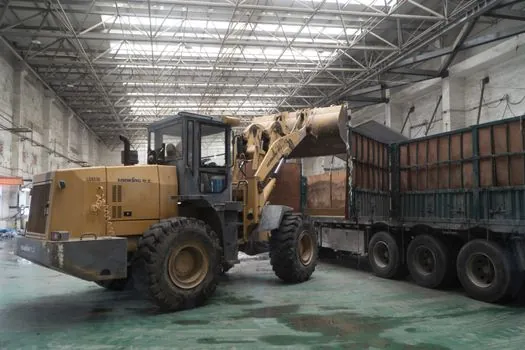
Heavy-load AGVs are a good fit when mold routes repeat at least several times per shift, when pickup and drop-off points are fixed, when aisles are wide enough for the vehicle plus safety margin, and when the plant can host a charging station for a lead-acid or lithium battery pack [S2][S3][S4]. They are a poor fit for one-off moves, for very narrow aisles under ~2 m where a 5600 mm long 35 t cart physically will not turn, and for outdoor yards without a defined path, where a sand casting mold or large forging die still needs a mobile crane or a heavy-duty prime mover rather than a fixed-route AGV [S4][S6].
Plants evaluating a 20 t mold AGV should also confirm that the mold base and rack interface match the AGV deck: support-leg position on the rack, deck height, and the AGV's lift stroke must align so the mold does not have to be re-shimmed at the press. For foundries running hot work, the casting mold handling path may push the spec toward a high-temperature-proof chassis with reinforced cast-steel frame and derated payload, since continuous radiant heat shortens electronics life [S8].
For context on the broader equipment category that a 20 t mold AGV belongs to, see the AGV robot reference page and the construction machinery and equipment classification that many integrators also list heavy transport carts under.
Trackable signals for the next planning window
Three signals are worth watching through Q4 2026 and into 2027: (1) Chinese suppliers extending the standardized AGV payload ceiling above the current 6 t entry-level toward 15-20 t catalog SKUs, which would shift price points for buyers; (2) more automotive mold warehouse retrofits going in across Tier 1 plastic-parts plants, which is the use case the HENSEN reference project documents; (3) wider adoption of laser-SLAM navigation on 20-40 t mold AGVs, which would remove the magnetic-tape installation step and shorten commissioning time [S3][S5][S6].
For buyers running stamping and forging lines adjacent to mold cells, the relevant spec is whether a single AGV platform can be re-rated between mold handling and die-casting duties without a full chassis swap, since shared fleets are how plants typically recover the capital cost of a 20 t unit.
Related analysis: CC vs CV vs CR vs CP on a DC Electronic Load: Loop Behaviour, Use-Case Fit, and Selection.