
On 2026-06-24 Made-in-China sourcing pages, factory-direct helical gear reducers cluster between roughly US$200 and US$2,000 FOB per unit, with parallel-shaft inline units at the low end and right-angle helical-bevel units at the high end [S4][S5].
Output configurations span 0.12 kW micro units to multi-hundred-kW industrial housings, and the same listing pool shows production capacities from 3,000 units per month up to modular parallel-shaft families covering 14 frame sizes with power scope starting at sub-1 kW [S2][S5]. Selecting a helical gear reducer at the right frame, ratio and shaft tier is the single biggest cost lever a buyer controls.
What a 2026 helical reducer actually costs on the export market
The Made-in-China "Helical Reducer Price" sourcing index returned in 2026-06 lists hundreds of supplier offers with sample FOB unit prices starting near US$200 for 1-piece MOQ cast-iron bevel-helical units, scaling to US$1,500-2,000 for larger right-angle helical-bevel housings carrying RoHS certification paperwork [S4][S5]. A micro-reducer line from Zhejiang Kangpu, spanning KPM/KPB quasi-hyperbolic and KPC helical families, sits in this same entry-level band with motor-drive integration bundled into the price [S2]. For comparison, the Huchi (Shanghai) Transmission product tree — established 2023-08-15, manufacturer + trading composite — quotes parallel-shaft and helical-bevel SKUs at the higher end of that range once frame size and torque class increase [S3]. Export-tier pricing is therefore not a single number but a band tied to (a) frame size, (b) shaft orientation, and (c) certification paperwork.
The four cost drivers a process engineer should lock first
First, frame size and power scope. The FC-series helical reducer uses modularization design across 14 sizes from 07 to 167, with power scope from sub-1 kW to roughly tens of kW and a "large speed range and rational and fine assignment" of ratios — every frame jump usually lifts casting, bearing and gear-cutting cost non-linearly. Second, shaft orientation: coaxial inline helical units are the cheapest to machine, right-angle helical-bevel units add a bevel gear set and a second housing face, and the TB planetary-helical hybrid from GEARKO combines coaxial and right-angle options in one family for buyers who need both [S1][S3]. Third, gear material and heat treatment: cast-iron housings with hardened, ground gears dominate the sub-US$1,000 band, while ductile-iron housings and case-hardened or nitrided steel gears push prices above US$1,500 [S4][S5]. Fourth, certification and documentation: RoHS paperwork, ATEX/IECEx variants for explosive atmospheres, and mill test certificates for marine or offshore buyers each add 5-15% to a like-for-like unit, based on supplier-side certification flags visible across Made-in-China listings [S4].
Inline helical vs helical-bevel vs planetary-helical: a 2026 cost/fit comparison
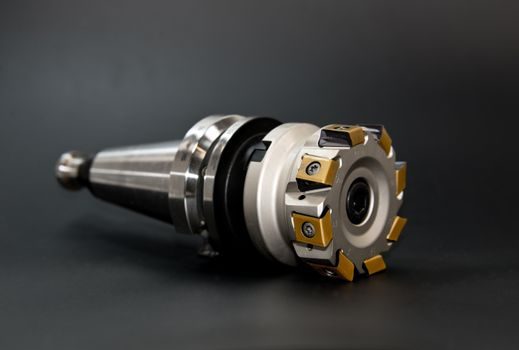
Helical-bevel (right-angle) adds one bevel stage to deliver a 90° output, costs 30-80% more than the same-kW inline unit on Made-in-China 2026 listings, and trades 1-2% efficiency for the layout freedom [S3][S4]. Planetary-helical hybrids such as the GEARKO TB-series combine helical and planetary stages in coaxial and right-angle variants, target the high-torque / low-backlash end of the market, and sit at the top of the price band — but they deliver the highest torque density per kg of housing, which matters on mobile equipment and large cranes where mass is a real cost [S1]. Buyers who already know they need a parallel-shaft unit should not pay the helical-bevel premium; buyers who need 90° output should not paper over the geometry with a chain or belt drive that costs more over the unit's life.
Standards, materials and documentation that change the quote
Most export helical reducers use cast iron (FC200 / GG25 grade-class) housings with 20CrMnTi or 40Cr case-hardened steel gears, ground to ISO 1328 grade 6-8 depending on tier, and assembled on rolling-element bearings to ISO 15 dimension series [S5]. The dominant quoting standards on 2026 Made-in-China listings are GB/T 10089 (equivalent to ISO 1328) for gear accuracy and GB/T 19001 (ISO 9001) for the supplier's QMS; marine and offshore buyers typically also demand factory acceptance tests against classification-society rules, and the parent of Shanghai Zhenhua Heavy Industries' Nantong transmission subsidiary — a 333,500 m² site with 179,000 m² of built area — is a useful benchmark for the kind of installed capacity that drives OEM pricing in this category. For a like-for-like inline helical gearbox, expect the price ladder cast-iron → ductile iron to add 15-25%, and the addition of a brake, encoder mount, or food-grade stainless output shaft to add another 10-20% on top.
MOQ, lead-time and total landed-cost levers
MOQ behaviour on 2026 export listings is unusually soft: sample-order MOQs of 1 piece are visible on the Made-in-China "Helical Reducer Price" index, and production capacities of 3,000 units per month for a single Tianjin supplier are common at the entry-level price points [S4][S5]. Payment terms cluster around T/T in advance, L/C at sight, with D/P, PayPal and Money Gram appearing on smaller-sample transactions [S5]. For a process engineer running a sourcing event, the realistic levers in 2026 are: (a) consolidate frame sizes to stay inside one supplier's modular family, because the FC-series 14-size modular logic is the norm and crossing sizes forfeits volume pricing; (b) choose coaxial inline unless the layout forces a right-angle, because the right-angle bevel stage is the single largest cost adder; and (c) buy the linear guide or crossed-roller guide that drives the reducer from the same supplier where possible, since the same trading-company bundling that shows up on Made-in-China pages also handles the rails. If you are also sizing a coupling downstream, a gear coupling matches helical reducer output speeds better than elastomeric inserts above roughly 3,000 rpm.
When a helical reducer is the wrong choice in 2026
Helical and helical-bevel units are not the right answer for every motion-control problem. If the application is a robot joint or a CNC rotary axis where backlash under 5 arc-min matters, the more cost-effective answer is a harmonic-drive reducer or a high-precision planetary reducer — see the 2026 harmonic drive price guide for the cost-per-arc-minute comparison. If the driven machine is a heavy structural element that needs fine incremental positioning — for example the boom hoist on a truck crane — a helical gear reducer still wins on cost per kW, but the buyer should also read the 2026 truck crane buying guide to make sure the gearbox duty class matches the crane's CMAA group. Conversely, for a simple conveyor or mixer drive where a gear pump or a standard industrial gear could be sourced from the same supplier, a helical-bevel unit is overkill and the buyer is paying for geometry they do not need. [S1]
Trackable signals for the rest of 2026: monitor the Made-in-China "Helical Reducer Price" index for the next 90 days to see whether the US$200-2,000 band holds as raw steel and energy costs move, and watch for new IECEx variant announcements from the major Shanghai and Zhejiang suppliers following the Huchi (Shanghai) Transmission product-line expansion seen on 2026-06-24 [S3][S4]. One more cross-check worth running: if your duty cycle is intermittent rather than continuous, ask the supplier for the SF (service factor) and thermal rating together — a smaller-frame unit correctly de-rated will often match the price-per-kW of the next frame up and shorten lead time by 2-4 weeks.