
High-temperature o-ring selection is governed by three concrete variables: continuous service temperature, thermal cycling rate, and chemical exposure at temperature — and a wrong pick fails by extrusion, compression set, or chemical attack rather than by simple melting [S3].
Marco Rubber's published material matrix covers 250 °F (121 °C) for standard NBR up to 250 °F (121 °C) service, while specialty compounds push to 600 °F (315 °C) and beyond, and the same matrix shows NBR rated "Poor" for steam service under 300 °F — a single line that disqualifies nitrile for the majority of steam-skid duties [S3].
Temperature Ceiling by Elastomer Family
Silicone (VMQ) compounds such as the GETELEC GT 70 reach a 232 °C (450 °F) upper limit and a −73 °C (–99 °F) lower limit at 70 Shore A, a range that covers most engine, aerospace, and heat-cure oven static seals [S1].
Marco Rubber's comparison table places standard BUNA-N (NBR) at 250 °F / 121 °C high, with a higher-acrylonitrile NBR like B1083 reaching 275 °F (135 °C) and lower-temperature flexibility to −65 °F (–54 °C), and a "Higher performance NBR" descriptor noting "improved lower and higher temperature resistance and oil resistance at higher temperature than standard NBR" [S3].
FKM (Viton-class) fluoroelastomers typically rate to roughly 200–230 °C continuous depending on grade; FFKM perfluoroelastomers extend the ceiling to about 300 °C and higher in short peaks, and that gap is exactly where aerospace and chemical-process specs land [S3].
EPDM is the standard choice for hot water and steam below about 150 °C continuous, with steam service flagged "Poor" for NBR even below 300 °F (149 °C) and "Good" for EPDM in the same Marco table [S3].
Hardness, Compression Set, and Gland Geometry
Hardness is not cosmetic: 70 Shore A is the workhorse, 90 Shore A (compound B1001) is specified for "higher pressure applications," and 50 Shore A (B1006) is used to "help seal rough or warped glands and or lower closure force applications" per the same supplier data [S3].
Compression set behaviour drives seal life more than ultimate elongation; high-temperature compounds are post-cured for hours at elevated temperature to drive compression set down before the part ever sees service, and that post-cure is the single largest difference between a 150 °C-rated HNBR and a 200 °C-rated FKM of identical hardness [S3].
GT 70's U-shaped / circular configuration with 70 Shore A hardness makes it a fit for static face seals and connector grommets where the gland is machined or moulded to a controlled squeeze, not for dynamic rod seals where extrusion under pressure becomes the failure mode [S1].
Static vs Dynamic Duty: Why the Same Compound Fails Differently
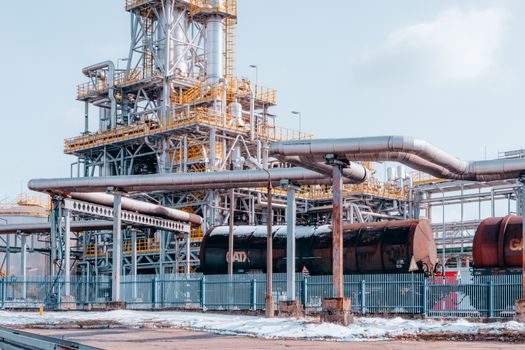
Static high-temperature seals fail by compression set, chemical attack, or thermal ageing of the polymer backbone; dynamic seals at the same temperature fail by friction heat, extrusion into the clearance gap, and abrasion — so an HNBR rated for 150 °C static will not survive 150 °C dynamic service because the frictional temperature rise pushes the local polymer above its ceiling [S3].
Reciprocating and rotary duties also demand a lower friction compound and tighter clearance control; a general-purpose NBR like B1000 with "Good" wear and abrasion rating is acceptable for low-speed reciprocation, but a 250 °F (121 °C) high limit still rules it out for any hot-oil or steam reciprocating service where the actual seal-groove temperature runs above 121 °C [S3].
For connectors, instrument panels, and aerospace housings where the o-ring never moves, the GETELEC GT 70 silicone profile — high-temperature, waterproof, chemical-resistant, dust protection — addresses the dominant static failure modes directly [S1].
Chemical Compatibility at Temperature, Not at Room Temperature
A compound that resists a fluid at 25 °C can swell, harden, or blister in the same fluid at 150 °C; this is why chemical compatibility charts are temperature-stratified and why FFKM exists — it keeps its chemical envelope at temperatures where FKM and silicone would already be attacked [S3].
Marco's matrix lists NBR as "Poor" for steam under both 300 °F and 400 °F columns, while EPDM scores "Good" in the same columns — the same physical seal, in steam, behaves completely differently simply because the elastomer family changed [S3].
For semiconductor, aerospace, and aggressive chemical service above 200 °C where neither silicone nor FKM holds chemistry, FFKM is the default, with a price premium that is typically 10–100× over commodity NBR for the same AS568 cross-section [S3].
Selection Shortlist by Service Window

–100 °C to 232 °C, static, dry or water/glycol: silicone (VMQ) at 70 Shore A, e.g. GT 70 profile [S1].
–54 °C to 135 °C, petroleum oil, static or low-speed dynamic: NBR B1083 (75 Shore A-class, higher-acrylonitrile grade) [S3].
–40 °C to 200 °C continuous, hot air, fuels, many chemicals: FKM (fluoroelastomer), with compound grade chosen for the specific fluid [S3].
–50 °C to 150 °C, steam or hot water: EPDM, not NBR; NBR is "Poor" against steam even at 300 °F [S3].
Above 230 °C continuous, aggressive chemicals: FFKM, accepting the cost premium, and validating with a fluid immersion test at the actual service temperature before releasing the spec [S3].
Who Should NOT Pick the Cheapest NBR
Any steam, hot-water, or glycol duty above 100 °C: NBR's "Poor" steam rating in the Marco table makes it a service-life risk, and the cost saving over EPDM is consumed by unplanned downtime in the first quarter of operation [S3].
Any continuous service above 135 °C: standard NBR tops out at 250 °F (121 °C) and even the higher-temperature B1083 caps at 275 °F (135 °C), so a silicone, FKM, or FFKM is the only defensible choice [S3].
Any dynamic reciprocating duty with a hot-oil sump: friction heat will push the seal-groove temperature past the bulk fluid temperature, so a compound must be picked against the local temperature at the seal-lip, not the reservoir thermometer reading — a point that disqualifies a surprisingly large share of in-service pneumatic and hydraulic cylinders.
Validation and Sourcing Discipline
Always cross-check the supplier's material datasheet against the actual service temperature plus a 20–30 °C margin for frictional hot-spots and thermal cycling, and use a O-ring hardness and sizing reference to confirm the gland fill and squeeze before the material choice is even locked in. [S1]
Marco Rubber publishes an OTIF (On-Time In-Full) shipping promise — "we'll ship any in-stock orders within 24 hours" — and a worldwide production network for non-stock compounds, which is the practical difference between a paper spec and a part on the maintenance bench [S3].
For chemical-skid sealing decisions the same temperature-and-chemical logic shows up in adjacent specs such as sealing washer vs gasket material compatibility mapping and steam separator selection for chemical process skids, where the dominant failure mode is identical: a wrong elastomer at temperature, not a wrong dimension.
Track three signals over the next two quarters: revised compression-set data on high-temperature HNBR post-cured at 175 °C, supplier announcements on FFKM lead-time at AS568 dash sizes above -326, and any new ISO 3601-5 or SAE J200 update that re-classes high-temperature elastomer families — those three together will move most high-temperature o-ring shortlists in 2026.
For component-level specifications, see high voltage tester, and retaining ring.