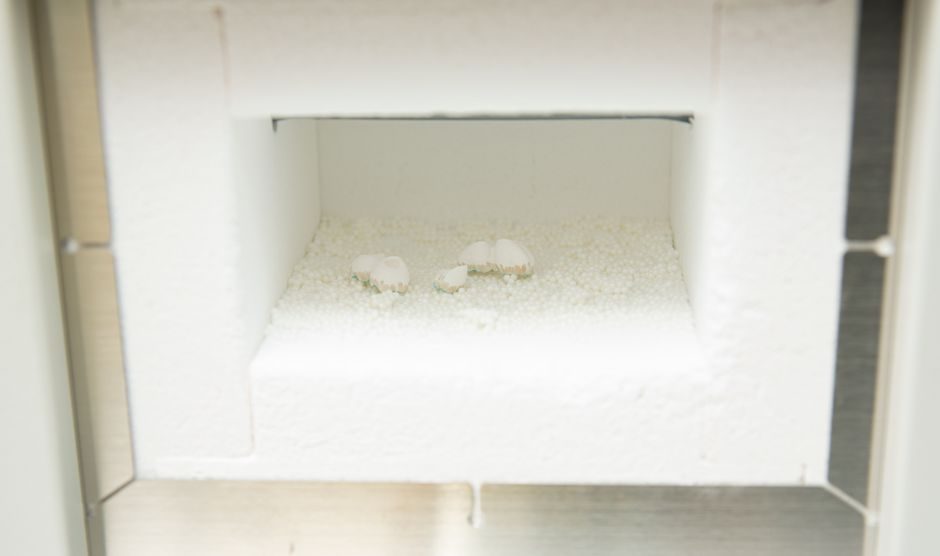
A holding furnace is a refractory-lined, energy-insulated vessel sized to keep molten aluminium, copper, iron, or zinc at a controlled pouring temperature (commonly 680-760 °C for Al alloys) between the upstream melting furnace and the casting station, accepting metal at a higher superheat and delivering it at a tight ±5-10 °C tolerance [S1].
Its single function — store + maintain + dose — makes it the cheapest tonne of metal per kWh in a die-casting or foundry line, but only when the holding-to-melting ratio, refractory chemistry, and burner/inverter control are matched to the alloy; misapplied, a holder becomes the dominant source of dross, gas pickup, and refractory budget.
Energy and Throughput Advantages
This 1000-fold ratio means every hour a properly sized holder stays full translates into avoided melt cost, and a continuous casting line that runs 5 000-7 000 h·year⁻¹ typically recovers the holder's capital cost in 8-14 months on energy alone. Thermal-mass designs (dense castable or brick hearth + silicon-carbide roof) also buffer the upstream induction furnace from pouring-bay demand swings, so melt rate can be steady while casting draw is intermittent.
Metallurgical and Quality Advantages
Soaking time in a holder enables inclusion float-out, hydrogen degassing (when fluxed or purged with argon at 0.2-0.5 NL·min⁻¹·t⁻¹), and grain refinement in aluminium, while keeping the bath inside a ±5 °C band reduces oxide-skin formation and Mg/Sr fade in 5xx and 6xxx series alloys [S1].
For iron foundries, a cupola furnace discharge held at 1 450-1 520 °C in a channel-induction or gas-fired holder produces more uniform carbon and silicon analyses than direct ladle pour, which is why ductile-iron producers running Mg-treated melt almost always interpose a holder. The same logic applies to brass and bronze continuous casting, where Zn volatilisation above 980 °C is controlled by holding just above the liquidus rather than remelt-and-superheat cycling.
Operating and Capital Disadvantages
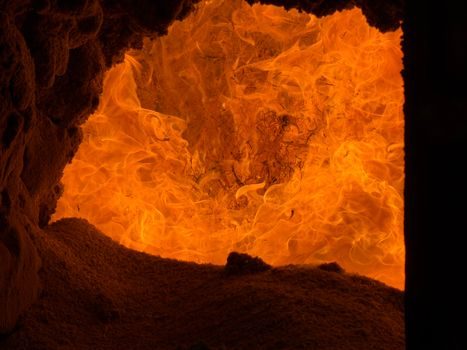
The dominant drawbacks are refractory wear, dross generation, and idle-heat loss: alumina-silica linings in aluminium holders typically reach 6-18 months before patching, and every reheat cycle through 200 °C adds thermal-shock spalling that a crucible furnace would not see in intermittent service [S1].
Comparison: Holding Furnace vs Alternative Holding Methods
Channel-induction holders win on temperature precision and low dross, but their water-cooled inductors add 5-8 % extra electrical loss and require 6-12 month inductor relining cycles; gas-fired regenerative holders win on capex and turndown ratio (10:1) but lose on CO2 footprint at ≥0.20 tCO2 per tonne held when fired on natural gas.
When a Holding Furnace Is the Wrong Choice
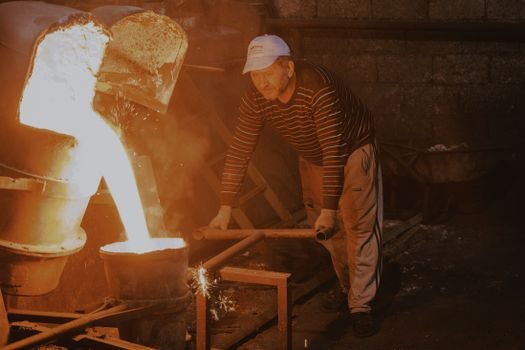
A dedicated holder is the wrong specification when daily throughput is below 5 t·day⁻¹, when the alloy mix changes more than once per shift (cross-contamination cost exceeds savings), or when the casting cell runs fewer than 1 000 h·year⁻¹ — in those duty profiles a transport ladle or a larger melting furnace held at tap temperature is cheaper on a 5-year TCO basis [S1].
It is also the wrong choice for alloys with very narrow pour windows (Mg-rich Al at < 680 °C, or high-Zn brass near 900 °C) unless the holder is baffled and lid-closed, because oxide-loss and burn-off dominate the operating budget. Foundries specifying a holder should also confirm refractory compatibility (Al2O3-SiO2 for Al, MgO-Cr2O3 for Cu, SiC for Zn) before signing the PO — see the related Holding Furnace Types and Classifications for Foundry Engineers reference for the full classification map.
Selection Criteria and Sourcing Standards
Procurement specs should lock five items: bath capacity (t), metal temperature range (°C), burner or inverter rating (kW or Nm³·h⁻¹), refractory grade (Al2O3 % or SiC %), and emission limits (NOx mg·Nm⁻³, CO mg·Nm⁻³) — the last two normally cited against local air-quality permits, while refractory and lining acceptance typically follow ASTM C401 (alumina-silica castables) and ISO 2245 (shaped refractory classification) [S1].
For safety, the holder's charging door interlock, emergency-pour tilter, and thermocouple-redundant over-temperature trip (set 50 °C above working setpoint) should be checked against the same furnace-standard family already used for the upstream heat treatment furnace on the same site, to keep the PSM/HAZOP register consistent.
For a deeper cross-check on sizing, the Two-Hand Control Types I, II, III: ISO 13851 Classifications and Selection piece is unrelated to furnace spec but illustrates the same "verify standard + duty cycle" discipline that should drive any capital-equipment PO.