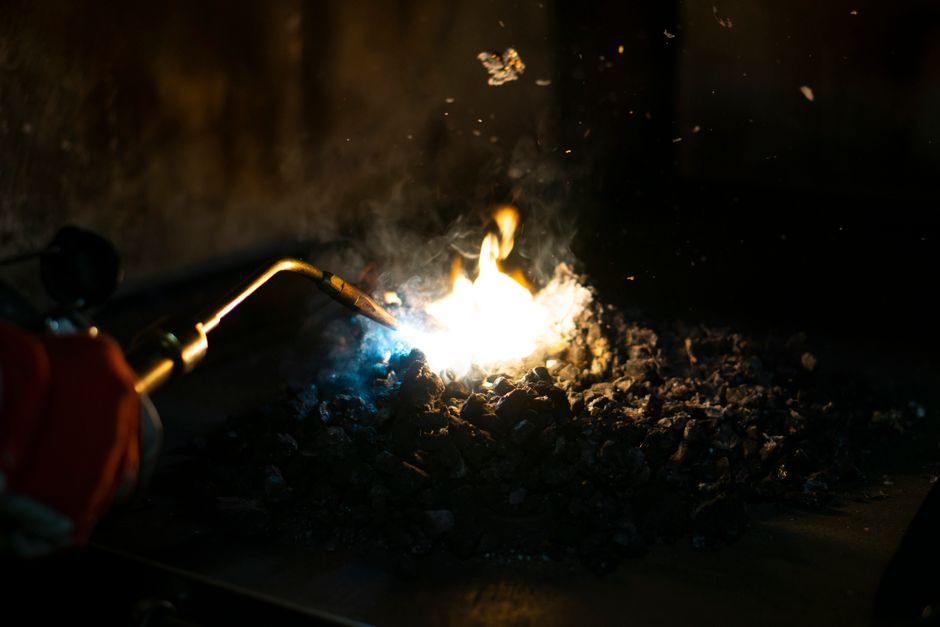
A holding furnace is a refractory-lined thermal vessel positioned downstream of the melting furnace to keep molten metal at a controlled pour temperature before casting, with classifications driven by heat source, bath geometry, and alloy chemistry [S1].
Chinese OEM catalogues list holding furnaces as a separate product line distinct from crucible furnace and induction furnace families, with 2026 wholesale listings spanning electric-resistance, gas-fired reverberatory, and channel-induction designs for aluminium, copper, and zinc baths [S3].
Three Heat-Source Families: Gas, Electric-Resistance, and Induction
Gas-fired reverberatory holding furnaces dominate aluminium casthouse duty at capacities from 5 t to 60 t, using regenerative or recuperative burners to hold bath temperature within ±5 °C of the casting setpoint [S1][S3].
Electric-resistance holding furnaces apply silicon-carbide or FeCrAl radiant elements through the roof and sidewalls, making them a fit for zinc, lead, and low-melting alloys below 700 °C where atmosphere control matters more than throughput [S1].
Channel-induction and coreless-induction holding furnaces use a 50 Hz or medium-frequency coil coupled through a refractory throat, giving electromagnetic stirring that homogenises chemistry and supports inclusion settling per Stokes-law behaviour modelled in aluminium holding baths [S2][S3].
Classifications by Bath Geometry and Refractory Lining
Reverberatory (open-bath) designs expose the melt to a flue-gas atmosphere and use dense castable or brick linings of 200-300 mm thickness, sized for die-casting and continuous-casting transfer launders [S1].
Crucible-type (shaft) designs enclose the melt in a removable graphite or silicon-carbide pot set inside a gas-fired or induction shell, an arrangement preferred for small-batch magnesium and precious-metal holding at 500-1200 °C [S3].
Submerged-channel induction furnaces route the molten channel through a transformer-coupled inductor loop under the bath, giving the best thermal-efficiency and stirring mix for copper and copper-alloy holding in the 1100-1250 °C band [S3].
Selection Criteria: Alloy, Capacity, Temperature Window, and Atmosphere
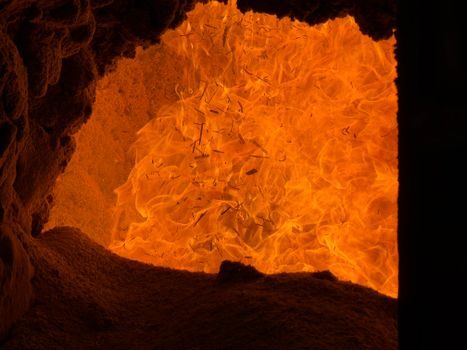
Aluminium foundries typically specify gas-fired reverberatory or channel-induction holding units sized 1.5-2.0 times the hourly casting demand, so peak pour temperature and alloy loss from oxidation both stay within metallurgical limits [S1].
Copper and bronze operations prefer induction holding because electromagnetic stirring keeps sulphur and oxygen inclusions moving toward the slag, and the absence of combustion gases prevents hydrogen pick-up during dwell time [S2][S3].
Zinc and lead die-casters usually choose gas-fired crucible or pot furnaces because bath temperatures stay below 700 °C, where induction coil cooling would consume more energy than it saves at the required 30-80 t/day throughput [S1].
Comparison: Reverberatory vs Crucible vs Induction Holding
Crucible-type holding furnaces offer the cleanest atmosphere and best alloy-chemistry stability, yet they cap out below 8-10 t bath size because pot handling and refractory wear drive maintenance cost sharply upward at larger capacities [S3].
Channel-induction and coreless-induction holding furnaces reach 60-70% thermal efficiency with electromagnetic stirring that promotes inclusion settling, but they require water-cooled coils, three-phase power at 400-3000 kW, and a cold-start preheat before the first pour [S2][S3].
Fluid-Flow Behaviour and Inclusion Settling in Holding Baths
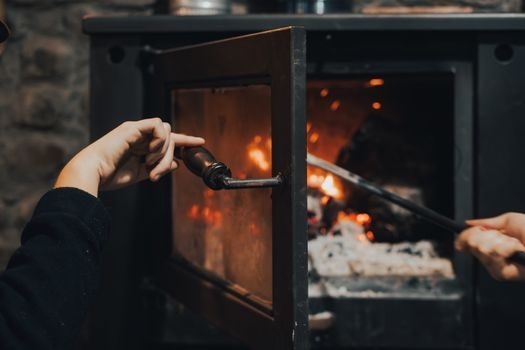
Thermal convection driven by roof-to-bath temperature gradients dominates flow in a holding furnace, so Stokes-law settling of inclusions only holds in the laminar zones near the bath floor [S2].
Numerical models calibrated against lab-scale and industrial-scale aluminium holding furnaces show that thermal convection from gas-injection or induction stirring influences inclusion trajectories and settling behavior versus a quiescent bath, with effects depending on bubble flow rate and coil power [S2].
The same modelling work links inclusion removal efficiency to a dimensionless ratio of buoyancy force to drag force, giving foundry process engineers a way to size gas-flow or stir-coil input against target cleanliness levels before commissioning [S2].
Operating Limits, Failure Modes, and Maintenance Windows
Reverberatory holding furnaces typically run 2-5 years between cold repairs, with the limiting wear located in the sidewall lining above the metal line and in the burner-block zone, where flame impingement raises surface temperature above 1100 °C in aluminium service [S1].
For specification work on adjacent cast-house equipment such as relief devices on hydraulic clamps or filtration stages downstream of the launder, see the pipe clamp cost guide and the precision filter buying guide for the supporting cost and selection data.
Standards, Sourcing, and Cross-Reference to Related Equipment
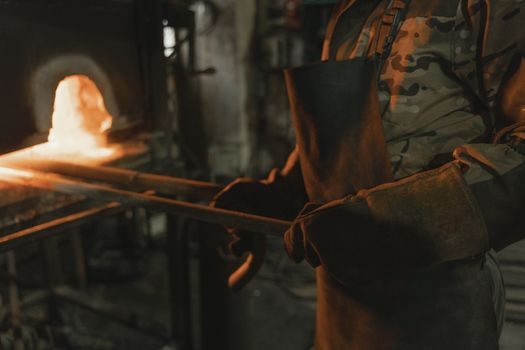
Holding-furnace energy consumption in European casthouses is reported under ISO 50001 energy-management audits, while refractory specification typically references ASTM C401 classification for castables and preformed shapes used in contact with molten aluminium and copper alloys. [S2]
2026 wholesale data from Chinese OEM platforms lists holding-furnace export prices in the US$ 8,000-120,000 band for 0.5-10 t aluminium units, with a 5 t gas-fired reverberatory common as a benchmark at the lower end of that range [S3].
Engineers sizing a holding furnace against upstream holding furnace capacity should treat a 5-10% bath-size margin over peak hourly casting demand as the practical lower limit, because surge events during ladle transfer routinely push instantaneous demand above the rolling average [S1].
For plants weighing whether to use a holding furnace in series with a cupola furnace for iron duty, the industrial boiler selection guide covers the fuel-and-capacity matching logic that overlaps with large fuel-fired holding units, while relief sizing on gas-train components follows the same pressure relief valve cost map used on boiler and furnace trains.