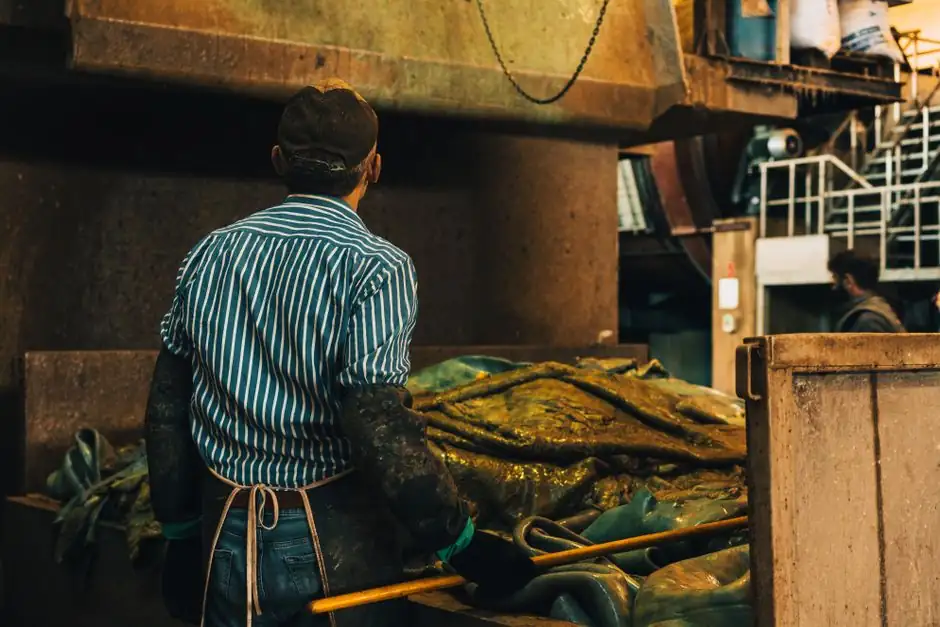
Hot box core shooters cure phenolic resin-coated sand inside heated tooling held between 250 and 350°C [S5], producing dimensionally stable cores for valve, automotive, and machine-tool castings at small-to-medium box sizes up to roughly 500×500×400 mm [S1].
Selection in 2026 comes down to four hard numbers: heaviest single-core mass, required shot pressure band, clamping force versus core box weight, and the thermal duty the heater stack must hold across an 8-hour shift. Everything else on a quotation, cycle time, automation level, control platform, is downstream of those four, per supplier guidance on what foundries should provide at the inquiry stage [S3].
Hot Box Versus Cold Box Versus Shell: Process Boundaries
Hot box tooling sits at 250 to 350°C during cure, with the resin-coated sand hardening against the heated box walls [S5]; small to medium core boxes near 500×500×400 mm are the typical envelope for benchtop and mid-frame hot box units [S1]. Cold box core shooters, by contrast, blow sand-resin mix under high pressure and then pass amine gas through the core, hardening in seconds at room temperature, which is why most modern high-volume foundries route medium-to-high volume work through cold box instead [S4].
The practical boundary: pick hot box when your core is small enough to be heated evenly through the box wall, when you need a high surface finish, and when you are running a Croning-style coated sand; pick cold box when core mass exceeds what a heated box can cure uniformly, or when amine gas chemistry fits your binder system better. Picking a hot box core shooter for a core that is too thick leads to under-cured centers, and picking a cold box core machine for a 200 mm thin-wall core you could cure in 90 s with a 300°C box wastes capital on a gassing plenum you do not need.
Core Size and Weight: The First Sizing Filter
Suppliers size a hot box line off the largest single core, not the average: a 150×80×60 mm core under 1 kg can be served by a compact bench unit with manual handling, while a 600×350×250 mm core in the 8 to 15 kg band needs greater shooting capacity, stronger clamping structure, and a safer unloading method [S3]. The 500×500×400 mm ceiling on a standard small-to-medium hot box machine [S1] is the practical upper limit before the builder moves you into a heavy-frame or two-station configuration.
Write down three numbers before any supplier call: heaviest single-core mass, longest single dimension, and the wall thickness of the thinnest passage. A thin-wall passage under about 5 mm on a heavy core is the case that breaks under-sized shot chambers, because filling pressure drops as the sand path lengthens. If your heaviest core lands near the machine's published limit, you have no headroom for a new part, so step up one frame size now rather than after commissioning.
Shot Pressure, Shot Volume, and Clamping Force
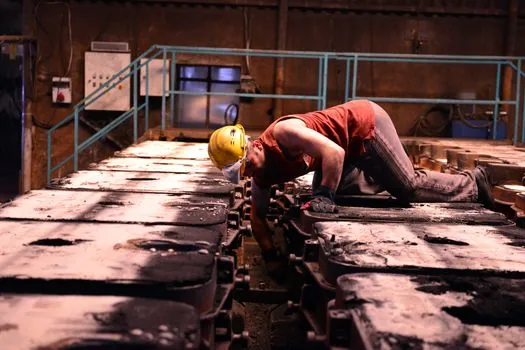
Hot box core shooting relies on a much lower pressure band than cold box, because the resin-coated sand is already free-flowing: core blowing on gravity-assisted machines runs at 0.2 to 0.4 MPa, with the additional pressure coming from a pour-and-blow principle rather than a high-velocity shot [S5]. That changes the spec sheet: instead of asking for peak shot pressure, ask for the shot chamber volume, the adjustable pressure range, and the clamping tonnage the frame can sustain against the heated box's internal pressure at cure temperature.
Suppliers frame shot pressure around part reality, not brochure numbers: more pressure is not automatically better, and over-pressurizing a delicate hot box can damage tooling or blow sand where it does not belong, while under-pressurizing leaves incomplete fill in thin sections [S4]. A comparison of the three practical hot box classes looks like this: benchtop / small-frame units handle cores under roughly 1 to 3 kg at 0.2 to 0.4 MPa with manual clamping; mid-frame units in the 500×500×400 mm class handle 3 to 8 kg cores with hydraulic clamping and PLC temperature control [S1]; heavy-frame or rotary units handle 8 to 15 kg and above with shot volumes above 10 L per cycle and PLC-controlled cure timers. Match the chamber volume to your largest core with at least 15% headroom, because resin-coated sand bulk density varies with temperature and you do not want the chamber running at 95% fill on the hot cycle.
Tooling, Sand, and Thermal Duty
Hot box tooling is the long pole: wood, plastic, or metal core boxes are all used, with the choice driven by series size and the thermal cycling the box will see at 250 to 350°C [S5]. Aluminum tooling is common for short-run coated-sand cores because it heats fast, but it distorts over time in continuous hot-box service; cast iron or tool steel is the default for any core box expected to see more than a few thousand cycles, and that tool material choice feeds back into the machine's clamping force requirement.
On the sand side, the machine must be matched to phenolic resin-coated sand with the right work time and bench life for hot box cure, and the supplier needs to know sand characteristics, working time, and required core strength at the inquiry stage, especially for copper-alloy or other high-finish castings [S3]. The heater stack has to hold the box within roughly ±10°C of setpoint across an 8-hour shift, because under-temperature cores come out soft and over-temperature ones scorch the resin; PLC-controlled automatic digital temperature control with LCD parameter display is the minimum modern spec [S1].
Who Should Not Pick a Standard Hot Box

A standard small-to-medium hot box unit is the wrong pick for foundries whose heaviest core exceeds the 500×500×400 mm envelope [S1], because the heated box cannot hold temperature uniformly across a larger surface and the cycle time penalty wipes out the process advantage. It is also the wrong pick for runs under about 500 cores per shift, where the heated-box energy cost per core exceeds the per-core labor saving, and a shell or cold box route will land cheaper on a total-cost basis.
Skip hot box entirely if your cores use a binder system that is not phenolic resin-coated sand, because the 250 to 350°C cure window [S5] is tuned to that chemistry, and forcing a different binder through the same temperature profile produces inconsistent cure and elevated scrap rates. For high-mix short-run work, a shell core shooter is often a better fit, since shell process logic accepts the same coated sand but with shorter hardening times on the 40 to 120 s band typical of the pour-blow principle [S5].
Shortlist Logic and Sourcing Signals
The shortlist filter is mechanical, not commercial: confirm the machine's published max core box envelope covers your largest part with at least 10% margin on every axis [S1]; confirm shot chamber volume covers your heaviest core with at least 15% headroom; confirm the heater stack can hold ±10°C across an 8-hour shift at your setpoint; and confirm the clamping force exceeds the core box's mass by a safety factor the supplier can document. Quote packages that list only a single shot pressure number rather than a band are a red flag, since real production needs a tunable range, not a fixed point [S4].
For buyers building a sourcing shortlist, three trackable signals matter: suppliers that ask for core weight, core box weight, and parting method at RFQ stage are filtering for fit [S3]; suppliers that publish a 250 to 350°C box temperature window and a 0.2 to 0.4 MPa low-pressure pour-blow band [S5] are aligning with the established hot box process envelope; and suppliers that quote automatic digital temperature control with PLC and LCD parameter display as standard [S1] are at parity on controls, so selection can move to cycle time, warranty terms, and local service coverage. Foundries weighing hot box against alternatives in a wider foundry line can also review how these machines fit alongside industrial oven selection logic for the heat-soak steps upstream of core shooting.