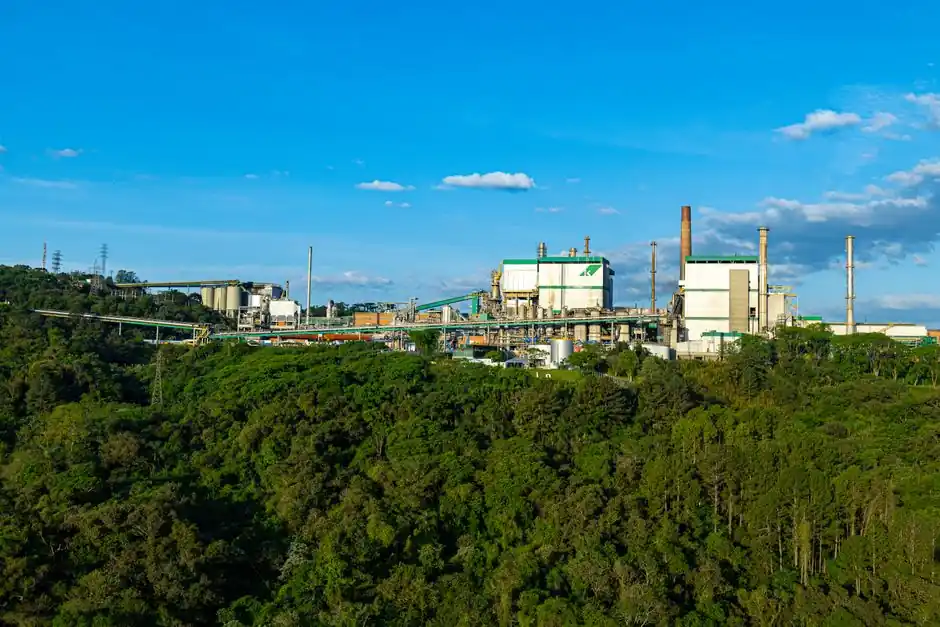
Hot box core shooters cure phenolic resin-coated sand inside heated core boxes held at 250-350°C, with shot volumes typically ranging from 10 to 150 L per cycle and hardening (sintering) times of 40-120 s for the shell-mold variant [S2].
For pulp and paper mill foundries the relevant question is narrower: most paper-machine castings (suction roll shells, headbox bodies, dryer frames) are large, thick-walled, and produced in low volumes where hot box is mismatched, so the technology fits only the small valve, pump, and Yankee-cylinder-component cores, not the heavy machine bases [S1][S4].
Where Hot Box Fits, and Where It Does Not, in a Paper Mill Foundry
Hot box machines are justified for small and medium cores with complicated internal cavities, such as those for valves, machine-tool castings, and automotive parts, with hot-box curing delivering better sand core strength and hardness than many room-temperature processes [S1]. The flip side is operating cost: phenolic resin plus 250-350°C tool heat for every cycle drives energy and resin consumption that only pencils out when cycle time is short and core weight is low.
Pulp and paper applications split into two camps. Reject the hot box for: suction roll shells (often 1.5-3 t iron castings), headbox stainless bodies, and paper-machine bases, all of which demand large cold box or green sand cores where cycle-time-per-kg matters more than surface finish. Specify the hot box for: small pulp-stock valve bodies, pump impeller cores under roughly 30 kg, and Yankee dryer piping fittings, where the 40-120 s cure window [S2] matches a high-mix, small-batch job shop. The shell core shooting machine is the closer competitor here, sharing the resin-coated-sand feed but at a different temperature profile.
Shooting Volume and Corebox Size: Picking the Right Class
Modern core shooters split into size classes by shot volume and corebox footprint. The Lüber C1 series, in production since 2011, covers three sizes: C1S at 25-40 L with 550x550 to 700x700 mm shoot area, C1M at 40-80 L with 800x800 to 1000x1000 mm shoot area, and C1L at 80-150 L with 1200x1200 to 1400x1400 mm shoot area, all accepting up to 6-part core boxes [S4]. The Lüber CL (entry-level) covers 25-30 L at 550x550 mm, and the C2 compact series handles 15-25 L at 300x300 to 450x450 mm shoot area for small coreboxes [S4].
For a paper-mill foundry running valve and pump cores in the 5-20 kg range, the C1S or C2S class is the right band: shot volume 15-40 L, max corebox footprint under 700x700 mm horizontally. Stepping up to C1M (40-80 L) only pays back when you also need to shoot larger dryer-section housings in the same cell. Core blow machines operating at low pressure (0.2-0.4 MPa) [S2] handle shell-mold material differently from true shooting machines and are not interchangeable on hot box duty, where the compressed-air impulse is what compacts the resin-coated sand against the heated box wall.
Tooling Temperature, Cure Time, and Resin System
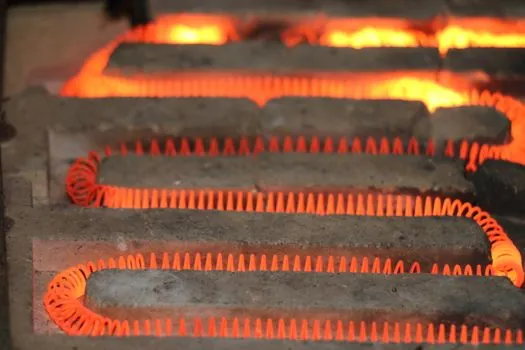
Hot box core boxes run at 250-350°C to thermally cure the phenolic resin-coated sand; the same temperature window applies to shell (Croning) mold material, with the difference that hot box uses bulk fill while shell uses a pour-and-tip cycle that hardens only a shell layer against the tool [S2]. Standard hot box sequence: shoot resin-coated sand into the heated box, hold under 0.2-0.4 MPa equivalent contact pressure (in shell-mold cousin processes) or via shooting impulse, cure 40-120 s depending on wall thickness, strip, and clean the shoot head [S1][S2].
Phenolic-urethane cold box dominates high-volume automotive iron foundries because the gas-cured cycle is faster and the resin cost per kilogram of core is lower at scale. Hot box earns its place on low-toxicity emissions and clean shake-out after casting, properties that matter when a paper-mill job shop is pouring against food-grade piping specs [S5]. The trade-off: hot box tooling must be heated uniformly, so the machine spec must include automatic digital temperature control with zone monitoring and a PLC with fault diagnosis, not just an on/off heater circuit [S1]. A hot box core machine lacking closed-loop temperature control will produce cores with inconsistent strength across the box, which then shows up as casting scrap in the field.
Control Architecture and Maintenance Access
Process-grade hot box cells now ship with PLC control, LCD parameter setting, and manual/automatic/jog modes plus fault diagnostics; the sand shooting head self-cleans after each shot, the alarm reminds the operator to open the moulds, and the middle slide withdraws to release the core [S1]. Tooling slides typically run on rigid chrome-plated guide rails with high-frequency quenching for long service life under the thermal cycling [S1].
Maintenance-driven spec must include: vertical-motion safety locks on the shooting unit, gassing unit, upper section, and pressure cylinder so operators can access the tool area without stored-energy risk, plus a shoot-plate cleaning station and automatic shoot-screen changer as field-proven options [S4]. The modular Lüber C1 design, for example, requires no special foundation or pit, which is a real cost driver in a paper-mill brownfield where the core room often sits over process-water trenches [S4]. Without these access features, a paper-mill maintenance crew (typically smaller than an automotive foundry's) will fight the machine, and downtime climbs.
Comparison: Hot Box vs Cold Box vs Shell Core Shooter
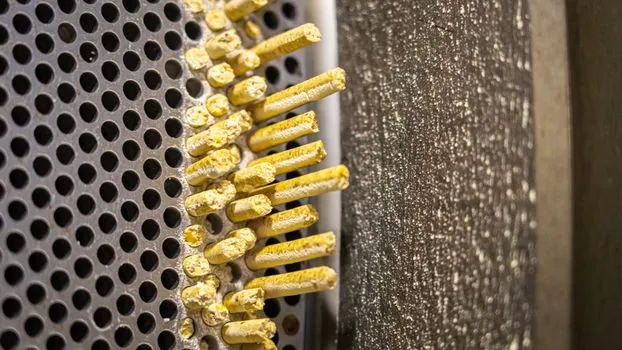
Three process choices compete for the same job. Hot box uses phenolic resin-coated sand cured at 250-350°C in 40-120 s, handles small-to-medium cores with the best surface finish and clean shake-out, but burns energy on every cycle and is limited to roughly 150 L shot volume [S1][S2][S5]. Cold box shoots resin-bonded sand at room temperature and gasses with amine vapor, fits much larger cores and high-volume runs, but the amine and resin handling adds environmental controls [S3]. Shell (Croning) shooters pour-blow at low 0.2-0.4 MPa pressure and produce only a thin hardened shell, ideal for thin-walled hollow cores but unsuited to solid heavy sections [S2].
For a paper-mill buyer the decision matrix reduces to: choose hot box when core weight is below ~30 kg, surface finish matters (valve bodies, pump liners), and batch sizes are moderate (100s, not 10000s); choose cold box when you need cores above 50 kg or very high annual throughput, accepting the amine gas system; choose shell when the core is thin-walled and hollow (e.g., a water-cooled jacket section) and tool temperature stability at 250-350°C is already in your process. The cold box core machine reference path covers the gas-system spec for the larger-core alternative.
Sourcing Path: New, Modular, or Used
Three sourcing channels are open to a paper-mill foundry. New OEM machines (Lüber C1/C2, ATHI, Laempe, Loramendi) carry full PLC controls, modular options, and warranty, with delivery typically 16-30 weeks depending on configuration. Custom-engineered machines from builders like Lüber are developed in tandem with the customer when the core geometry or cell layout is non-standard [S4]. Used and rebuilt machines from dealers such as FISS cover Coldbox, Hotbox, CO2, and Croning process equipment, available as individual units or complete core cells, which is the standard route for a paper-mill budget cycle [S7].
For pulp and paper foundries specifically, the practical recommendation is to size for 25-40 L shot volume in the C1S/C2S class [S4], confirm phenolic-resin-coated-sand compatibility with 250-350°C heated tooling [S1][S2], and require PLC temperature control with zone monitoring plus safety locks on all vertical motions [S1]. The related construction machinery and equipment reference page covers broader mill-floor machine spec logic, while the aluminum die casting machine selection for pump and valve bodies article maps the pump and valve casting requirements that overlap with paper-mill valve cores. The next node to track: any 2026-2027 OEM update to the C1 platform that adds servo-electric shooting (replacing hydraulic), which would shift the energy math for paper-mill buyers running partial-shift core rooms.