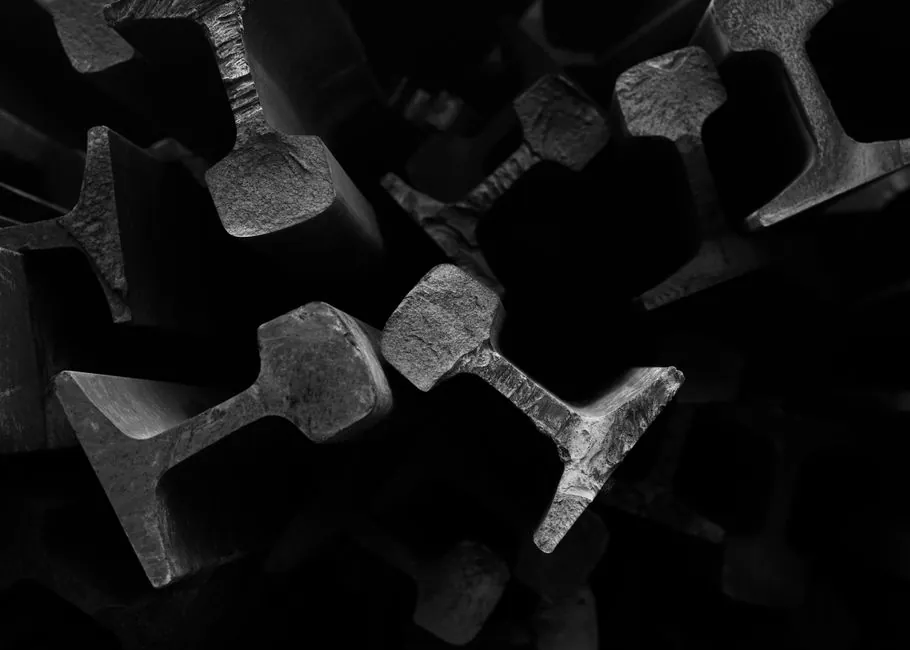
Railway component foundries running hot box shell core lines on coated silica sand typically land on the 10–20 kg core weight band, 20 kg shooting capacity, and 6 bar blow pressure cell, with 440 V 3-phase and electric core box heating as the standard configuration [S2].
That envelope covers the bulk of railway castings buyers actually order: wheels, brake parts, and bogie elements, all of which are produced in shell molding with hot core box cores for accurate internal shapes and smooth surfaces [S4].
Working Spec Window for Rail-Component Cores
The 10–20 kg core weight window matches what hot box shell core shooters deliver at 6 bar blow pressure with electric core box heating, and is the cell that railway parts foundries run most often when consolidating wheel, brake, and bogie core production on a single platform [S2]. Below 10 kg the auto shell core shooter line drops to a 12 kg shooting capacity at 4 bar for smaller core weight (5–10 kg) work, which tends to be over-specified for railway bogie cores and under-utilized on wheel cores [S2]. For general sand core equipment context outside the railway niche, the broader core shooter category covers standard, auto, and double-head variants sized to core weight, production volume, and application rather than to a single product line [S1].
Auto Shell vs Roll-Over vs Standard Core Shooter
Automatic shell core shooter machines with horizontal core box mounting, Mitsubishi PLC, and 20 kg shooting capacity are the practical workhorse for railway parts, with sand level sensors, individual temperature controllers for both halves of the core box, and Industry 4.0/SCADA hooks as standard fitment [S2]. Roll-over shell core shooters keep the same 10–20 kg core weight and 20 kg shooting capacity at 6 bar, but use a rollover core box mounting so the shell can be inverted for uniform thickness and surface finish on larger bogie cores [S2]. Standard core shooters, including auto and double-head variants, are aimed at general foundry work where the core is not shell-formed and the rail casting is not the primary product; these are widely used by foundries, core shops, automotive casting manufacturers, pump and valve component makers, sanitary fitting producers, hardware manufacturers, and general engineering industries [S1]. For deeper background on the shell core process family see the shell core shooter reference page.
Process Fit: Shell Molding on Rail Castings
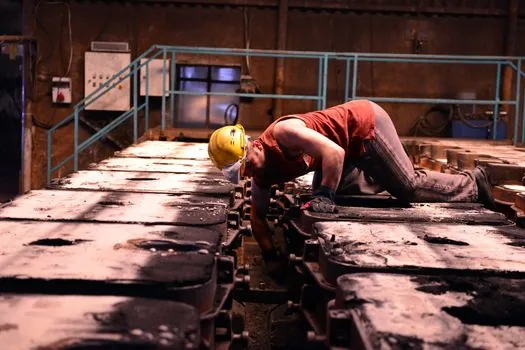
Shell molding with hot core box production is the rail casting process of record for hollow or complex rail parts, since the cores deliver accurate internal shapes and a smooth surface that cuts downstream machining [S4]. Material options for these castings cover ductile iron, carbon steel, stainless steel, and aluminum alloys, with the choice driven by the railway component duty (wheels, brake parts, bogie elements) rather than by the core shooter itself [S4]. Coated sand is applied to form a strong shell, with pattern creation, shell building, core making, mold assembly, pouring, cooling, and finishing as the discrete stations the hot box line has to feed [S4]. For a parallel decision framework in an adjacent casting segment, see hot box core shooter selection for agriculture machinery castings, which uses the same 10–20 kg / 6 bar envelope but lands on different core box heating priorities.
Comparison Table: Three Hot Box Configurations for Rail
The three configurations line up against core weight, blow pressure, mounting, and shooting capacity as follows, drawing on the published data sheets: [S2]
Selection Criteria Buyers Should Lock First
Before any quotation, four inputs have to be nailed down: target core weight (most rail cores land in the 10–20 kg band), required shooting capacity (20 kg for bogie and brake cores, 12 kg only for smaller auxiliary cores), core box mounting (horizontal for the auto shell cell, rollover for heavier asymmetric bogie cores), and control package (fully automatic PLC, ideally Mitsubishi, with SCADA and individual temperature controllers on both core box halves) [S2]. Power supply is fixed at 440 V 3-phase across the line, and core box heating is electric rather than gas for the models actually shipping into railway parts work [S2]. For foundries that also run cold box lines for the same rail castings, the cold box core machine reference covers the amine-cured complement to this hot box setup. Closer to a foundry process overview, the hot box core machine page tracks the broader machine category behind these specs.
What Hot Box Selection Is and Is Not For
Hot box core shooter selection in the 10–20 kg / 6 bar band is for railway parts foundries producing wheels, brake parts, and bogie elements in shell molding with hot core box cores, where a single platform has to cover multiple core sizes and the buyer needs PLC-controlled repeatability [S2][S4]. It is not for low-volume job shops running one-off rail prototypes, where standard core shooter variants without a full PLC stack are the lower-cost fit, nor for very large rail castings that would push core weight above 20 kg and force a different machine class [S1][S2]. Across the broader market, the same machine class also serves foundries, core shops, automotive casting manufacturers, pump and valve component makers, sanitary fitting producers, hardware manufacturers, and general engineering industries, so the rail-specific spec window is a subset of a wider application base rather than a standalone niche [S1].
For deeper cross-segment sizing logic, the hot box core shooter sizing for lighting fixture foundries piece shows how the same 10–20 kg / 6 bar cell moves when the priority shifts from rail duty to thinner-wall cores. Track going forward: whether a railway foundry can pull cycle time below the current PLC-controlled baseline on 20 kg cores, and whether the Industry 4.0/SCADA hooks on the auto shell model [S2] are actually being used to log per-core box temperature and blow-pressure traces at production scale [S4].