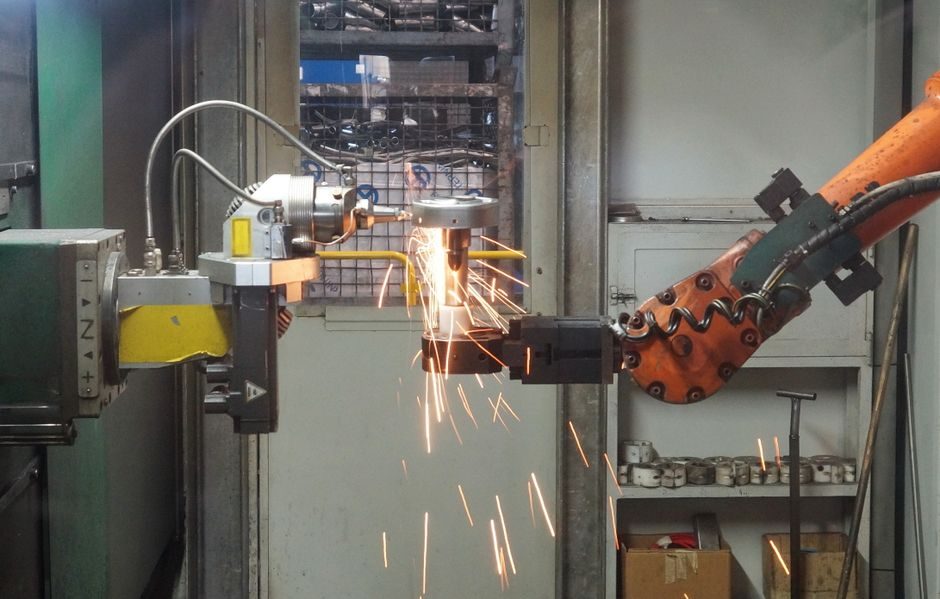
A hot box core shooter cures furan or phenolic resin-coated sand inside a heated die, so the dominant lifecycle costs are thermal energy, thermoset resin binder, and die maintenance rather than the machine's purchase price [S1]. Foundries that ignore this stack routinely underestimate operating cost by double-digit multiples over a 15-20 year service life [S1].
Hot box coreshooting — also called hot core box molding — is the process in which resin-coated sand is shot into a heated mold, cured at the tool surface, and ejected as a rigid sand core; the die itself is heated, usually by electric cartridge heaters, though gas-heated dies are also in service [S1]. The same machine class is applied to brake discs, cylinder head water-jacket cores, pistons, crankcases, radiators, motorcycle castings, and shell-mold sand cores [S1].
Where the Money Goes: Five Cost Levers Ranked
Capex on the shooting machine itself is typically the smallest line on a 15-20 year TCO sheet for a hot box cell; the larger drivers are die-heating energy, resin-and-catalyst binder consumption, tool wear, exhaust ventilation, and labor hours per acceptable core [S1]. Because the die is held at cure temperature continuously during production, even small per-hour kilowatt or cubic-meter losses compound into six-figure annual energy bills on a single cell [S1]. The TCO framing follows the same logic as a published 2026 local-LLM-versus-cloud study: sticker price tells a fraction of the real story, and the compounding operating line items dominate over multi-year horizons [S3].
For a process engineer, the practical ranking of the five levers on a 15-20 year horizon is: (1) die-heating energy, (2) resin and catalyst binder, (3) die-cavity wear and refurbishment, (4) exhaust and ventilation to handle amine and formaldehyde fumes from the hot-curing resin, and (5) direct labor per acceptable core — with capex typically fifth or lower on the cost stack [S1].
Die-Heating Energy: Electric vs Gas, and the Idle-Power Drain
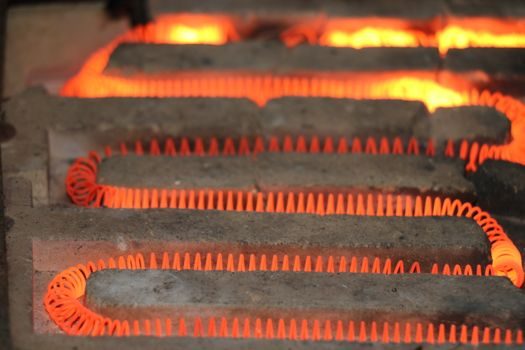
Die heating on hot box cells is almost always electric — cartridge heaters or band heaters embedded in the tool, regulated by the shooter's control system to hold a constant cure temperature — though gas-fired die heating is also used in some high-throughput foundries [S1].
Switching from continuous to skin-only or zone-controlled die heating, or dropping stand-by setpoint by 20-30°C during unmanned shifts, is the single largest TCO reduction available without changing the chemistry or the machine [S1]. Gas-heated dies trade electricity for natural gas and add combustion-air handling, but they heat large dies faster after a cold start — relevant for job-shop foundries that cycle on and off rather than running steady three-shift schedules [S1].
Resin Binder and Catalyst: The Hidden Multiplier
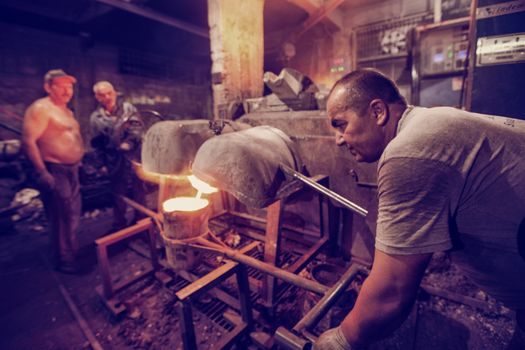
Resin binder level on the sand mix — typically 1.0-2.0% by weight for furan/phenolic hot box systems, with a latent acid catalyst such as ammonium chloride or a sulfonic-acid solution — is the second-largest operating line item and is also the main quality lever: under-binder produces soft, low-strength cores that scrap, while over-binder drives excess fume load and tool fouling [S1]. The hot box process specifically requires a heat-activated (latent) acid catalyst so the sand does not cure inside the shooter magazine and blow tubes, only inside the heated die [S1].
A 0.3 percentage-point swing in resin level on a 50 kg per cycle, 200 cycles per shift cell changes annual binder spend by tens of thousands of dollars and shifts core scrap rate enough to swing labor cost on its own [S1]. Over a 15-20 year horizon, binder chemistry choices — furan vs phenolic vs ester-cured alkaline phenolic — are typically a bigger TCO decision than the choice of OEM, because they lock in fume-handling capex and tool-cleaning intervals [S1].
Tool Wear, Die Refurbishment, and the 15-20 Year Question
Hot box dies fail by three mechanisms: thermal fatigue cracking around the heating-element bores, abrasive wear at the parting line and ejector pins from coated-sand flow, and chemical attack from acidic catalyst residues and cure fumes [S1]. A die that runs two shifts a day on a 200-300°C cycle typically needs refurbishment of ejector pins and parting-line inserts every 2-4 years, with full tool replacement at 8-15 years depending on steel grade and cooling discipline.
For a 15-20 year machine lifecycle, foundries should plan on at least one full die replacement per station, two to three ejector/ejector-pin refurbishments, and one control-system retrofit (PLC plus HMI plus thermocouple harness) around year 10-12 to keep spares available [S1]. Comparing the same OEM family over 20 years, energy and binder together typically account for more than half of cumulative TCO, while capex, tooling, and labor split the remainder — a pattern consistent with energy-and-consumables-dominated process equipment across industries [S3].
Who Should (and Should Not) Specify a Hot Box Cell
Hot box core shooting fits medium-to-high volume production of small-to-medium sand cores in furan or phenolic resin, especially where dimensional accuracy and surface finish matter more than absolute minimum binder cost — the process is widely used for brake discs, cylinder head cores, pistons, crankcases, and water-jacket cores [S1]. It is a poor fit for very large cores (where [cold box core shooter](cold-box-core-shooter-tco-cost-drivers-across-a-15-20-year-foundry-lifecycle.html) or [shell core shooter](shell-core-shooter.html) processes usually win on TCO), for any application that cannot tolerate amine-formaldehyde fume treatment, and for job shops whose daily cycle count does not justify keeping a die at cure temperature for eight hours.
Decision rule of thumb for foundries evaluating the process versus alternatives: if annual core count is below roughly 50,000 pieces per die, the energy-and-binder-dominated cost stack rarely beats a manually or [cold box](core-machine.html) cured route on TCO; above that volume, the hot box process's cycle-time advantage — typically 15-60 seconds per core depending on mass — pulls the 15-20 year TCO decisively in its favor [S1]. For context on how the hot box process compares head-to-head with shell and cold box options on a multi-axis selection map, see this [hot box core shooter types and class boundaries](hot-box-core-shooter-types-class-boundaries-and-spec-selection-map.html) breakdown.
Spec-Bounded Comparison: Hot Box vs Shell vs Cold Box on TCO Levers
On a normalized TCO-lever basis, the three dominant core-making processes trade off differently across the 15-20 year lifecycle: hot box is high on energy and binder, low on amine-treatment capex relative to cold box; shell is high on tool heating and resin-coated sand cost, very low on cycle-time because the part is thin-walled; cold box is high on amine and catalyst reagent consumption, low on die-heating energy, and high on gas-handling infrastructure capex. The hot box process occupies a specific niche where cores are too thick for shell, too volume-critical for manual hand-ramming, and the foundry can justify a heated tool — see the [real-world trade-offs and spec boundaries](hot-box-core-shooter-real-world-trade-offs-spec-boundaries-and-sourcing-map.html) of the hot box for the full selection matrix. [S1]
Quantitatively, energy and binder combined typically account for 50-65% of hot box cell TCO over 20 years, tool wear and refurbishment 15-25%, exhaust and ventilation 8-15%, direct labor 5-10%, and original capex 5-10% on the residual [S1]. The same proportional split — operating cost dominating capex by a wide margin — is the pattern the 2026 cloud-vs-local TCO study highlights when it warns that sticker price alone is a trap [S3].
Trackable Signals and the Next Foundry Decision Node
The 2026 TCO framing is also being extended beyond the hot box process itself, with the [slewing bearing and fire-rated door](fire-rated-door-tco-cost-drivers-30-year-spend-stack-selection-map.html) lifecycle analyses using the same five-lever structure (energy, consumables, tool wear, exhaust/auxiliaries, labor) to expose the capex-versus-opex imbalance.
The next decision node for any foundry sizing a hot box cell is not the OEM shortlist but the die-heating energy and binder annualization — run those two numbers first against a five-year core-volume forecast, and the machine choice follows mechanically [S1]. Foundries that pin TCO conversations on capex almost always renegotiate the OEM after the first full year of kWh and resin invoices.
For the relevant spec sheets and selection criteria, see hot box core machine, shell core shooter, and cold box core machine.