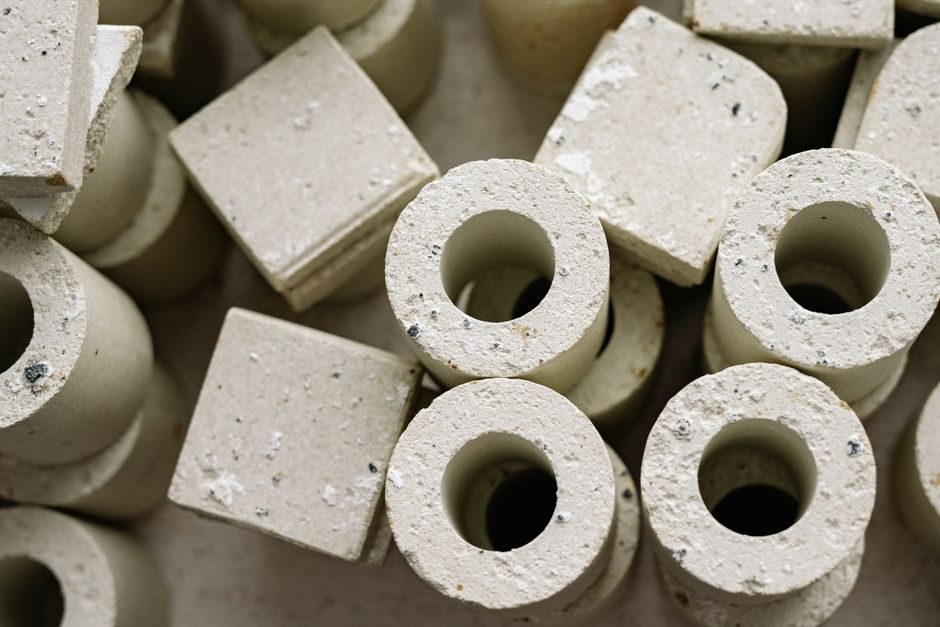
Cold Box Core Shooter total cost of ownership is dominated by consumables and gas-handling, not the machine price tag: amine, phenolic/PU resin, and sand recurring spend over a 15-20 year service life routinely exceeds the capex delta between a manual single-station and an automatic three-station rotary cold box core shooter by 2-5x [S1][S3].
Buyers comparing quotes from Pune-based manufacturers and global integrators should weight amine scrubber throughput, PLC architecture, and parting-line count before focusing on headline price, because the same part can be made on a four-way-parted, three-station rotary, or horizontal-parted unit with materially different downstream cost per core [S3].
TCO Scope: Five Cost Buckets a Cold Box Core Shooter Owns
Total Cost of Ownership in foundry equipment collapses into five buckets: acquisition (machine + freight + foundation), installation and commissioning, consumables (resin, sand, amine or CO2), energy and utilities, and maintenance plus end-of-life decommissioning [S2][S4].
The Microsoft FinOps framing of TCO as a lifecycle metric that bundles direct and indirect cost over a resource's service life maps directly onto a shell core shooter or cold box line, where the resource life commonly spans 15-20 years of two- or three-shift operation [S2]. Buyers who stop at PO price miss the 60-80% of lifecycle spend that lives in buckets 3 and 4 once throughput is normalised [S4].
Cost Driver 1 — Curing Chemistry: Amine Cold Box vs CO2 Cured vs Shell
Amine-cured cold box (phenolic-urethane, gassed with TEA or DMEA) is the dominant high-volume choice because cycle times fall to 15-30 s per core versus 60-120 s for CO2-cured sodium silicate, and core strength after amine purge is high enough for thin-wall iron castings [S1][S3].
The hidden cost is amine handling: every kilogram of phenolic resin dragged out by the purge stream must pass through a wet scrubber, and amine scrubber water treatment, NaOH dosing, and blowdown are recurring opex items that rarely appear in vendor quotations [S3]. For foundries below roughly 20 t/day of core weight, CO2-cured hot box core machine alternatives or shell shooters with phenolic novolac resin (no amine) shift the opex curve back toward the consumables bucket and away from the environmental-compatibility bucket [S1].
Cost Driver 2 — Parting Line and Station Count: 1 vs 2 vs 3 vs 4-Way
Single-station horizontal-parted cold box units suit short runs and prototype tooling, while three-station vertical-parted rotary cold box machines are specified when the same core is run in volume above ~50,000 cores/month, because indexing, gassing, and purge happen in parallel rather than serial [S3].
The capex premium for stepping from single-station horizontal to a three-station rotary typically runs 1.8-2.5x, while the labour and cycle-time savings recover that delta inside 18-36 months at two-shift utilisation above 70% [S3].
Cost Driver 3 — PLC, Servo, and the Retrofit Cliff
Most cold box core shooters shipped before 2015 carry relay-logic or early PLC controls that are increasingly expensive to support; spare-part lead times for proprietary CPU modules and obsolete HMI panels routinely stretch past 12 weeks [S3].
Modern automatic units ship with PLC + HMI architectures that expose cycle counters, amine dosing diagnostics, and sand level interlocks over Ethernet, which lets a plant track OEE per station and amortise the controls premium through scrap reduction [S1]. Specifying open-architecture PLCs and fieldbus I/O during procurement is the single cheapest hedge against the retrofit cliff, because a controls retrofit on a 20-year-old mechanical core shooter can run 18-30% of original machine price [S3].
Cost Driver 4 — Sand, Resin, and Amine Unit Economics
Cost Driver 5 — Energy, Compressed Air, and Amine Scrubber Load
A three-station rotary cold box core shooter typically draws 30-60 kW of installed power across blow heads, exhaust, sand feed, and amine scrubber circulation, with compressed air at 5-7 bar being the single largest pneumatic load [S1].
Leakage on a 20-year-old compressed-air ring is the most common silent TCO leak in older cold box lines, because amine gassing pressure is 3-5 bar and any seal loss shows up as higher compressor runtime and amine overuse rather than a visible process fault [S3].
Use-Case Map: Which Cold Box Class Fits Which Foundry
Jobbing foundries running below 200 t/year of castings usually end up over-paying for a three-station rotary: a single-station horizontal or one-half-fixed-one-half-moving unit delivers lower TCO because the capex-to-throughput ratio is unfavourable for rotaries below ~50,000 cores/month [S3].
High-volume iron and steel foundries in the 5,000-50,000 t/year band running the same core families for automotive or pipe-fitting customers should default to automatic three-station vertical-parted rotary cold box machines, with amine scrubber and sand-cooler ancillaries factored into the bid from day one [S1][S3]. For thin-wall aluminium or copper-alloy cores where surface finish and gas evolution matter more than strength, cold chamber machine die-casting cells paired with shell core shooters often beat amine cold box on TCO because the shell process eliminates amine handling entirely [S1].
Limitations and Failure Modes That Distort TCO
Three failure modes skew cold box core shooter TCO calculations: unplanned amine scrubber downtime (forces a full line stop), sand-binder mix drift (raises scrap rate before any alarm fires), and core-box heating/cooling imbalance on long-cycle cores (warps tooling and forces re-machining) [S3].
A useful cross-check is to compare this lifecycle profile against other capital-equipment TCO benchmarks such as the FRP composite 25-year spend stack and mining dump truck 20-year lifecycle cost stack, both of which show consumables and energy dominating capex by 3-7x over service life [S2][S4]. Buyers who skip a 15-year opex projection before signing a cold box PO routinely underestimate lifecycle spend by 40-60% [S4].
Procurement Checkpoints and Sourcing Signals
Three checkpoints belong on every cold box core shooter RFQ: amine scrubber sizing in m3/h per station, PLC platform and I/O count with a 10-year spares commitment, and parting-line count justified against the core family's annual volume [S1][S3].
Watch the 2026-07-24 Pune-India manufacturing cluster for new three-station rotary capacity ramp, and track whether 2026 Q3 quotes from cold box integrators are starting to bundle amine scrubber and sand automation as standard rather than as separate line items, because that bundling is a reliable early signal of where opex risk is being pushed in the supplier's commercial model [S1][S3]. For a complementary look at how a different foundry consumable category breaks down, the concrete batching plant TCO cost stack and the industrial coating TCO lifecycle spend stack both apply the same driver-mapping logic to adjacent capital-goods categories.