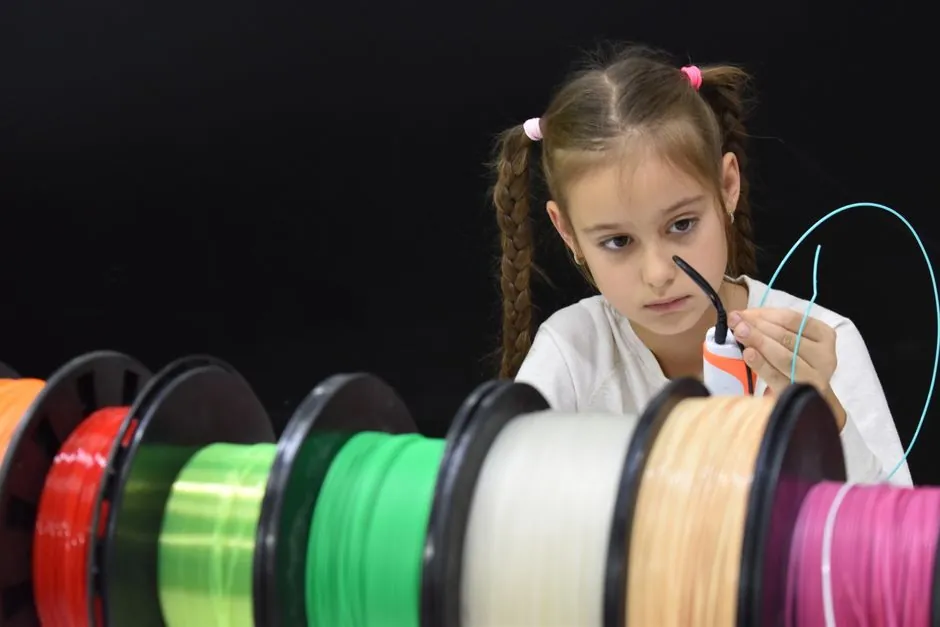
Additive manufacturing (AM) is described in McKinsey-quoted industry literature as a technology native to Industry 4.0, sitting alongside cloud computing, AI, the Industrial Internet of Things, data analytics, and industrial robotics as one of the pillars that collectively define the smart factory [S2]. Where the other pillars move bits around, 3D printing moves atoms: a digital CAD file becomes a physical part, which makes it the only Industry 4.0 technology that "holistically applies the defining characteristics to the actual fabrication of parts" [S2].
Its role inside a working plant is structural, not decorative: AM collapses lead time on spare parts, hosts digital inventory instead of physical stock, and feeds live process data back to a manufacturing execution system. The same review notes that "digital inventory in the form of CAD files is uploaded to 3D printer software, resulting in conversion from the digital object to a physical equivalent" [S2], which is why a process engineer can think of a printer as just another node on the plant network, comparable to a pressure transmitter or a flow meter on the control loop.
Where 3D Printing Sits in the Nine-Pillar Framework
Industry 4.0 is normally taught as nine digital pillars: big data and analytics, simulations and digital twins, autonomous robots, horizontal and vertical system integration, the Industrial Internet of Things (IIoT), cybersecurity, additive manufacturing, cloud computing, and augmented reality [S3]. 3D printing overlaps almost every one of them: cloud platforms host the print queue, IIoT sensors stream chamber temperature and vibration, digital twins simulate layer-by-layer build, and big-data analytics flag failed jobs [S2][S3].
Two pillars matter most for the shop floor. First, IIoT, because a modern printer exposes chamber temperature, nozzle pressure, material feed rate, and laser power over standard protocols, which is the same telemetry philosophy a pressure sensor or a 3D scanner brings to a metrology cell. Second, simulations and digital twins, because the build can be pre-validated in software before any powder or filament is consumed, cutting failed-build scrap [S3]. A peer-reviewed review reaches the same conclusion, calling AM "one of the most important aspects of Industry 4.0" because it lets fabricators produce complex parts and cut inventory cost simultaneously [S1].
From Standalone Box to Cloud-Native Fabrication Node
Early professional 3D printers were isolated hardware; modern ones are full platforms with cloud connectivity, data analytics, automation hooks, and software integrations [S2]. A plant team can now push a CAD file from a global engineering server to a printer in another plant, watch the build in real time, and trigger post-processing robotics, which is the cloud-fabrication model multiple vendors describe in their technical writing [S2][S5].
That connectivity is what unlocks the digital-inventory model: instead of storing a forged bracket on a shelf for 10 years, the plant stores the CAD and prints a replacement in hours, a change the same source frames as "the only [Industry 4.0 technology] that applies the defining characteristics to the actual fabrication of parts" [S2]. In a process plant the practical benefit is fast turnaround on legacy spares that the original equipment manufacturer may no longer support, plus the ability to iterate on jigs, fixtures, and ergonomic aids without waiting weeks for an outside machine shop [S1][S4].
What 3D Printing Delivers in Real Plant Use
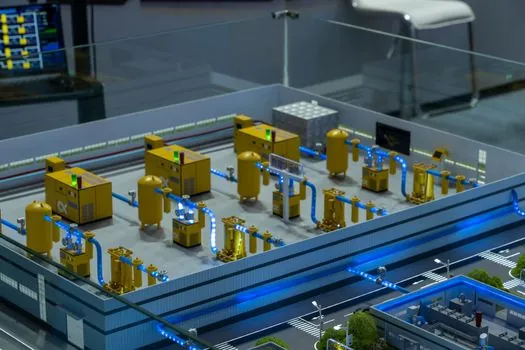
The most-cited operational wins in the literature are three: shorter lead time on parts, lower tooling cost for low volumes, and the ability to consolidate multi-piece assemblies into single printed parts, which "can offer increased flexibility in the construction process" and in ongoing operations [S4]. A flexible shop can re-route a print job between machines when one printer is down, which is the kind of resilience Industry 4.0 is supposed to provide [S2][S5].
A second benefit is on-demand spare-parts manufacturing, especially for obsolete components, custom brackets, or one-off tooling. Where a CNC setup might take a full day of fixturing, a printed part can come off the bed in hours, with geometry verified against the original CAD [S1]. For asset-heavy industries this directly supports predictive-maintenance programs, because the maintenance crew can move from "we need this part" to "this part is printing" inside a single work order. The same source observes that "printers are now accessible in cost and size, both as it relates to physicality and infrastructure demand: power consumption, physical space, air filtration" [S6], which is why printers now sit next to the concrete batching plant office or inside a maintenance shop rather than in a separate prototyping room.
Mainstream 3D Printing Technologies Compared for Plant Use
Engineers selecting a process usually pick from four families, each with a different fit in an Industry 4.0 setting: [S3]
FDM (Fused Deposition Modeling) is the lowest-cost option, uses thermoplastic filament (PLA, PETG, ABS, nylon, PEEK), and is the workhorse for jigs, fixtures, and ergonomic aids on the plant floor. It tolerates a wide range of operating environments and needs minimal enclosure work, but tolerances are typically ±0.2 to ±0.5 mm on consumer-grade machines.
SLA (Stereolithography) and MSLA (masked SLA) use UV-cured resin and deliver higher surface finish and tighter tolerances (around ±0.05 mm on a well-tuned machine), at the cost of post-curing and a more controlled operator environment, because uncured resin is a handling concern. Good for detailed prototypes and small functional parts.
SLS (Selective Laser Sintering) sinters nylon powder with a laser, has no support structures, and produces mechanically robust parts suitable for end-use functional components. Build envelopes are larger than FDM and the unsintered powder doubles as support, which is why SLS is favoured for low-volume production of brackets, manifolds, and housings.
Metal PBF / DED (Powder Bed Fusion and Directed Energy Deposition) cover the high-end industrial tier. DED systems can deposit multiple kilograms per hour of stainless, tool steel, Inconel, or titanium, with build volumes measured in hundreds of millimetres in each axis; these are the systems a heavy-industry buyer pairs with a pressure transmitter qualification program, because printed metal parts can carry the same pressure and temperature ratings as cast or wrought equivalents when post-processed to spec.
On the four criteria a process engineer usually weighs (cost per part, lead time, mechanical performance, and integration with plant data systems), FDM wins on cost and lead time, SLS wins on mechanical performance for polymers, SLA wins on surface finish, and metal AM wins on metal part performance but loses on cost and lead time. The trade-off is consistent across the practitioner literature, which frames AM as a complement to CNC and casting, not a wholesale replacement, especially in regulated parts where standards and traceability still favour subtractive processes [S2][S5].
Integration With the Rest of the Plant Stack
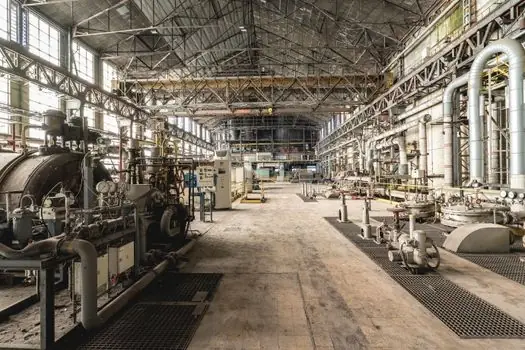
Connecting a printer to the plant network is a standard IIoT exercise: the printer exposes REST or MQTT endpoints, the MES (Manufacturing Execution System) ingests build status, and the ERP (Enterprise Resource Planning) system holds the part master and revision. The result, as one source puts it, is that "print jobs can be monitored and initiated across different geographic locations" from a single dashboard [S2], which lines up with the vertical/horizontal integration pillar of Industry 4.0 [S3].
Data is where the deepest return sits. A printer that streams layer images, chamber temperature, and laser power into a data lake feeds the same analytics layer that monitors a flow meter or a pressure transmitter, and the same machine-learning models that flag a pump degradation can flag a build that is drifting out of tolerance, a pattern repeatedly noted in the Industry 4.0 / AM literature [S1][S7]. Cybersecurity becomes non-trivial at that point, which is why the nine-pillar list treats it as a standalone pillar rather than an IT subset [S3].
Limits, Failure Modes, and Honest Constraints
AM is not a free lunch. Mechanical anisotropy is real: an FDM part printed in the Z direction typically has 30 to 60 percent of the strength of the same part printed in XY, which has to be designed in. For load-bearing parts, especially in pressure or rotating equipment, the printed geometry has to be validated against the relevant material standard, and many plant buyers still default to forged or cast equivalents for safety-critical service [S1][S5].
Process control is also less mature than for CNC. Layer adhesion, porosity in metal AM, warping in FDM, and resin curing in SLA are all sensitive to ambient conditions, so an Industry 4.0 plant still needs a controlled build environment, calibrated machines, and trained operators, which is the same constraint that shows up in any process-control discussion [S3]. Material supply is a third pinch point: qualified polymer and metal powders come from a smaller supplier base than bar stock, and lead time on exotic alloys can run weeks, which offsets some of the on-demand advantage [S2].
For these reasons, the realistic role of 3D printing in an Industry 4.0 plant is hybrid: printed jigs, fixtures, ergonomic aids, and a growing share of polymer spares, with metal AM reserved for low-volume, high-value, or geometry-impossible parts, while CNC and casting continue to carry the high-volume, safety-critical workload [S1][S4].
Implementation Checklist for a Plant Engineer
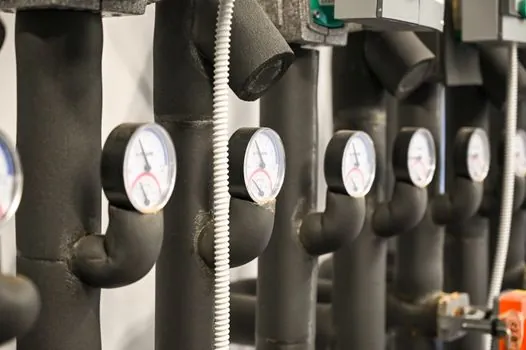
Four moves cover most of the value. First, pick a starter use case that is high pain and low safety risk: maintenance fixtures, gauge shims, or labelling brackets, because these print fast, fail safely, and build operator trust [S2]. Second, connect the printer to the plant network through a documented protocol and feed build telemetry to the same historian that holds the pressure sensor and flow meter data, so analytics is consistent across the plant [S3][S7].
Third, qualify the supply chain: one polymer filament source for FDM jigs, one qualified metal powder supplier for any structural part, and a documented post-processing route (annealing, HIP for metal AM, UV cure for resin) [S1]. Fourth, write an internal standard for printed parts that names the allowable machines, materials, layer orientation rules, and acceptance tests, because the lack of such a standard is the single most common reason an AM program stalls inside a regulated plant [S4][S6].
How 3D Printing Connects to the Wider Plant
The clearest signal of maturity is when a printed part is treated as just another item in the asset register: CAD under version control, print job recorded in MES, build telemetry in the historian, and acceptance test signed off against the same document that governs a industrial valve replacement. That convergence is exactly what the Industry 4.0 literature describes, where "3D printing dovetails with other Industry 4.0 technologies such as big data analytics, artificial intelligence, and autonomous robots" [S5] and where AM "is yet another driver to move to a flexible software platform that will allow the global use of data in ever more sophisticated" ways [S7].
Trackable signals in 2026 include the share of plant spares that ship as digital files rather than physical crates, the percentage of FDM and SLS machines reporting telemetry to the plant historian, and the first plant-level audit that admits AM-printed parts into the same qualification register as cast or forged components. When those numbers start to appear in maintenance KPIs, AM has moved from a workshop curiosity into a load-bearing part of the Industry 4.0 stack, alongside the connected 3D scanner, the concrete batching plant controller, and the rest of the sensor layer that defines a modern plant [S2][S3][S7].
This topic is covered further in AWS C5.4 Stud Welding Recommended Practices: Scope, Use, and Withdrawal Status.