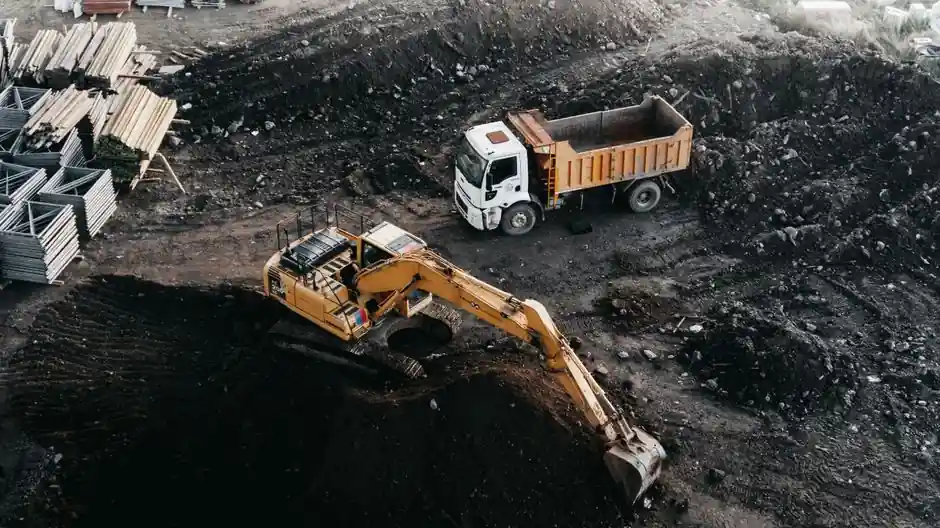
A modern hydraulic excavator is a torque-conversion chain, not a digging machine in the mechanical sense: diesel rotational power is converted into hydraulic pressure, and that pressure is converted back into linear and rotary motion at the work tools [S1][S2].
For a typical 20-25 t class machine, the diesel engine delivers 110-130 kW per ISO 9249, the main hydraulic pumps pressurize oil to 34.3-37.3 MPa, and a 0.8-1.2 m³ bucket reaches 6.0-7.0 m deep and 9.0-10.0 m out per ISO 6015, while the upper structure slews at 9-11 r/min [S2].
The three-stage energy path: engine, pump, actuator
The diesel engine drives one or more variable-displacement hydraulic pumps through a power take-off; the pumps raise hydraulic oil from tank pressure (near atmospheric) to the system working pressure band of 34.3-37.3 MPa [S2][S4].
That high-pressure oil is routed by pilot-operated control valves to either linear hydraulic cylinders (boom, arm, bucket) or rotary hydraulic motors (swing, travel). When oil enters the head end of a boom cylinder, the piston extends and the boom rises; reversing flow retracts the piston and lowers the boom, which is the same force-balance logic used in any pressure sensor driven hydraulic actuator [S1][S4].
The pump-to-actuator path is identical across machine classes: a 1.5 t mini excavator and a 90 t mining shovel use the same energy chain, only the pump displacement, cylinder bore, and accumulator sizing scale with operating weight. This is why the excavator working principle can be taught once and applied to a 13-tonne job site unit or a Cat 390 long-reach mining configuration [S1].
Component map: undercarriage, house, front linkage, hydraulics, controls
The undercarriage carries the machine and transmits travel force to the ground: tracked undercarriages spread load to 40-60 kPa ground pressure and are the default for soft or uneven terrain, while wheeled undercarriages trade lower ground pressure for higher road speed on paved urban sites [S2][S4].
The house (upper structure) mounts the engine, pumps, cab, counterweight, and the swing bearing; a hydraulic swing motor with planetary reduction slews the house at 9-11 r/min on a mid-size unit, and the swing circle is what allows the machine to dump without repositioning the tracks [S2][S4].
The front linkage is three pinned segments: boom (pivoted to the house), arm or dipper (pivoted to the boom end), and bucket (pivoted to the arm end). Each joint is moved by a double-acting hydraulic cylinder, and cylinder forces multiplied by the lever geometry of the linkage set the digging force at the bucket teeth [S1][S3].
The hydraulic system itself is a closed loop of reservoir, suction strainer, pumps, control valves (sectional, load-sensing on most post-2010 units), actuators, return filter, and oil cooler. A 20-25 t excavator holds roughly 300-400 L of diesel and 150-200 L of hydraulic oil, and the oil also serves as the working fluid in pilot circuits that move the main spools, the same pilot principle used in industrial valve actuation [S2][S4].
How operator input becomes bucket motion
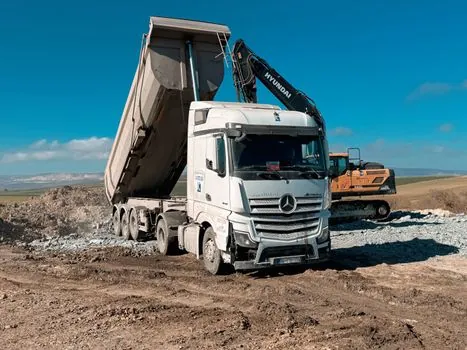
Joystick and pedal input in the cab is not mechanically linked to the valves on older units and is purely electrical on newer electronic-hydraulic (EH) controls: the joystick output is read by a controller, which modulates a proportional pressure-reducing valve that sets pilot pressure on the main spool ends, and spool position then meters oil flow to the actuator [S1][S2].
Because flow is metered (not just on/off), the operator gets proportional speed on each function: a small stick deflection produces a low pilot pressure, partial spool stroke, and slow cylinder extension; full deflection commands full pump flow and maximum boom/arm speed. The same proportional logic governs the swing motor and the two travel motors, so the upper structure and the tracks share one control architecture [S2][S4].
Load-sensing pumps, standard on most current mid-size and large excavators, vary pump displacement to maintain a constant pressure differential across the control valve regardless of load, which means the operator's joystick command maps to speed rather than to raw flow. This is also why two excavators of the same class can feel very different at the bucket: pump regulation strategy, not just peak pressure, sets the digging feel [S1][S2].
Energy losses and where the heat goes
Energy conversion in a hydraulic excavator is roughly 35-40% efficient end-to-end (fuel chemical energy to useful work at the bucket), with the largest losses in the engine, the pump, and the throttling across the control valves. Open-center systems bleed off excess flow as heat whenever a function is not demanded; closed-center load-sensing systems cut that loss by destroke the pump to near-zero flow at idle, which is why modern units show visibly lower fuel burn at the same workload [S1][S2].
That heat is rejected by the hydraulic oil cooler and the engine radiator, which is one reason a 20-25 t excavator runs the operator ear noise at 70-75 dB(A) per ISO 6395 and ambient ratings of -20 to 40°C, and is the limiting factor for continuous-duty work in hot climates [S2].
Counterweight sizing, a single-number decision most spec sheets bury, sets how much tractive effort the front linkage can apply before the machine lifts off the tracks; a heavier counterweight trades transport width and ground pressure for higher breakout force, and is the single biggest mechanical lever an operator can change between jobs [S2][S4].
Type-by-type fit: crawler, wheeled, mini, and long-reach
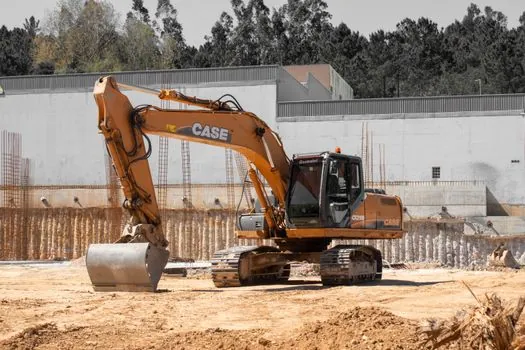
Crawler (tracked) excavators are the default for uneven, soft, or slope terrain, and are the only practical choice for mining and foundation work where ground pressure must stay under 40-60 kPa with a 20-25 t machine [S2][S3].
Wheeled excavators run on rubber tires, road at up to around 35 km/h on the highway between urban sites, and use outriggers and a front blade for stability during dig; they are wrong for soft ground but correct for street utility work where a tracked machine would tear up asphalt [S3][S4].
Mini excavators (typically 1-6 t) keep the same engine-pump-actuator chain, but at lower system pressure and with smaller pumps; they trade raw single-cycle digging force for the ability to fit through a 1 m gate and work next to a foundation wall, which is why landscaping and utility contractors specify them over mid-size units even at higher hourly cost [S3].
Long-reach and demolition-configured excavators extend the boom and arm (and add a third articulation segment in some demolition rigs) to push dig depth past 7 m or reach past 10 m; the trade is a heavier counterweight, higher ground pressure, and a noticeable drop in cycle time, which is why they are wrong for high-cycle truck-loading and right for slope finishing or pond work [S1][S2].
Maintenance and signal nodes worth watching
Greasing interval, every 50-250 service hours depending on the joint and the manufacturer's lube chart, is the most predictable wear-control point; pin-and-bushing wear at the boom-foot and arm-foot pivots is what sets the rebuild-vs-replace decision on older units [S1].
Hydraulic oil and filter life is the second signal node: most modern mid-size units run 1,000-2,000 hour oil change intervals with in-line return filtration down to roughly 4-10 µm absolute, and a sample-based oil analysis program is the cheapest way to catch pump or motor wear before it becomes a tear-down. Engine emissions tier (Stage IIIA/III per EU 97/68/EC on the cited mid-size spec) is the third signal: it sets the aftertreatment package, the DEF/AdBlue tank if present, and therefore the parts stocking you need to keep the machine earning [S2].
For a yard that already runs heavy lift, compare spec logic across machines the same way you would spec a truck and port crane for terminal operations: operating weight, engine power per ISO 9249, hydraulic pressure, bucket capacity per ISO 7451, and dig depth per ISO 6015 are the five numbers that survive a tender, and the diesel forklift selection logic translates to a surprising degree, since both pick the prime mover, then the hydraulic or hydrostatic system, then the work tool.