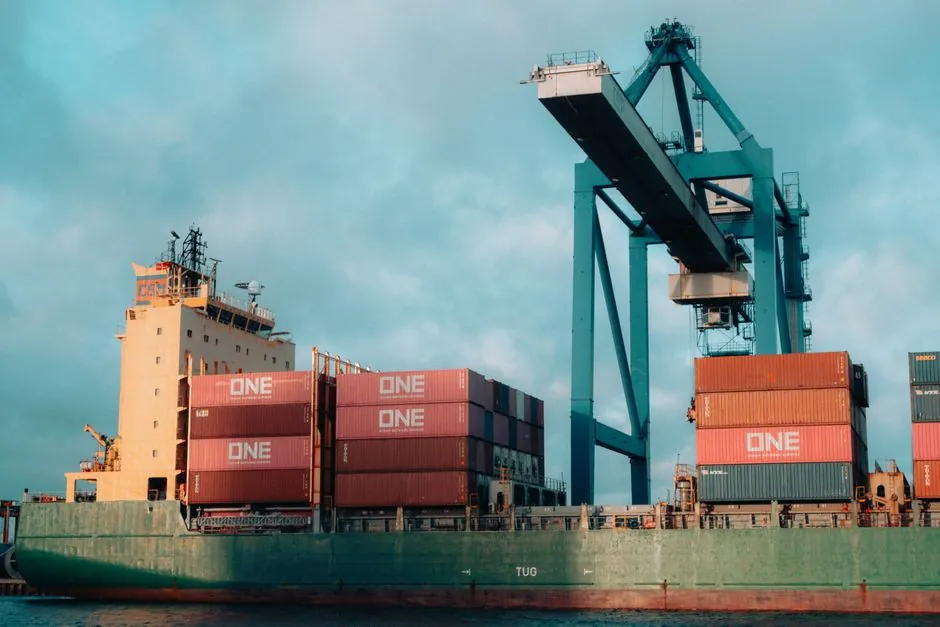
Container terminal operators in 2026 face a 5-axis decision tree: vessel class (Panamax to 24,000+ TEU ULCV), cargo mix (containers vs bulk vs break-bulk), yard density target, automation level, and total cost of ownership, with STS, MHC, RTG, and RMG each owning a distinct envelope [S1][S2][S5].
Mobile harbor cranes for general-purpose bulk and break-bulk handling typically land between $600,000 and $3 million per unit [S1], while an STS gantry for a ULCV berth pushes that number into the high single-digit millions, so procurement has to weight capital cost against moves-per-crane-hour before any spec sheet is opened [S1][S2].
STS Quay Cranes: The Container Throughput Benchmark
Modern STS cranes deliver 25 to 40 moves per crane hour under optimal conditions, with dual-tandem spreader configurations pushing past 40 moves/hour on automated cycles [S2]. Outreach of 60 to 72 meters covers the full beam of ultra-large container vessels, and lifting height above 52 meters with outreach beyond 69 meters is the de facto floor for any port serving 20,000+ TEU ships [S2][S5]. Rated load typically runs 30 to 75 tons under the spreader, with the 65-ton figure showing up repeatedly on new-build gantries sized for dual-lift 40 ft + 20 ft combinations [S1][S5].
Port Houston's Barbours Cut and Bayport terminals operate a combined 27 neo-Panamax STS units alongside 116 rubber-tired gantry cranes, a real-world ratio that puts yard equipment at roughly 4 RTGs per quay crane in a mixed semi-automated layout [S3]. For port projects matching the truck-mounted crane family on yard reach, the STS still anchors the waterfront while smaller boom units feed the apron.
RTG vs RMG: Yard Stacking Under Different Constraints
Rubber-tired gantry cranes lift up to 70 tons, run on diesel gensets as standard, and are increasingly available in fully electric configuration, with the first automated RTGs entering service in 2013 [S1][S4]. They stack containers 3 to 4 high across roughly 6 rows wide, with cable carrier systems like igus e-chain routing power and PROFIsafe-style control signals to the hoist [S4].
Rail-mounted gantry cranes use the same basic gantry geometry but ride on ground rails, which stabilises positioning, raises the ceiling on automation, and allows larger overall spans for higher-density yards [S1][S4]. RMGs handle stacks of 3 to 4 containers high and 6 rows wide in the common configuration, with double-cantilever designs enabling through-running between adjacent blocks [S4]. For procurement teams cross-referencing construction machinery and equipment budgets, the RTG wins on flexibility and lower civil works, while the RMG wins on energy per move and unmanned shift coverage.
Mobile Harbor Cranes: Multi-Cargo Berth Flexibility
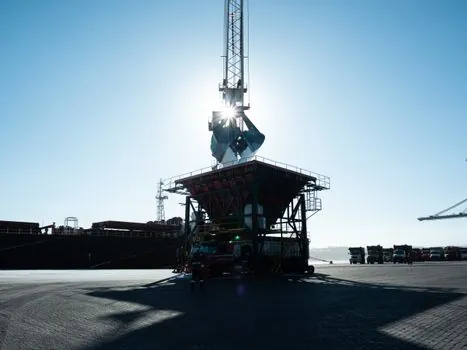
Mobile harbor cranes (MHCs) are diesel-electric or fully electric pedestal units on a slewing superstructure, free to walk between berths on rubber tires and serve bulk, break-bulk, project cargo, and containers in mixed mode [S2]. Where an STS is welded to its rail, an MHC trades peak moves-per-hour for operational agility, ideal for general-cargo berths and mid-size terminals that cannot justify dedicated quay cranes per cargo stream [S2][S4].
Grab-equipped MHCs handle coal, grain, and aggregates at rates that compete with dedicated continuous unloaders on smaller parcels, and the same machine swaps to a container spreader for cellulosic or steel products without a re-rig [S2]. This dual-cargo role explains why MHCs anchor the fleets at multi-purpose terminals like the Port of Antwerp, where berth flexibility outweighs raw STS throughput [S2].
Truck-Mounted Cranes: Apron, Empty-Yard, and Project-Cargo Roles
Inside the wider port ecosystem, truck-mounted cranes cover the mobility niches that fixed gantries cannot: lifting odd-sized cargo on the apron, handling empty-container repositioning in remote stack blocks, and supporting project-cargo loads that arrive outside the STS reach window. They share drivetrain platforms with heavy dump trucks for spares pooling, which matters when terminal fleets run mixed OEM rosters. [S2]
Selection hinges on boom length, outrigger spread, and remaining lifting capacity at the working radius demanded by the yard layout, the same triangle that drives spec'ing a truck-mounted concrete pump for port and terminal pours on the construction side of the same site. A 4-axle chassis with a 30-ton/meter rating typically covers empty-handler duties, while 5- to 6-axle units with 60-ton/meter booms step in for break-bulk and project lifts.
Selection Criteria and Common Mismatches
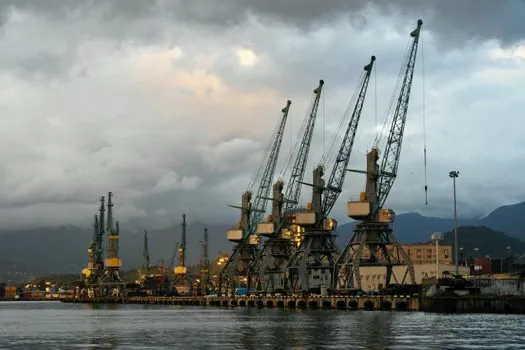
Match the crane to the primary cargo before anything else: bulk goes to grab/MHC, containers go to STS plus RTG/RMG, heavy-lift goes to high-capacity boom cranes, and mixed cargo defaults to MHC for flexibility [S4]. For terminals above 500,000 TEU/year, crane-type mismatch ranks in the top three causes of berth productivity loss, per the International Association of Ports and Harbors (IAPH) framework cited in current buyer guidance [S2].
Five technical parameters drive any STS decision: lifting height, outreach, backreach, rated load, and wheel load, and each must be traced back to the largest vessel class the berth will accept over the next 20 years [S5]. Outreach below 69 m locks the terminal out of 20,000+ TEU service; lifting height below 52 m caps the usable stack on deck, regardless of how many rows the boom can reach [S5]. For yard planning, the rough terrain forklift selection for port and terminal yards workup dovetails with RTG aisle width, while dump truck selection for port and terminal operations lines up with haul distances between quay and stack block.
Standards, Power, and Site Integration
Power systems on fixed port cranes use shore-side electrical supply with variable frequency drives for smooth trolley and hoist control, eliminating diesel exhaust at the waterside and reducing per-move energy cost against diesel-hydraulic MHCs [S1]. Cable management on the hoist, whether festoon or energy-chain, governs mean time between failures on the most-cycled component, and operators should verify the carrier rating against the hoist's full-load cycles per shift [S4].
For yard and apron lighting during 24/7 operations, the lighting equipment and electric lamps category sets the lux levels at container-handling positions, and the related lamps and light fittings range covers the explosion-protected fittings for adjacent hazardous-zone fuel and chemical berths. Always cross-check the structural and electrical standards named on the OEM data sheet against the local port authority's certified list before issuing a purchase order.
Track the next decision node at the Q4 2026 Container Terminal Automation Conference announcements and the post-2026 IAPH crane-type productivity update, both of which historically reset the moves-per-crane-hour benchmarks used in TCO models. Watch also for port authorities publishing new neo-Panamax berth specs through 2027, since those will tighten the minimum 69 m outreach and 52 m lift floor that governs ULCV compatibility.