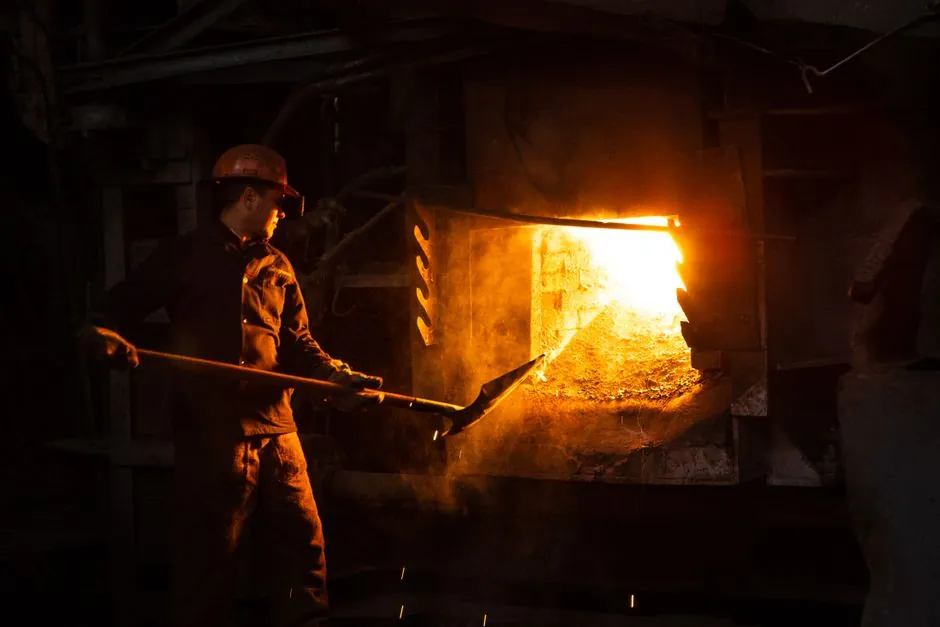
In aluminum foundry practice, the walls, floor, and doors of a holding furnace must be scraped on a daily basis, with no exceptions, to remove aluminum-oxide dross before it penetrates the refractory [S1][S4].
For foundries running high charge frequencies, hot cleaning is required up to three times per shift; otherwise, corundum growth seals off melt-well passages and forces unscheduled refractory relines [S3].
Daily Hot Cleaning: The Minimum Industrial Cadence
Daily hot cleaning of an aluminum melting furnace or holding furnace is the documented minimum across three independent refractory and equipment service sources [S1][S3][S4]. The procedure targets oxide-rich dross, corundum, and other deposits that form when molten aluminum contacts air, which is unavoidable in any open-bath or well-style furnace exposed to atmosphere. The action is mechanical scraping with a dry, pre-heated tool, executed while the furnace is at low flame or low temperature and never while the bath is fully ramped to casting temperature [S3].
The driving engineering reason is that corundum (aluminum-oxide) grows in two distinct modes that both damage the furnace. Internal corundum forms inside the refractory joints, expands on oxidation, and destroys lining geometry. External corundum forms on the bath-side wall surface, reduces effective bath capacity, and can fully block melt-well passages within a two-week window if not removed [S3]. Skipping a single day is rarely visible, but a two-week build-up photographed in field service reports shows the practical upper bound: a hard, sealed layer that requires chipping rather than scraping to remove [S3].
Heavy-Production Escalation: Up to Three Times per Shift
Foundries running heavy production schedules may require hot cleaning up to three times per shift, with the exact frequency driven by charge rate, alloy chemistry, and bath temperature [S3]. Operators with a single 8-hour shift on a low-charge-rate furnace can sometimes hold to one cleaning per shift, while two- or three-shift die-casting operations feeding holding furnaces from a central melter generally fall on the more aggressive end of that range [S3][S4].
The induction furnace and gas-fired reverberatory both fall under the same rule when they hold aluminum, because the oxide-forming mechanism is driven by the bath-air interface, not by the heat source. Crucible-style operations using a crucible furnace typically accumulate less wall buildup because there is no permanent refractory wall in contact with the bath, but the outer crucible and surrounding shell still require routine inspection on the same daily-discipline philosophy [S1].
Flux-Assisted Cleaning vs Mechanical Scraping
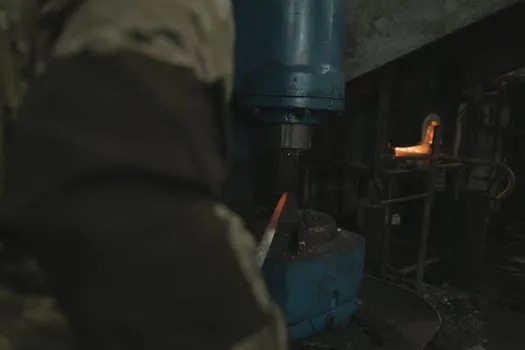
Cleaning flux for aluminum is classified separately from cover, drossing, and refining fluxes by major refractory and consumables suppliers, including Pyrotek and ASM International references cited in technical literature [S2]. The function of a wall-cleaning flux is to attack or loosen oxide-rich deposits so they can be removed; it is not a substitute for the daily mechanical scrape, but rather a complement used during deeper cleaning cycles [S2].
The terminology matters at procurement. A product labelled only as "aluminum cleaning flux" may be a molten-metal cleaner, a drossing flux, or a wall-cleaning flux, and each has a different chemistry and target surface. Foundry buyers are advised to confirm the primary function from the manufacturer's technical data sheet rather than from the product name alone, and to verify that the flux is compatible with the specific alloy being held and the bath temperature at the time of application [S2].
Quarterly Deep Clean and Annual Refractory Audit
Beyond the daily discipline, a quarterly comprehensive cleaning of the holding furnace is standard practice, using a specified flux (commonly Rossborough NS-411 or equivalent), a degasser such as Foseco 601, and a four-tool kit consisting of a skimmer, scraping tool, forked paddle, and degassing hook [S3]. The quarterly cycle is paired with an annual refractory audit, in which lining thickness is measured at planned outages and thermal imaging may be used to track refractory health while the furnace is online [S4].
The contrast with residential HVAC is large. Carrier, a major U.S. furnace manufacturer, recommends professional cleaning of a home gas furnace once per year, ideally before the heating season, with a possible mid-year repeat for some operating conditions [S5]. The same annual cadence appears in consumer-facing service guides, which recommend scheduling professional service in early fall [S7]. This is roughly 1/365th of the industrial aluminum-furnace cleaning frequency, reflecting the very different consequence of failure: a residential furnace that loses efficiency costs the homeowner energy; an aluminum holding furnace that loses a melt well or ruptures a lining joint costs the foundry a full reline and weeks of downtime [S1][S3][S5].
Comparison of Cleaning Cadences by Furnace Type
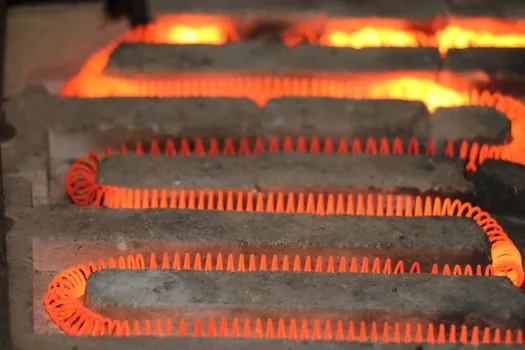
Different furnace types and end uses follow very different cleaning schedules, summarized below. The key selection criteria for any plant are the alloy being held, the bath temperature, the charge frequency, and the cost of an unplanned outage. The table lines up four common options against the two most operationally relevant criteria: required cleaning frequency and the consequence of skipping a cycle. [S3]
Comparison of cleaning cadences:
1. Aluminum holding furnace (reverberatory, gas-fired): daily wall scraping, up to three times per shift in heavy production; consequence of skipping is corundum growth and reduced bath capacity within 1-2 weeks [S1][S3].
2. Aluminum melting furnace with separate holding well: daily scraping of walls plus a quarterly deep flux clean; consequence of skipping is corundum penetration of refractory joints, leading to reline on a 6-month to 6-year interval depending on discipline [S1][S3].
3. Induction furnace for aluminum: same daily discipline applies to wall surfaces in contact with the bath, with frequency scaled to charge rate; corundum forms at the slag-metal interface and at the floor-to-wall joint [S3][S4].
4. Residential gas furnace (HVAC): annual professional cleaning, typically scheduled in early fall; consequence of skipping is efficiency loss and unplanned mid-winter breakdown [S5][S7].
Who Needs Daily Cleaning, and Who Does Not
Any furnace holding molten aluminum, whether gas-fired, electric-resistance, or induction-heated, falls under the daily-discipline rule because the oxide-forming mechanism is intrinsic to aluminum and independent of the heat source [S1][S3][S4]. This includes reverberatory melters, stack melters, and holding furnaces used in die-casting operations. The same rule applies to lead and zinc holding furnaces in principle, though the oxide growth rate is markedly slower and the cleaning interval can be extended in proportion; aluminum is the case where the published industry guidance is most aggressive [S1][S3].
Furnaces that do not require daily wall cleaning include residential HVAC units (annual), industrial process furnaces running non-reactive metals such as copper under a protective atmosphere, and aluminum crucible operations in a crucible furnace configuration where the consumable crucible rather than a permanent refractory wall is the primary contact surface. The decisive criterion is whether molten metal is in direct, sustained contact with a permanent refractory wall above the bath line, which is the condition that produces corundum and oxide buildup [S3].
Failure Modes if the Daily Cadence is Skipped
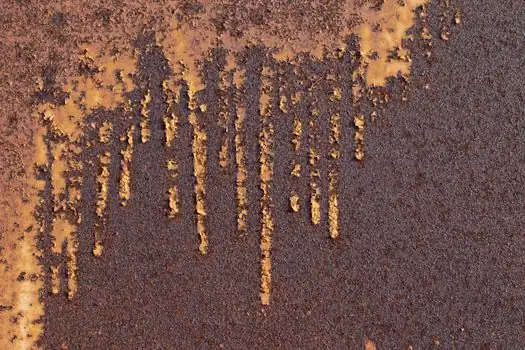
The documented failure modes from skipping daily cleaning fall into five categories, each with a measurable cost [S3][S4]. First, capacity loss: corundum growth on the walls reduces effective bath volume and increases the number of charges required to fill a given casting demand. Second, element damage: buildup on radiant or immersion elements forces them to work harder, shortening service life and raising energy use. Third, hood damage: overheating propagates from the bath to the exhaust hood and shortens its life. Fourth, refractory deterioration: oxide penetration degrades the insulating value of the lining, so more heat input is required to hold the same bath temperature. Fifth, aluminum deterioration: oxide inclusions contaminate the metal, raise the rejection rate, and reduce saleable yield [S3].
The economic gap between a well-maintained and a poorly maintained aluminum furnace is illustrated in a published case study from a reverberatory furnace manufacturer: one customer ran a 30,000 lb capacity, 3000 lb/hr gas-fired furnace for 6 years before the first complete refractory reline, while an otherwise identical unit at a second site required a full reline after just 6 months of service, with the only material difference being the discipline of daily cleaning and fluxing [S1]. Foundry managers should treat that six-versus-one-year ratio as a baseline for the financial case, and cross-check it against the cupola furnace and heat treatment furnace maintenance literature for parallel guidance on iron-side and aluminum-heat-treatment cells.
Standards, Documentation, and What to Track
No single ISO or ASTM standard sets the cleaning interval for aluminum holding furnaces; the daily cadence is a foundry-industry practice documented by refractory service companies, equipment OEMs, and flux suppliers [S1][S2][S3][S4]. Operators are advised to record the cleaning operator, time, charge count since the last clean, and any visible corundum growth at each shift change, and to log refractory thickness measurements at each planned quarterly outage [S3][S4].
For process engineers building a written preventative-maintenance plan, the minimum documentation set is: (1) the OEM-recommended maintenance schedule supplied with the furnace, which the OEM is contractually obligated to provide; (2) a written hot-cleaning procedure with the required PPE, tool pre-heat, and low-flame setting steps; (3) a flux selection record identifying the wall-cleaning product by chemistry and the alloy compatibility; (4) a quarterly deep-clean checklist including the four-tool kit and the specified flux and degasser grades; and (5) an annual refractory audit log with thickness measurements and thermal-imaging snapshots [S1][S3][S4]. Two trackable signals a foundry can use to verify the cadence is working: bath capacity should remain within 2-3% of design value between quarterly deep cleans, and heating-element current draw at steady-state should be flat, with no upward drift indicating corundum insulation on the elements [S3][S4].
Cross-reference: how to plan pneumatic conveying bend equivalent length sizing is a parallel maintenance-discipline article on SourceBySpec that illustrates the same principle of documenting a routine interval against measurable performance drift; for foundries running die-casting cells, the horizontal GDC interlock control piece covers the downstream equipment that depends on a clean, on-spec melt from the holding furnace.