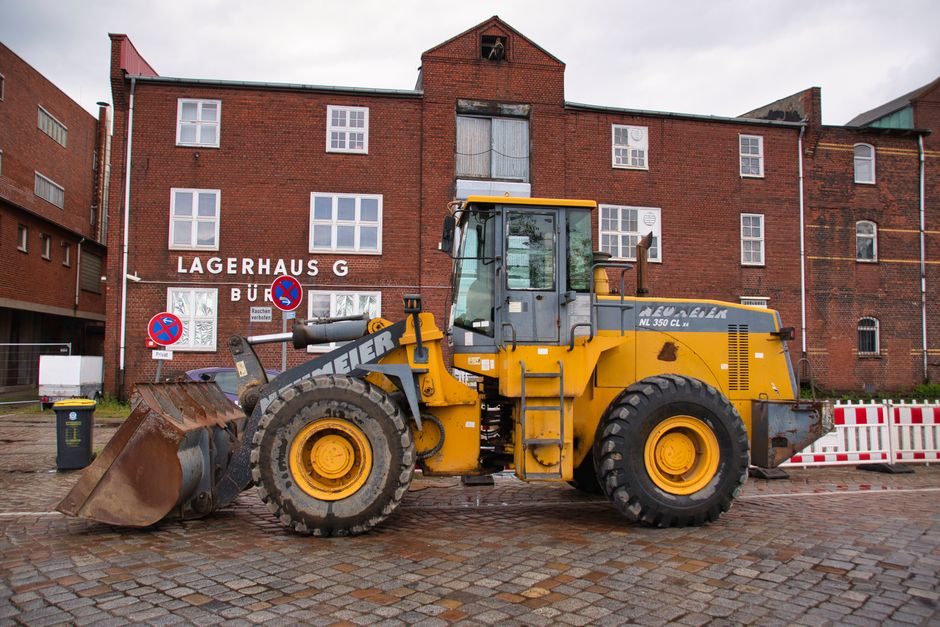
Backhoe loaders are sized primarily by operating weight, engine power, and the combined capacity of the front loader bucket and rear backhoe bucket, with 7-9 t class machines dominating municipal and utility fleets [S1].
On active China export listings, current supplier-side offerings cluster in the 6.5-9.5 t operating-weight band with engine power in the 55-82 kW window, matching the same class envelope used in rental and small-civils fleets [S1][S2]. The decision tree for a buyer is therefore narrow: match weight class to job, pick drivetrain and stick options, then validate the manufacturer against certification and after-sales scope.
Operating-Weight Class and Where Each Fits
Operating weight is the single hardest spec to compromise on because it drives transport licensing, tyre choice, and rear-bucket breakout force on a backhoe loader. Sub-6 t units target tight urban utility work and inside-building demolition, while 7-9 t units remain the workhorse band for trenching, light foundation dig, and loader-and-truck loading cycles [S1]. Above 10 t the machine drifts into tractor-loader-backhoe territory and competes with mid-size wheel loader platforms on cycle productivity.
Buyers should map the heaviest dig cycle first: depth below grade, swing clearance against the cab, and truck-side loading height. A 7-9 t class machine typically delivers 4.2-5.5 m backhoe dig depth, while a 4-in-1 loader bucket on the same chassis widens the unit's usefulness on cleanup and grading [S1]. When the work is roughly 60% trench-and-load and 40% truck loading, the centre-of-class 8 t unit is almost always the correct spec.
Engine, Drivetrain and Hydraulic Spec Bands
Engine power in the 55-82 kW band, paired with a 4-cylinder diesel rated to Tier 3 / Stage IIIA or Tier 4F / Stage IV emissions, is the dominant configuration on China-built export machines priced in this segment [S1]. A 4WD rear axle with 100% differential lock and a 4F/4R power-shift transmission is now table stakes for any buyer intending to operate on soft ground or unimproved sites.
For the loader end, look for a parallel-lift loader linkage with a 1.0-1.3 m³ general-purpose bucket, and breakout force that scales with operating weight rather than being a marketing add-on. On the backhoe end, specify extendable dipper if any trenching exceeds 4.5 m, and confirm the swing post is 180° with a thumb-ready stick if pipe, log, or demolition work is on the menu [S1]. Hydraulic flow in the 110-160 L/min range is the band where auxiliary attachments — breakers, compactors, augers — run at rated productivity.
Backhoe Bucket and Loader Bucket Capacity Decisions
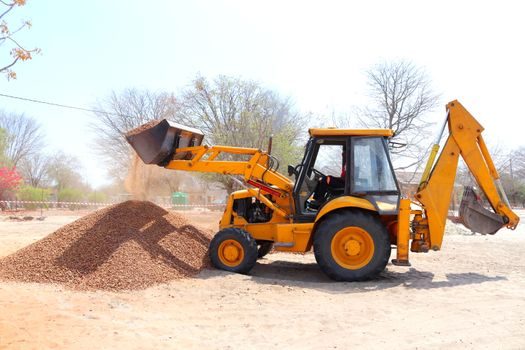
Bucket capacity is the second decision that locks in operating cost, because cycle time scales almost linearly with bucket volume for a given material density. A 7-9 t class backhoe loader typically ships with a 0.08-0.3 m³ backhoe bucket and a 1.0-1.3 m³ front loader bucket, with the smaller rear bucket for trenching and the larger front bucket for bulk loading [S1].
For cohesive clay or ripped rock, step the backhoe bucket down one size (0.08-0.15 m³) and raise tooth and side-cutter hardness, since tooth wear is the dominant cost in abrasive dig. For topsoil, sand, and loose aggregate, the upper end of the bucket range is correct. Buyers running a mixed fleet with skid steer loader attachments should also verify the auxiliary hydraulic flow and quick-coupler pattern before signing a PO, because attachment compatibility is the most common retrofit miss.
Manufacturer Selection, Certification and After-Sales
On the China export side, Shandong-Jinan and Shandong province overall host a dense cluster of backhoe loader manufacturers, with multiple OEM-grade suppliers offering 6.5-9.5 t class machines at competitive lead times [S2]. The export market reference listing for a 630A-class new model shows a minimum order quantity of 1 PCS, TT or LC payment terms, and a supply capability measured in single-digit units per month, signalling that most suppliers in this band are running build-to-order rather than inventory [S1].
For fleet buyers, the practical due-diligence gate is certification, not sticker price: confirm CE marking for European delivery, EPA Tier 4F or EU Stage IV for emissions, and ROPS/FOPS for the cab. Service-network coverage on the destination continent is the second gate — a machine that loses three days to parts wait in season costs more than a 4% spec premium on a better-supported brand. Where the duty cycle is mixed with wheel-loader work on the same site, fleet owners often standardise cab controls and joystick layouts across wheel loader and backhoe loader to keep operator-pooling simple.
Sourcing Levers, Lead Time and Total Cost
Lead time for a build-to-order China-built backhoe loader typically runs 30-45 days ex-works once the configurator is locked, with sea freight adding 25-40 days to most non-Asian ports; traders and large dealers hold ready-stock units in 2-3 popular configurations that ship inside 7-10 days [S1]. The total-cost lens matters more than FOB price: include bucket-and-tyre choices, hydraulic attachment couplers, and the warranty window in the comparison rather than headline unit cost.
A useful side comparison when scoping a backhoe loader is the sizing logic on adjacent compact equipment — a Skid Steer Loader sizing reference clarifies ROC and hydraulic-flow bands, while the Wheel Loader Sizing and Selection guide shows how bucket-and-engine class pair on a heavier chassis. Where the fleet also needs a small dozer on rural sites, the Bulldozer Suppliers 2026 sourcing map gives a parallel read on the same supplier cluster in Shandong.
Limits, Failure Modes and Buyer Pitfalls
Backhoe loaders fail predictably in three places: the rear axle seals on machines operated in mud and standing water, the loader-pivot pins on units run without daily greasing, and the hydraulic-hose chafe on tight-radius job sites. Buyers who spec lighter frames to save on transport cost almost always pay it back in frame-flex repairs inside the first 2,000 hours. [S1]
The other recurring pitfall is over-trusting the brochure hydraulic-flow number without checking pump-to-work-port pressure drop at the actual work temperature; Chinese-supplier brochures sometimes quote theoretical pump output rather than working-circuit flow at 180-200 bar. Insist on a test sheet for the specific serial number on the PO, and match the 4-in-1 loader bucket to the same hydraulic circuit that powers the rear backhoe to avoid flow-sharing losses during simultaneous operation.
The next trackable signal is the 2026 H2 emissions transition in the EU and parts of Southeast Asia: machines ordered now with Tier 3 / Stage IIIA engines will be import-restricted in an expanding list of markets within 12-18 months, so buyers placing build-to-order POs in this window should confirm Tier 4F / Stage IV readiness before locking the configurator [S1].