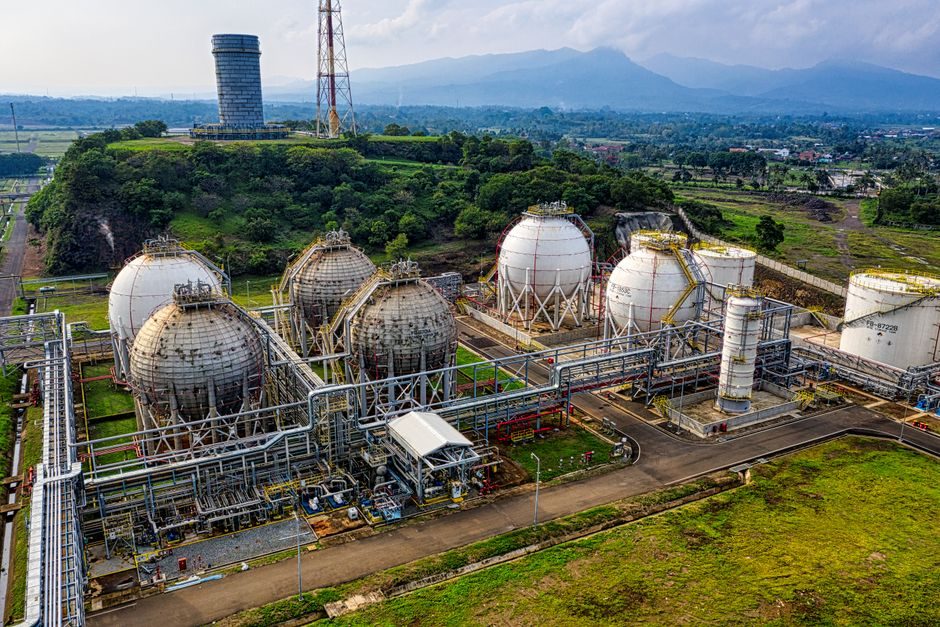
A 20' ISO tank container built to ISO 1496-3 / IMO 1 framework is typically a 6058×2438×2591 mm stainless-clad frame holding 21,000–26,000 L of payload at a 33,000–36,000 kg gross weight [S6][S7]. The maintenance schedule is anchored to the CSC (International Convention for Safe Containers) decal — a 2.5-year periodic inspection and a 5-year full structural re-test — with hydrostatic re-qualification of the pressure vessel shell on the same rhythm under IMDG / ADR / RID [S7].
Calibration in the spec sense has two distinct meanings that buyers and operators often conflate: (1) dimensional/volumetric re-strapping of the barrel to update strapping tables after repairs, lining changes, or frame distortion, and (2) gravimetric verification of the load-cell or weighbridge system used for custody transfer, which is what [S3] and [S4] document for tank, reactor, hopper and silo installations. Both must be traceable — usually to OIML R76 (non-automatic weighing instruments) or OIML R117 (fuel dispensers and loading racks) where the container interfaces a metering skids — or the cargo manifest cannot be defended in a B/L dispute [S2][S3].
Mandatory Test Intervals Under CSC, IMDG, ADR and RID
The CSC safety approval plate dictates the absolute re-test window: a periodic examination is required at intervals not exceeding 30 months (commonly scheduled at 2.5 years), and a thorough examination including the shell hydrostatic test is required at intervals not exceeding 5 years [S7]. The hydrostatic test pressure for an IMO 1 / IMDG-class vessel is typically 1.3× the MAWP marked on the data plate, held for a minimum of 10 minutes, with the shell showing no permanent deformation or leak [S7].
For multi-compartment tank containers the same 2.5/5-year rhythm applies per compartment, and every compartment is bar-coded or stamped with its own barrel data plate carrying volume, MAWP, test pressure and last-test date [S7]. Operators running bitumen or heated cargo must additionally test the heating coil circuit — typically 7 bar steam or 6 bar thermal-oil service — at the same 5-year interval because coil pinhole leaks are a top cause of cargo contamination claims [S7].
Volumetric vs Gravimetric Calibration — Which One You Actually Need
Volumetric re-calibration via the strapping-table method (also called "tank re-strapping") is required when the shell geometry has changed: after a barrel section replacement, after a new rubber or PTFE lining, or after documented impact damage to the frame that alters the shell's vertical reference [S2]. Intertek's shore-tank calibration workflow — manual strapping with certified tape, reference to API MPMS Ch. 2.2A or API 2551, and issuance of a calibration table traceable to a national standard — is the same workflow scaled down for a 20' ISO barrel [S2]. Typical strapping increments are 50 mm with interpolation to give a volume uncertainty better than ±0.2% on a 25,000 L barrel [S2].
Gravimetric calibration is what [S3] and [S4] cover and is the right answer for any cell where the container sits on, or is suspended from, load cells — including weighbridge-mounted tankers, reactor vessels on weigh frames, and the increasingly common ISO container-on-load-cell skids used in food and pharma. METTLER TOLEDO's RapidCal workflow documented in [S4] replaces test-weight stacking or purified-water dispense with a calculation from the load-cell rated output and the empty/tare vessel mass, cutting a 4-hour tank-scale calibration down to under 30 minutes and removing the contamination risk of introducing calibration water into a sanitary vessel. For custody-transfer applications the gravimetric check itself is governed by OIML R76 (accuracy class III or IIII), with maximum permissible error of ±0.5% at verification and ±1.0% in service for class III non-automatic instruments — a band the operator should engineer into the custody-transfer margin, not eat it as measurement noise [S3][S4].
Selection and Sourcing Criteria: Frame, Lining, MAWP and Compartment Count
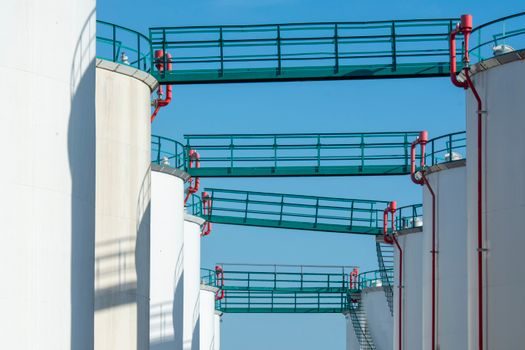
Specifying a tank container for a calibration-friendly duty starts with four numbers: nominal volume (L), MAWP (bar), lining material, and compartment count. Mainland-China fabricators in the Suizhou/Hubei cluster quote FOB 11,000–15,800 USD per 20' standard unit at one-piece minimum order, with CCC and ISO 9000 cited as the typical certification package and a 20-day production period [S6]. That price band is for a single-compartment, 21,000–26,000 L, MAWP 4.0 bar carbon-steel shell with a phenolic or epoxy lining — the workhorse configuration that dominates bitumen, sodium silicate and most food-grade edible-oil trades [S6][S7].
Baffle-tank and multi-compartment variants are not interchangeable. A baffle tank uses internal surge plates to suppress liquid surge at ≤0.4 g longitudinal acceleration, which is the right pick for wine, latex and any cargo with a low-viscosity free-surface hazard [S7]. A multi-compartment tank is for transporting two or more incompatible chemicals in a single ISO frame, with each sub-compartment carrying its own MAWP, relief valve and data plate, and with the 2.5/5-year test cost scaling linearly with the number of compartments [S7]. Where surge control AND segregation are both needed, a baffled multi-compartment unit is the only spec that satisfies both — at the cost of roughly 8–12% payload loss to internal hardware [S7].
Field Procedure: Hydrostatic Test, Valve Service and Leak Decay
Between statutory re-tests, the maintenance items that actually fail in service are: PRV seat leaking (replace the soft seat at 30-month inspection, not just verify the set pressure), gasket creep on the manlid (replace EPDM/FKM every 12–18 months regardless of test cycle), foot-valve O-ring hardening on the bottom-discharge unit (replace at every 2.5-year periodic), and load-cell drift on a weigh-frame installation (gravimetric re-check per [S3] at the operator's chosen interval, typically every 6 or 12 months for custody-transfer duty). A practical way to think about it: the CSC decal controls the shell, the OIML certificate controls the weighing system, and the operator's own SOP controls the consumables in between [S3][S4][S7].
Failure Modes, Sourcing Constraints and Trackable 2026 Signals
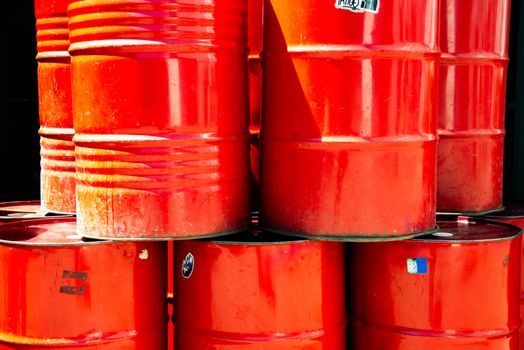
Three failure modes generate the bulk of insurance claims on ISO tank containers: (1) shell pitting under a failed lining — usually traceable to a missed 2.5-year periodic where the lining was never visually inspected, (2) bottom-outlet ball-valve seat wear allowing residual heel to leak into the next cargo, and (3) overpressure event on a heated cargo where the PRV was sized for ambient MAWP but the actual service was bitumen at 200 °C with a blocked vent. The first is a maintenance-program failure, the second a component-life failure, and the third a design-basis failure — and the corrective action differs in each case [S7].
For a 2026 spec update, the trackable signals are: (a) the [S6] mainland-China FOB band of 11,000–15,800 USD for a 20' standard unit as the live reference for a 2H 2026 procurement, (b) the [S4] RapidCal weightless calibration workflow as the current best practice for weigh-frame installations, and (c) the [S7] baffle vs multi-compartment selection matrix as the canonical reference for surge-prone or multi-product fleets. Reference the tank container overview for the broader ISO/IMDG framework, the IBC tank page for the smaller 1,000 L class, and the tank cleaning machine entry for the clean-in-place equipment sized to the barrel between re-tests. The 2.5/5-year CSC rhythm and the OIML R76 gravimetric band are the two non-negotiables; everything else is an engineering choice on top of them.
For related coverage, see How to Choose a Concrete Mixer Truck: Capacity, Drive and Chassis Spec Bands.