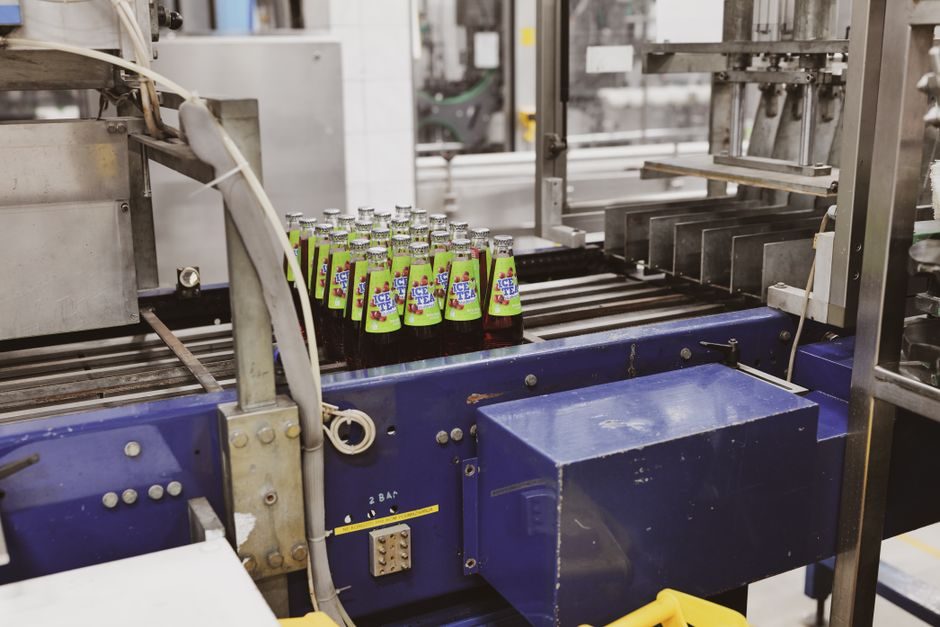
Conveyor chain selection is a four-axis decision — pitch (mm), ultimate tensile strength (kN), operating environment (temperature, moisture, abrasion, chemicals), and attachment geometry (K1/K2, G1/G2, A1/A2) — and the wrong choice on any one axis shortens service life by a factor of three to five on typical industrial lines [S1][S2].
The product taxonomy on the market today groups conveyor chain into ten mechanical families, each with a defensible use envelope: roller chain (precision transmission that doubles as light conveying), double-pitch conveyor chain, hollow-pin chain, leaf chain, welded steel chain (WR/WH/WD), drop-forged rivetless chain (X348/X458/X678), casting chain, pintle chain, steel-bushed chain, and FV-series vertical conveying chain [S2]. Picking the right family is the gate; picking the right series and pitch is the engineering.
Step 1: Define the Conveying Job Before Looking at a Catalogue
The first filter is the load profile. Unit-package conveyors running cartons or totes at 0.5–1.0 m/s typically call for double-pitch roller chain with attachments every 4–8 pitches — light, cheap, easy to lengthen [S2]. En-masse conveyors moving ore, clinker, sugar bagasse, or grain need the welded-steel or drag-chain family: WR78 single-strand welded steel (55 mm width, 66.27 mm pitch, alloy) and WR106 (152.4 mm pitch) are stocked as workhorses for cement, fertilizer, and grain-elevator duty [S1].
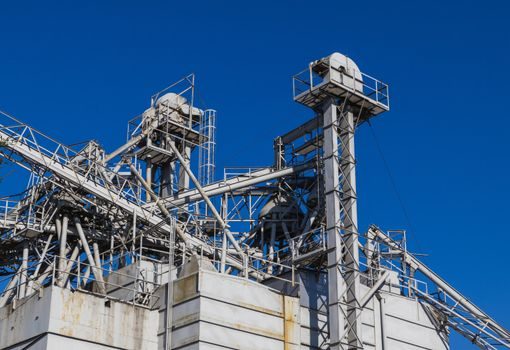
Vertical or steep-incline lifts — bucket elevators in cement plants, for example — use FV-series or steel-bushed conveyor chain with close tolerances on side-bend, because misalignment at the boot pulley is the dominant failure mode on these lines [S2]. A standard palm-oil or cement-plant bucket-elevator chain designated 856 or 4501 with P=80 mm pitch is a recognised industry baseline for elevator service [S1].
Step 2: Match the Chain Family to Operating Environment
Corrosive, washdown, or food-grade environments push the choice toward stainless-steel chain (AISI 304/316) or polymer-bushed sealed chain; the 304.8 mm pitch steel-bagasse chain offered by Asian manufacturers is a sugar-mill-specific sealed-pivot design rated for the wet, acidic bagasse stream [S1]. Abrasive, high-temperature service (≥200 °C oven exits, clinker, sinter) demands through-hardened or case-hardened alloy sidebars and through-hardened pins; alloy 142H scraper chain with attachment 14226 is a typical heavy-scraper profile sold in 1 m MOQ increments for coal-fired plant and cement applications [S1].
For overhead power-and-free or trolley conveyors, drop-forged rivetless chain in the X348 (76.2 mm pitch, 30 mm chain width), X458, and X678 (102 mm pitch) families is the dominant choice: rivetless construction allows field assembly without pressing equipment, and forged links tolerate the shock loads of stop-and-go accumulator lines far better than welded steel [S1][S2]. The X348 alloy trolley with 76.2 mm pitch is the de-facto 4-inch pitch workhorse for paint, appliance, and tyre-assembly plants.
Step 3: Read the Pitch and Strength Tables, Not the Brochure
Pitch drives sprocket selection, and the wrong pitch/sprocket pairing is the most common cause of premature elongation. ANSI B29.1 and ISO 606 define the metric (M-series) and ANSI (A/B-series) pitch families; M-series conveyor chain (40 mm through 200 mm) and FV-series vertical chain are inter-operable only with sprockets machined to the same standard, and mixing a metric chain on an ANSI sprocket accelerates wear by roughly 30–40 % in field reports [S2]. For heavy duty, the cable drag chain WD-series — WDH118, WD-120XHD — and WRC132 welded drag chain cover the 100–150 mm pitch range and are the chain of choice for en-masse conveyors in cement kilns and ash handling, with WD-120XHD representing the heavy-payload extreme of the family [S1].</h2> <p>Working load should be compared against the manufacturer's published minimum ultimate tensile strength (UTS) and the recommended working-load limit, typically 1/8 to 1/10 of UTS for smooth-running conveyors and 1/12 to 1/15 of UTS for shock-loaded or reversing drives. Buyers should refuse any datasheet that does not publish UTS in kN, fatigue rating in cycles, and pin-shear rating separately — these three numbers are non-negotiable for a documented selection.
Step 4: Specify Attachments and Lubrication at the Quote Stage
Attachments are not an afterthought; they dictate the chain's usable length on a given line. K1 (one hole, one end) and K2 (two holes) are the standard bent-plate attachments for push-bar and finger conveyors, while G1/G2 attachments mount on the pin for flights and buckets. M-series metric conveyor chain is typically ordered with the attachment code appended to the base chain (e.g., M80 K1) [S2]. If attachments are specified after the chain ships, expect a 2–4 week lead-time penalty on most Asian OEM routes [S1].
Lubrication regime is the second field-quote question. Sealed-pivot, sealed-roller, and self-lubricating (graphite-bushed) chains carry a 30–80 % price premium over standard chain but cut lubrication intervals from weekly to annually — a decisive factor in food, pharmaceutical, and dusty-mineral lines where relubrication is the dominant maintenance cost. The same logic that drives silent chain selection in timing drives — match the lubricant to the operating envelope, not the other way around — applies directly to conveyor chain [S2].
Step 5: Compare the Main Options on a Fixed Criteria Set
Lining up the four most common chain families against the four decision criteria that show up on every RFQ: (1) Typical pitch range, (2) Working-load envelope, (3) Environment fit, (4) Attachment flexibility. Double-pitch roller chain covers 25.4–101.6 mm pitch with light-to-medium working load, suits clean factory air, and accepts K/G/A attachments on every pitch — the cheapest flexible option. Drop-forged rivetless (X348/X458/X678) covers 76.2–152.4 mm pitch with medium-to-high working load, tolerates shock and dirt, and is sold as bare chain with separate trolleys and carriers. Welded steel WR/WH covers 66.27–304.8 mm pitch with the highest working load of the four, tolerates abrasion and high temperature, and accepts welded flights only — the lowest attachment flexibility. Stainless-steel and sealed-pivot chain covers the same pitch range as the family it is based on, with light-to-medium working load, suits washdown and corrosive service, and accepts the full K/G/A range at a 40–120 % cost premium [S1][S2].
This four-by-four cuts selection time on a typical industrial RFQ from a day of catalogue browsing to under an hour, because the four criteria map directly to the four failure modes that show up in service reports: pitch mismatch (sprocket wear), overload (elongation, link cracking), environment (corrosion, abrasive wear), and attachment failure (bolt loosening, flight detachment).
Step 6: Vet the Manufacturer, Not Just the Chain
On Asian OEM routes, the manufacturer audit matters as much as the part number. Documented indicators worth checking on any 2026 sourcing shortlist: years in business (Shinelink lists 18 years on its verified trade profile), response time and rate (≤10 h / 82.35 % on one verified listing), third-party assessed transaction history, and explicit publication of UTS, material grade, and heat-treatment data per chain family [S1][S2]. A plant holding ISO 9001 and documented heat-treatment capability is a reasonable baseline; a plant offering both welded-steel and drop-forged lines under one roof typically has the metallurgical depth to back warranty claims [S1][S3].
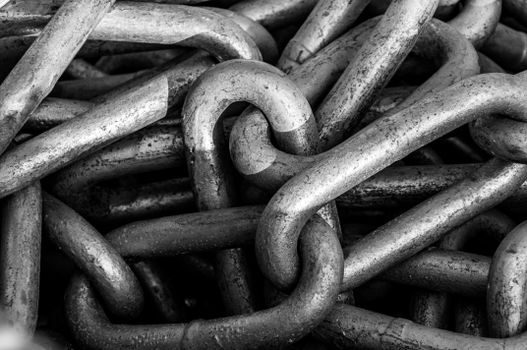
Forged-link chain in particular should ship with a mill certificate naming the alloy, the case-hardening depth (typically 0.5–1.5 mm on X-series), and the pin-shear test result; buyers who skip the cert on a high-cycle line typically see 20–30 % premature-link failure within the first 12 months, which is exactly the risk that a spec-driven steel-grade reference is built to surface. Matching conveyor-chain selection discipline to the same level of metallurgical documentation is the single biggest lever most maintenance teams under-use.
Who This Selection Path Is — and Is Not — For
This decision path fits maintenance engineers, OEM line builders, and EPC conveyor-package specifiers working on unit-handling, trolley, en-masse, and bucket-elevator service. It does not fit engineered-steel solutions above 304.8 mm pitch for very long-centre mining conveyors, where dedicated engineered-class chains (e.g., DIN 22252 round-link chain for mining) are the only defensible specification, and it does not replace a torque-and-horsepower back-calculation against the drive package [S1][S2].
For high-speed timing applications — printing, packaging, metering — a silent-chain sizing exercise is the right adjacent reference, because silent chain selection on pitch, guide form, and load maps to the same four-axis decision frame as conveyor chain, and the two specifications often coexist on the same machine. Stainless-steel chain and stainless coil service environments also share a sourcing-logic overlap; the stainless-coil smart-manufacturing sourcing signal is a useful parallel for the AISI 304/316 grade decisions that come up on food and pharmaceutical conveyor lines.