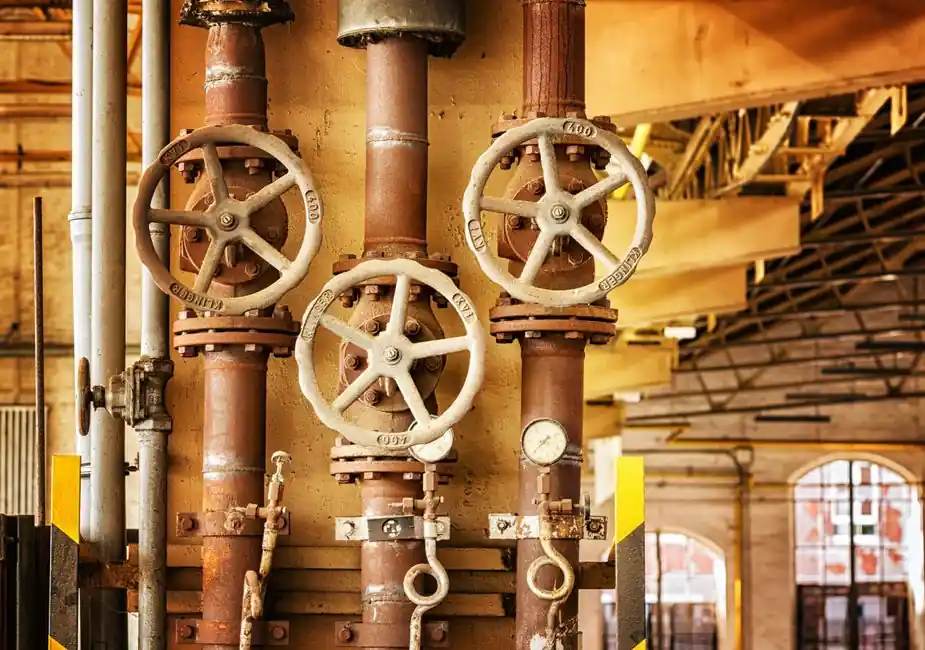
A level switch is a point-level device that changes state at a defined high, low, or mid setpoint, with media state and sensing principle driving the spec gates [S1][S3][S5].
Selection works in three steps: match the media (liquid versus dry bulk) to a switching family, fix insertion length and process connection to the vessel, then lock the hazardous-area certification and output protocol to the plant standard.
Switching Principles and What Each One Detects
Floating-magnet reed switches trigger a potential-free, contactless, wear-free output as a permanent-magnet float rides a guide tube, with no auxiliary energy required [S6]. The Tekno Fluida design runs the contact pipe in brass, the float in nylon, an IP65 enclosure, a 2 to 3 mm hysteresis, 80°C maximum, and an optional ATEX variant for mineral oil, diesel, petrol, and water service [S2].
Vibrating-fork and single-blade designs suit dry granular or powdered media, with the PTL Hermann single diamond blade handling densities as low as 20 g/L, grain up to 40 mm, and full stainless-steel wetted parts inside an aluminium IP66/IP67 housing built under DIN EN ISO 9001:2015 and CE-marked to LVD 2014/35/EU and EMC 2014/30/EU [S3]. A quick-drip fork variant tolerates foam, turbulence, solids, and hanging materials, runs at -30 to 150°C on a short body or -30 to 250°C on a long body, holds pressure to 1 MPa, and detects liquids above 600 kg/m³ or powder above 100 kg/m³ [S5].
Tilt and impedance membrane styles fit belt-conveyor silo overflow protection with an all-in-one sealed, steel-shell housing and a universal direction-free contact output [S1].
Insertion Length, Process Connection, and Mechanical Fit
Top-mount depth must be matched to the vessel geometry, and the PTL LevelSwitch family lines up four insertion-length models: CV120 fixed at 170 mm, CV130 welded pipe to 2.0 m, CV140 threaded pipe to 4.0 m, CV150 cable extension to 20 m, all on 1-1/2" EN10226 (DIN2999) or NPT threads with Tri-Clamp as a food-grade option [S3].
Side-mount mechanical switches such as the SOR 1510 and 1530 series cover vacuum to 5000 psi (345 bar) and -40°C to 204°C (-40°F to 400°F), making them a fit for high-pressure side-of-vessel service where top access is impractical [S7]. Mounting style is a primary gate: top mount for open vessels and hygienic lines, side mount for deep tanks and pressure vessels, and bottom mount only when an empty-pipe fail-safe is required.
Power Supply, Output, and Signal Wiring
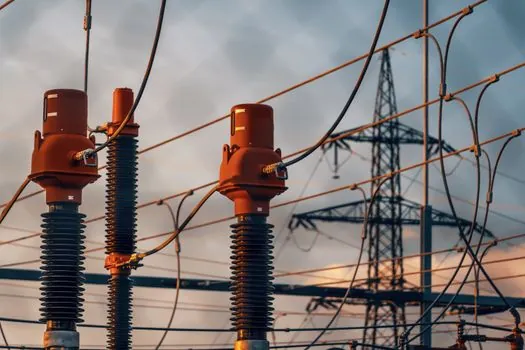
Output type is the second spec gate after media, and the PTL CV120 ships in three wiring versions: wide-range 22 to 250 V AC/DC with DPDT relay, 24 V DC with 3-wire NPN or PNP transistor, or 20 to 30 V DC 2-wire 8/16 mA loop when paired with the CV2000AE supply unit [S3]. The Marketronika quick-drip fork and microwave switch both expose DPDT relay, PNP, or NAMUR outputs across a 12 to 30 V DC / 110 to 220 V AC supply range [S5].
ATEX/IECEx plants often need a NAMUR (EN 60947-5-6) intrinsically safe output, since NAMUR interfaces sit on certified isolating barriers inside Zone 0, Zone 1, and dust Zone 20/21 boundaries [S3][S5]. Where the switch feeds a PLC analog input instead of a digital contact, specify 4 to 20 mA or 8/16 mA current loop so the same two wires carry both power and trip signal; for legacy panels, a dry contact DPDT relay at 250 V AC and 1 A level rating remains a common pattern, as in the Tekno Fluida float switch [S2].
Hazardous Areas, Temperature, and Pressure Limits
Hazardous-area certification is the third spec gate, with PTL CV120, CV130, and CV150 carrying ATEX II 1/2D for Zones 20/21 and ATEX II 1G Ex ia IIB T4 for Zone 0, the latter meaning the probe can sit inside a Zone 0 process when paired with the CV2000AE[Exi] associated apparatus [S3]. The SOR 1510 line adds CSA (US and Canada), INMETRO, UKCA, IECEx, and SIL2 on top of ATEX, and is rated 5 years warranty, useful when multiple global approvals are required in one skid [S7].
The SOR mechanical level switch series reaches 5000 psi (345 bar) and 400°F (204°C) [S7]. For dry bulk silos, IP66/IP67 is the practical dust-and-water-jet baseline as on the PTL LevelSwitch aluminium housing, while IP65 is acceptable for indoor float switches on closed oil tanks [S2][S3].
Decision Matrix: Four Common Duty Profiles
Liquid tanks under 100°C, non-hazardous: a brass-pipe nylon-float reed switch with 250 V AC, 1 A DPDT contact, IP65, and 2 to 3 mm hysteresis is the cost-effective default, matching the Tekno Fluida spec [S2].
Dry bulk silo, cement, or flour: a single-blade vibrating LevelSwitch on a 1-1/2" thread, with extension to 4.0 m, stainless-steel wetted parts, ATEX II 1/2D dust approval, and DPDT relay output, is the proven pick, anchored on the PTL CV120 to CV150 family [S3].
Adhesive or conductive paste, sanitary: a PEEK- and SS316-wetted microwave or RF-admittance switch at 40 to 170 MHz, 10 bar pressure limit, IP66/IP68, and PNP/NPN/relay output, suits the Marketronika-style hygienic duty, and RF admittance level switches are the canonical alternative when build-up coats the probe [S5].
High-pressure or high-temperature process: a side-mounted mechanical 1510/1530 switch at 5000 psi (345 bar) and 400°F (204°C), ATEX, IECEx, CSA, INMETRO, UKCA, SIL2 certified, fits hydrocarbon separators and steam drums where electronics-based switches would fail [S7]. A continuously tracking level measurement device is the alternative when point-level trips are not enough.
Failure Modes and Limits to Watch in Sourcing
Float switches fail when the float chamber fouls with sludge, paraffin, or iron oxide, and reed contacts can stick in high-current DC switching above the rated 80 W/VA in the Tekno Fluida datasheet [S2][S6]. Vibrating forks can false-alarm in dense-phase pneumatic conveying, in media with grain above 40 mm, or in material that bridges across two parallel tines, which is the explicit reason the single-blade PTL design was developed [S3].
Capacitive and RF-admittance probes misread on conductive build-up unless an active shield compensates, while microwave switches need a stable dielectric above 1.5 and can be confused by agitator blades sweeping the beam [S5]. Mechanical side-mount switches are the right call for high-pressure steam and hydrocarbon service, but they are blind to low-density media and need an external power supply on pneumatic variants like the SOR 1530 [S7]. Engineers who need remote tank telemetry should compare a switch against a continuous radar level meter or a laser level device, where trip points and trend data both matter.
Where Level Switches Do Not Fit and Adjacent Choices
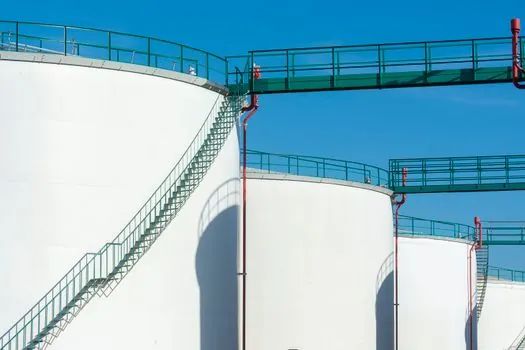
Ultrasonic and radar transmitters are the usual substitutes, with semiconductor wet-process and UPW service as a documented edge case covered in a separate spec guide [S5][S7].
Plants that already standardize on infrared level or laser level devices for non-contact service still keep float and tuning-fork switches as primary and backup level elements, since a hard-wired contact survives PLC and network outages. A budget-driven automatic level controller in a small sump often pairs a cable-float switch with a contactor, while a conductive level switch is the right pick for clean water and clean chemicals with stable conductivity.
Track the next two signals: ATEX/IECEx dual-certified mechanical and electronic switches on the same frame, and NAMUR (EN 60947-5-6) output variants appearing in more compact vibrating-fork bodies, both of which narrow the gap between Zone 0 reed switches and Zone 1 fork switches in 2026 [S3][S5][S7].