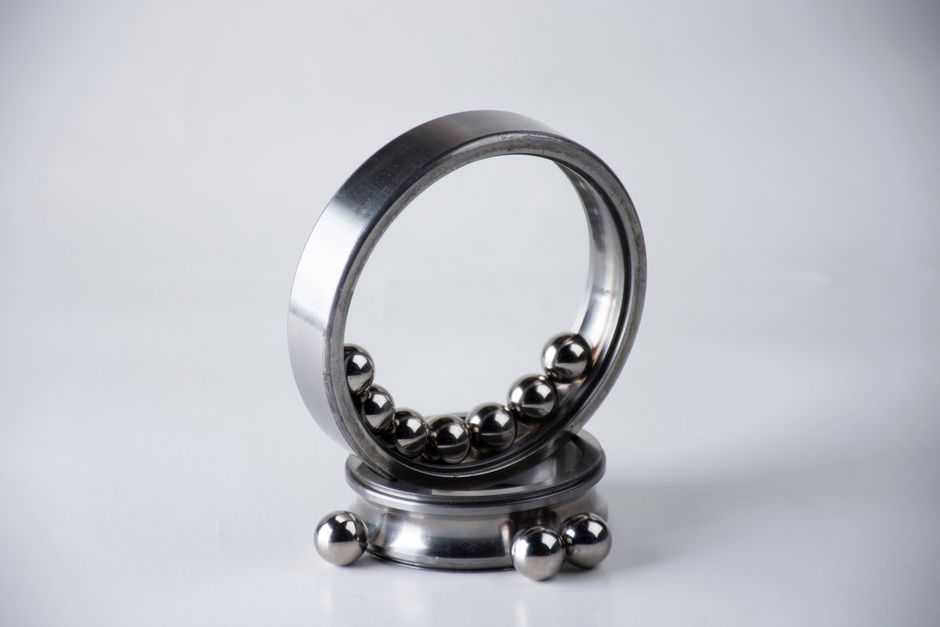
A pillow block bearing is a mounted bearing assembly that pairs an insert ball bearing (typically a UC-series spherical-OD unit) with a pedestal housing — rectangular or oval — that bolts to a frame and supports a rotating shaft through the bore [S1]. The insert carries the load and rotates; the housing carries the mounting bolts and absorbs misalignment, contamination, and thermal growth.
The selection question is not "what is a pillow block" but "which combination of insert, housing, seal, and tolerance survives my shaft, my load, and my environment." Current Asian-offering benchmarks cluster around 40 mm bore, 80 mm OD, 49.2 mm width, 1.9 kg mass, and P0–P4 precision grades, with GCr15 race material and double-sealed inserts as the default build [S3].
Definition, Scope, and Series Architecture
Pillow block bearings are catalogued by insert series: UCP (set-screw mounted, most common), UCFL (four-bolt flange variant), and UKP (adapter-sleeve mounted, suited to tapered-bore alternatives) [S3][S5]. The "UC" prefix denotes a spherical-OD insert bearing; the trailing letter denotes the housing style — P for pillow, FL for four-bolt flange, T for take-up, FC for two-bolt flange, and so on [S1][S3].
Series naming maps to specific bore-and-housing dimension tables. A UCP208 unit, for example, has a 49.2 mm base height (H), 100 mm total height to bolt centreline (H0), 184 mm housing length (L), 137 mm bolt-centre spacing (J), 17 mm bolt slot (N), 18 mm housing thickness (A), 54 mm slot length (H1), and a 1.9 kg shipping mass — values that recur verbatim in current Shandong and Hebei factory listings [S3]. Tolerance grades offered across the same series typically run P0, P6, P5, and P4, with double-sealed inserts as the default seal class [S3].
Decision Criteria: Bore, Load, Speed, Misalignment, Environment
Five parameters govern a defensible pick, and the first sentence after every <h2> must answer them with a number: (1) shaft bore — the UCP2xx series steps in 5–10 mm increments, UCP205 at 25 mm up through UCP210 at 50 mm being the most common small-frame range [S6]; (2) radial load capacity — proportional to the insert's dynamic load rating and the housing's foot-bolt shear capacity; (3) speed — limited by grease life and seal drag, typically 3,000–6,000 rpm for sealed UCP inserts on small frames; (4) misalignment tolerance — the spherical-OD insert accommodates ±2° static misalignment as a working baseline; (5) environment — dust, washdown, chemicals, or temperature swing drive the seal choice and housing material.
For comparison, the four common housing materials line up as: (a) cast iron — the default, robust, lowest cost, suitable for indoor and general industrial use; (b) pressed steel — lighter, cheaper, used on UCFL and lighter pillow variants; (c) stainless (CF8/304 or CF8M/316) — specified for food, beverage, pharma, and washdown zones; (d) polymer/triboplastic — igus igubal-class housings, used where lubrication-free, corrosion-free, and quiet running outweigh the lower continuous-load ceiling [S1].
Insert vs Housing: What Carries What
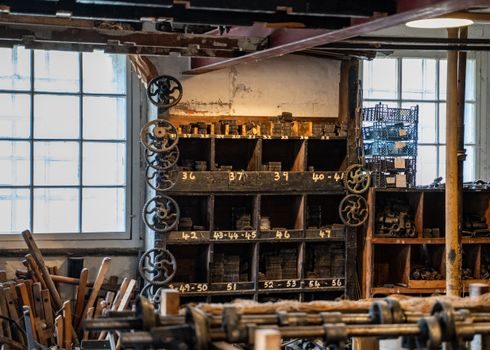
Mechanically, the insert does the work and the housing does the supporting. The insert — a deep-groove ball bearing with a spherical outside diameter — handles radial load, a small axial load in either direction, and accommodates the misalignment between shaft and housing. A GCr15 (Chinese grade equivalent to AISI 52100) through-hardened race, double-sealed (2RS) contact-rubber seal, and C3 or CN clearance is the typical build in the 2026 Chinese-offered UCP range [S3].
The housing — usually cast iron grade HT200 or GG20 — carries the bolt load, supports the insert, and absorbs the residual misalignment. The HT200 cast-iron pillow, paired with a UC208 insert, weighs 1.9 kg in the 40 mm-bore UCP208 SKU [S3]. A pressed-steel pillow with the same bore sits closer to 1.0–1.3 kg, while a stainless equivalent is roughly 2.0–2.4 kg for the same frame. This breakdown is the reason spec-driven selection beats brand-anchor selection: you buy the insert's load rating and the housing's mounting envelope, not a marketing label.
Selection Logic: Set-Screw vs Adapter-Sleeve vs Eccentric Collar
Three locking mechanisms cover most of the UCP-class insert range, and each one changes the way the unit mounts on the shaft. Set-screw locking (UC series) is the default: two screws at 120° on the extended inner-ring extension grip the shaft — quick, low cost, adequate for most applications below ~3,000 rpm, but the screws can score the shaft under heavy reversing loads [S3].
Adapter-sleeve locking (UK series) uses a tapered sleeve and lock nut to clamp the insert to the shaft — preferred for larger bores (≥50 mm), higher speeds, and shaft grades that cannot tolerate set-screw marking. Eccentric-collar locking (NA or UE series) uses a cam on the collar to grip the shaft — common in agricultural machinery and conveyor applications where frequent swap-out is valued over high-speed precision. For comparison across these three: set-screw is the cheapest and most common; adapter-sleeve is the most robust under reversing load; eccentric collar is the fastest to install and remove. The selection rule: pick adapter-sleeve when reverse loading, high speed, or a soft shaft is in play; pick eccentric collar when the line is dirty and the unit must be swapped in minutes; pick set-screw when the cost-per-unit is the primary driver and the shaft is keyed or hardened.
Sealing, Lubrication, and Tolerance Classes
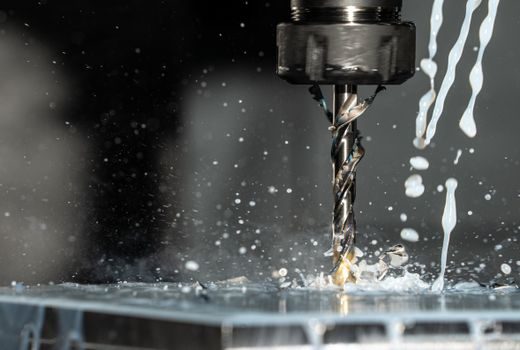
Most Chinese-offered UCP inserts ship double-sealed (2RS) with a contact rubber seal on each side, grease-packed for life, with P0 (ABEC-1) tolerance as the default and P6 / P5 / P4 available on request [S3]. The P-class step matters: a P4 insert costs more and runs truer at high speed, but a P0 insert is more than adequate for fans, conveyors, and general machinery. Where you genuinely need P4 or better, you usually also need a higher-grade grease, a better seal, and a balanced rotor — picking P4 on a P0 application is wasted spend.
Grease life is the hidden limit on a pillow block. For an average sealed UC-series insert in a clean, moderate-temperature environment, expect grease service life in the 10,000–25,000 hour range. Re-lubricatable variants (suffix "-2RS" with a grease nipple) extend this but add a maintenance step. The 2RS sealed-for-life format is the right default for inaccessible mounts — overhead shafts, ceiling fans, agricultural equipment — and matches the current Shandong and Hebei supply profile [S3][S6].
Standards, Materials, and Interchangeability
UCP-series insert dimensions follow the metric mounted-bearing convention used by every major manufacturer — SKF, FAG, NSK, NTN, Timken, Koyo, and the Chinese OEM tier (Bdl, C&U, LYC, ZWZ) — making them mechanically interchangeable at the bore and bolt-spacing level [S7]. Housing dimensions are tabulated by series: UCP2xx (metric medium), UCP3xx (metric medium-heavy), UCP4xx (metric heavy), and inch equivalents prefixed UCPA or UCPH for specific bolt patterns.
Material standards worth knowing: GCr15 (Chinese grade, equivalent to 100Cr6 / AISI 52100) is the standard through-hardening bearing-steel for race and ball elements; HT200 (Chinese grade, ~GG20 / ASTM Class 30) is the typical cast-iron pillow; 304 / 316 stainless appears in washdown and food-grade housings [S3]. The interchangeability rule — same UC insert fits a SKF, FAG, NTN, or Chinese-brand housing of the same series — means buyers can dual-source a proven insert against a cheaper Chinese pillow, or vice versa, without redesigning the mounting envelope [S7].
Supplier Landscape and Sourcing Checks (July 2026)

The current Chinese supply side is dense and price-competitive. Cixi Joton Bearing (Ningbo, Zhejiang) lists pillow block bearings alongside deep-groove, tapered, and spherical-roller lines for general industrial distribution [S4]. Ningbo Kent Bearing (Henghe Town, Ningbo) reports 1–3 month peak-season lead times against a one-month off-season lead time, with main export markets spanning North America, South America, Eastern and Southeast Asia, Africa, Oceania, and the Middle East [S8]. Hebei Longrui Bearing, founded as a registered manufacturer in 2011 in Shijiazhuang, lists pillow block bearings together with taper-roller and thrust lines for auto, motorcycle, and tools/hardware channels [S2].
Price points on the current B2B platform listings for the 25–50 mm-bore UCP range sit roughly between US$0.10 and US$10 per set at MOQ (1–10 sets), with a UCP206 SKU at US$1.30 per set at 1-set MOQ and a UCP208 at US$0.1–10 in the same listing [S6][S7]. For 2026 sourcing, four checks are non-optional: confirm the insert-race material is GCr15 (or an equivalent through-hardened bearing steel, not a case-hardened substitute); confirm the housing material on the drawing, not in the marketing photo; confirm the seal class and the grease spec; and confirm a mill certificate or dimension report on the first PO. The same caveat applies across Deep Groove Ball Bearing Selection and Tapered Roller Bearing Selection: the spec sheet beats the catalogue.
Where the application calls for tight alignment, high stiffness, or a non-rotating load path, the pillow block bearing is not the right answer — a linear guide or crossed-roller guide belongs in that conversation instead, because they handle pure linear travel and tilting moments rather than a rotating shaft through a bore. Watch the next six months for two signals: (a) whether the 2RS sealed-for-life UCP range pushes into more 60–80 mm-bore frames as Chinese mid-tier makers extend their catalogues, and (b) whether stainless / polymer pillow housings erode the cast-iron default in washdown and outdoor applications. Both are spec-driven shifts, not pricing-driven, and both will show up in the next supplier-catalogue refreshes before the end of 2026.