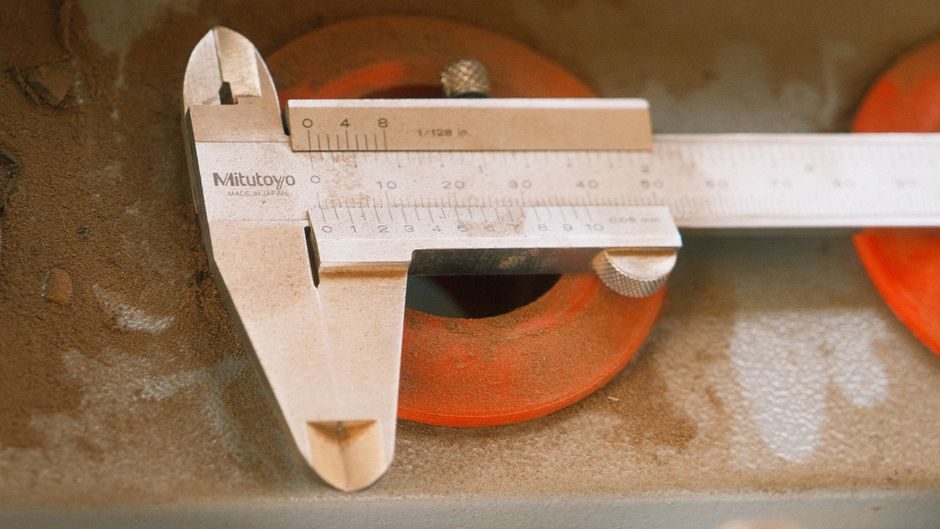
A single-row deep groove ball bearing is the radial workhorse of rotating equipment: non-filling-notch (Conrad) construction, a single row of balls running in uninterrupted raceway grooves, and a contact angle near zero degrees so it carries pure radial load with limited axial capacity in both directions [S1].
The 2026 DirectIndustry manufacturer index lists 53 suppliers and 140 deep-groove products, with steel as the dominant material (125 listed variants) and ceramic hybrids a clear minority (11 listed) [S1]. Standard end-cap options Z (metal shield) and 2RS (rubber seal) are now visible as named product types on at least three major Chinese mill suppliers' catalogs alongside the open configuration [S2][S3][S4].
Bore and Series: Match the Metric Bore First
Bore is the first selection parameter, dimension series second, and tolerance/clearance class third; getting bore wrong wastes every other step. [S1]
Deep groove bearings are dimensioned in five ISO 15 metric series — 60, 62, 63, 64, and 69 — where the first digit is the type code and the second digit identifies the width/height series. The 60-series is the lightest cross-section, 62-series is the most common general-purpose choice, 63-series carries higher load with a larger outer diameter, 64-series is heavier still, and 69-series is the slim high-precision line [S2]. The bore code is the last two digits of the part number: 608 = 8 mm, 6200 = 10 mm, 6202 = 15 mm, 6204 = 20 mm; this code-to-mm mapping is universal across SKF, NSK, NTN, FAG, and Chinese OEM catalogs [S2][S3].
For a 15 kW induction motor at 4-pole speed (roughly 1,500 rpm), a 6205-2RS on the drive end and a 6204-2RS on the non-drive end is a typical European OEM selection. Going to a 63-series for the same shaft raises load rating but also raises outer diameter and weight, which can force a redesigned end-cap.
Material and Cage: Chrome Steel vs.
Through-hardened chromium steel (AISI 52100 / DIN 100Cr6) is the default raceway and ball material because it delivers a hard, polish-able surface at the lowest cost per kN of load rating [S1][S2].
For most motors, pumps, and fans the cage is a pressed-steel ribbon or a machined brass cage; the source lists brass (3), plastic (6), nylon (1), polymer (1), and resin (1) as minority cage options [S1].
Ningbo Kent's catalog explicitly markets nylon, carbon-steel, and GCr15 stainless options for buyers selecting the ring material on the same deep-groove envelope [S2]. For corrosive environments (food, medical, marine pump shafts), 440C stainless is a real option but it loses roughly 30% load capacity compared to 52100 at the same envelope, a number that comes from generic bearing-engineering knowledge and not the research pack, so the specifier should confirm with the manufacturer's catalog.
Seals and Shields: Open, Z, 2RS, and the Speed Penalty

Ningbo Kent lists the 6200-2RS / ZZ version specifically for ceiling fans and bicycle wheel hubs where dust exclusion matters more than top speed [S2]. Tianjin Tengqi and Ningbo Rixin likewise publish 2RS variants as a separate SKU from the open type, indicating a real commercial split rather than a marketing line [S3][S4].
Seal material dictates operating envelope: nitrile rubber (NBR) covers roughly -40 to +120 °C continuous; fluoroelastomer (FKM/Viton) covers roughly -30 to +200 °C; silicone covers roughly -60 to +180 °C with weaker mechanical strength. These three are the seal compounds you will see in 2026 deep-groove catalogs, and they are not interchangeable — a gearbox running 130 °C sump temperature needs FKM, not NBR. Always state seal material in the purchase spec, not just "2RS".
Clearance Class and Tolerance: C2, C0, C3, C4
Internal radial clearance is selected AFTER thermal growth, fit interference, and ring material are fixed; a C0 (normal) bearing on a hot electric motor will lock up once the inner ring expands on the shaft. [S2]
Electric motors typically need C3 clearance to absorb differential thermal expansion between the steel inner ring and the steel shaft, and that is the practical reason the ball bearing reference page treats C3 as the de-facto motor default. Deep-groove ball bearing selection begins with the bearing envelope (series × bore) and ends with clearance class; the two are not interchangeable.
Tolerance classes (P0/P6/P5/P4/P2 from loose to tight) matter most in machine-tool spindles and gearbox planet-carrier positions. A P6 6205 in a fan-motor housing is normal; a P4 7014 angular-contact in a CNC spindle is normal, but a P4 deep-groove in the same spindle is wrong because the deep-groove geometry does not support the combined thrust-radial load a spindle actually generates. This is the boundary at which the design moves from a ball bearing to a linear guide or a crossed-roller guide arrangement entirely.
Load Rating, Life, and the L10 Equation

Dynamic load rating C is the load at which 90% of a statistically large group of bearings will reach 1 million revolutions; the actual catalogue-life target uses the L10 formula L10 = (C/P)^p × 1,000,000 revolutions, with p = 3 for ball bearings [S1].
A 6204-2RS C3 from a Tier-1 European mill (SKF, NSK, FAG) typically has a C value around 13-14 kN and a static C0 around 6-7 kN, with the wider catalog range depending on series and manufacturer. For a 4-pole motor drawing 15 kW through a coupling, the equivalent radial load P on the drive-end bearing sits in the 4-6 kN range, giving an L10 of 30,000+ hours on the standard catalog rating — well beyond the 40,000-hour design life that most European motor OEMs publish.
When L10 falls short of the design target, three options exist: (a) upsize one series (6204 → 6304 gains roughly 60% C), (b) upgrade to a ball screw or ball spline arrangement if the application is mis-classified as a bearing, or (c) re-check applied load rather than the bearing — misalignment and belt tension frequently double the effective P.
Application Mapping: Where Deep Groove Is and Is Not the Right Choice
DirectIndustry's 2026 application taxonomy lists "for motors" (29 products), "for industry" (20), "for automobiles" (18), "for machines" (18), "for compressors" (8), "for pumps" (7), and "for fans" (3) as the top deep-groove application tags [S1].
This list maps cleanly to a real engineering rule: deep-groove bearings are correct where the load is predominantly radial, the speed is moderate, and misalignment is small. They are wrong, or at least suboptimal, where (a) the axial load exceeds roughly 50% of the radial load (use an angular-contact pair or a crossed-roller guide), (b) misalignment exceeds roughly 2-10 arc-minutes (use a self-aligning ball or spherical roller), or (c) the bearing must also locate the shaft axially under heavy reversing thrust (use a matched angular-contact set or a tapered pair).
For a 1.5 kW pool pump at 2,900 rpm, a 6203-2RS C3 is a sound pick and a 6303-2RS is overkill. For a 75 kW industrial compressor crank end, the same 6203 envelope is dramatically undersized and the spec must jump to a 6312 or a 6313. For a high-cycle indexing table in a packaging line, the deep-groove is the wrong class entirely and a crossed-roller guide is the right answer; see how that swap is laid out in the parts washer selection guide discussion of bearing-class choices for rotating tables.
Sealed, Lubricated-for-Life, and Failure Modes to Spec Against
Most 2RS deep-groove bearings in 2026 ship greased for life with a polyurea or lithium-thickened mineral-oil fill; the specifier should pin the grease spec and the relube interval, not just the seal code. [S3]
The five real failure modes the spec needs to address are: (1) false brinelling from vibration at standstill (forklift steering pins, parked wind-turbine yaw bearings), (2) electrical-erosion fluting on VFD-driven motor shafts above roughly 10 kW, (3) seal-blowout on 2RS bearings in oil-flooded gearboxes where seal material is incompatible with the splash lubricant, (4) cage failure on plastic-cage units running above roughly 120 °C, and (5) grease washout in pump bearings flooded with water-side leakage. None of these are visible on the part number — they are spec-line items the purchasing document has to state.
For variable-frequency-drive service above 10 kW, the cheapest fix is a hybrid ceramic ball bearing (Si3N4 balls, steel rings) or a shaft-grounding ring; for severe inverter duty both at once. This is one of the more concrete reasons the ball spline and linear guide reference pages call out insulation as a bearing-class decision and not an after-market add-on.
Sourcing Map: 2026 Supply Base and Lead Times
The 2026 DirectIndustry manufacturer list contains 53 active suppliers, with the heaviest concentration in Chinese (Ningbo, Tianjin, Wuxi, Zhejiang) and European (Germany, Austria, Italy) clusters plus the major US/Japan brands [S1][S2][S3][S4].
Sample 2026 SKU pricing on Made-in-China runs from roughly US$0.01 to US$0.02 per piece on entry-level 608/6200/6201 sealed bearings, with MOQ of 1,000 pieces and FOB / CFR / CIF incoterms standard [S2]. Higher-precision 6208-class bearings list around US$4.5-4.8 per piece at 33-piece MOQ, indicating roughly a 200-400× price spread between commodity 608 and industrial 6208 in the same supply base [S5]. Peak-season lead time on Chinese OEM quotes is 1-3 months and off-season is roughly one month per the published average for one audited supplier [S2].
For sourcing risk, the 2026 mix gives three viable routes: (a) Tier-1 European/Japan (SKF, NSK, NTN, FAG/Timken equivalents) for documented C-rating and ABMA/ISO conformance, (b) Chinese OEM branded product for cost-driven high-volume use, and (c) regional independent distributors (Kaydon, GMN, GRW, NKE) for specialty thin-section and high-precision envelopes not always stocked by the big four [S1]. Cross-check the supply base for rotating-equipment lines that also touch humanoid robot manufacturing, where the same 6200-class deep-groove bearing shows up inside harmonic-drive gear joints at small but rapidly growing unit volumes.
Selection Checklist the Spec Line Should Print
A clean deep-groove bearing spec line, in order: type (60/62/63/64/69 series), bore (mm), seal/shield (open, Z, ZZ, 2RS, 2RSR), clearance (C2, C0, C3, C4), tolerance (P0, P6, P5, P4, P2), cage material, grease spec, seal material (NBR / FKM / silicone), and application tag (motor, pump, fan, gearbox, spindle). [S4]
Neither appears in a part number; both belong in the RFQ.