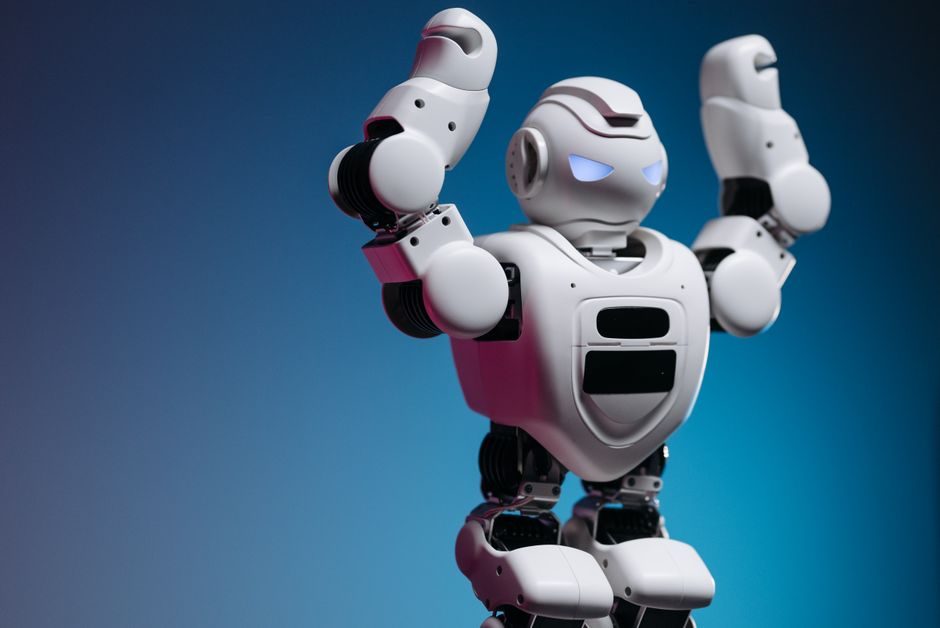
UBTech Robotics, Unitree Robotics, and Dobot anchor a 2026 humanoid-robot vendor list dominated by Chinese OEMs, with 37 of 100 firms on Morgan Stanley's global humanoid tracker headquartered in China, versus 5 in the U.S. [S1][S4].
Active deployments in 2025-2026 span automotive assembly, logistics, and education: UBTech's Walker S1 units work inside Geely's Zeekr 5G smart factory in Ningbo and are training at BYD, Foxconn, and SF Express sites, while Unitree's G1 platform is sold as a kung-fu-capable research unit and Dobot's Atom full-size biped opened pre-sale at 199,000 yuan (~$27,500) [S1][S4][S5].
China-Based Tier-1 Humanoid OEMs and Model Specs
UBTech's Walker S1 is a 172 cm silver humanoid operating in real automotive cells, where two units have demonstrated synchronized crate lifting and collision-avoidance routing at Geely's Zeekr 5G smart factory in Ningbo, Zhejiang province [S1]. The Beijing Humanoid Robot Innovation Center, co-founded by UBTech, fielded the Tiangong Ultra biped that won the world's first half-marathon for humanoid robots in April 2025 [S1]. Unitree, headquartered in Hangzhou, released a viral demonstration of the G1 executing a 720-degree spinning kick and a fluid kung-fu sequence in February 2025, positioning the G1 as a research and education platform rather than a fixed-payload factory worker [S4]. Dobot, based in Guangdong, launched the Atom as "the world's first full-size embodied intelligent humanoid robot" on 2025-03-18, advertising dexterous manipulation and straight-leg walking at a 199,000 yuan pre-sale price [S5].
For a deeper read on the BOM and sourcing lanes behind these platforms, the humanoid robot supply chain breakdown maps the five-block architecture most 2026 Chinese OEMs share.
U.S. and International Suppliers on the 2026 Shortlist
Boston Dynamics remains the benchmark U.S. humanoid OEM, with its Atlas platform cited in Morgan Stanley's global list and referenced in Chinese media as the traditional reference point that domestic vendors are now challenging [S1]. Hanson Robotics, based in Hong Kong, ships the Sophia platform, which carries a 33-DoF facial motion system driven by actuators beneath a "Frubber" skin-like material; the platform's expression library is the focus of a 2024 ShanghaiTech student project that maps ARKit blendshape parameters to motor targets for real-time generation [S2]. Tesla's Optimus program and Figure AI's Figure 01/02 are widely cited as competing U.S. entries, though none are confirmed in the supplied research material.
International educational and hobbyist vendors, including WowWee's Robosapien line that anchors the 2011 documentary "Robot Adventures with Robosapien and Friends: Humanoid Robots," continue to feed the consumer end of the market with 1h 24m family-oriented STEM content [S3].
Selection Criteria: Payload, DoF, Height, and Price Tier
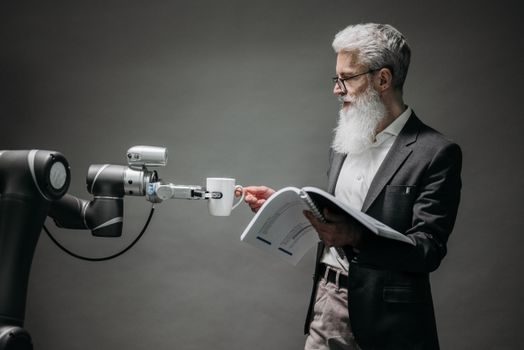
Specifying a humanoid in 2026 means picking across four engineering axes: standing height (Walker S1 at 172 cm, Atom at "full-size," Sophia at ~1.4 m), payload capacity (factory units need ≥5 kg per arm for crate handling), degrees of freedom (Sophia uses 33 facial DoF alone; full-body bipeds typically run 30-50 total), and price band (Atom at 199,000 yuan ≈ $27,500 entry, hobbyist kits well under $1,000) [S1][S2][S5]. UBTech explicitly states the Walker S-series is moving into "500+ units in potential orders for use in factories," a clear indicator that enterprise-tier Chinese bipeds are now in early serial production rather than prototype [S1].
The most common engineering trade-off in 2026 sits between DoF density and mean-time-between-failure: high-DoF heads like Sophia's 33-DoF face demand tight actuator coordination, while factory bipeds prioritize ruggedized joint modules over expressive range.
Where the 2026 Humanoid Market Is and Is Not Ready
UBTech's Walker S1 and Tiangong Ultra are validated for structured factory tasks — material sorting, cargo transport, and component installation — within a 5G-meshed plant like Zeekr's Ningbo line, and the half-marathon win demonstrates outdoor bipedal locomotion under realistic terrain [S1]. Unitree's G1 is positioned for research labs and viral demos (kung fu, 720-degree kick), not fixed-route material handling [S4]. Dobot's Atom targets "embodied intelligent" general manipulation with straight-leg walking, an explicit stance-efficiency claim aimed at battery-powered mobile manipulation [S5].
Humanoids are NOT ready where unstructured human contact, safety-rated collaborative work, or unguarded operation near humans is required: bipedal locomotion remains far from realistic requirements for arbitrary terrain, and humanoid morphology does not yet allow a robot to perform all the tasks a human can do, per a foundational review of the field [S6].
Standards, Funding, and the 2026 Policy Backdrop
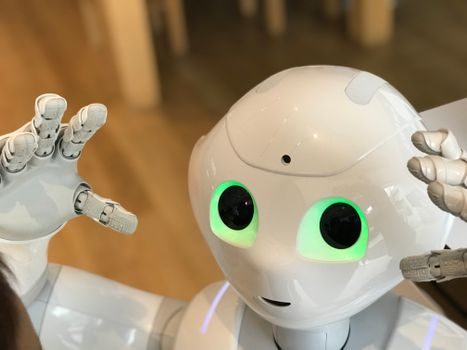
Chinese local governments including Beijing, Shanghai, and Shenzhen have established billion-yuan industrial funds dedicated to humanoid robotics, and viral demonstrations of front flips, backflips, and bicycle riding have repeatedly surfaced on social media through 2024-2025 [S1]. No international standard (ISO 13482 for personal-care robots, ISO/TS 15066 for collaborative robot safety, or IEC 61508 for functional safety) is named in the supplied research as governing bipedal humanoid deployment, so a specifying engineer should validate the certification path with the OEM before purchase.
Adjacent robotic-welding vendors listed on Made-in-China.com exceed 2,000 manufacturers with 6,000+ products, including industrial robots, cobots, and fiber-laser cutting machines with ODM/OEM R&D capacity; this is the same Shenzhen-and-Guangdong supply base that fabricates actuators and reducers for Chinese humanoids [S7]. For welding cells that may soon share floor space with humanoids, the robotic welding market 2026 selection map covers the integration side.
Failure Modes and Sourcing Risks Specifiers Should Track
Actuator and reducer supply remains the single largest bottleneck: a humanoid uses 25-50 servo or harmonic-drive actuators, and the same Shenzhen/Guangdong cluster that serves the welding-robot industry (2,000+ manufacturers, 6,000+ SKUs on Made-in-China.com) also defines humanoid lead times [S7]. Software-stack risk is equally concrete — Sophia's facial system still relies on artist-defined preset expressions, and the ShanghaiTech 2024 project explicitly targets this gap with a transformer mapping ARKit to motor parameters, indicating that even flagship humanoids ship with hand-authored animation libraries rather than fully learned control [S2].
Vision-side dependencies for bipedal navigation overlap with the broader 2026 machine-vision supply picture; engineers integrating humanoids into existing lines should read the machine-vision supply and component risks for 2026 alongside the humanoid BOM map.
Who Should and Should Not Specify a Humanoid in 2026
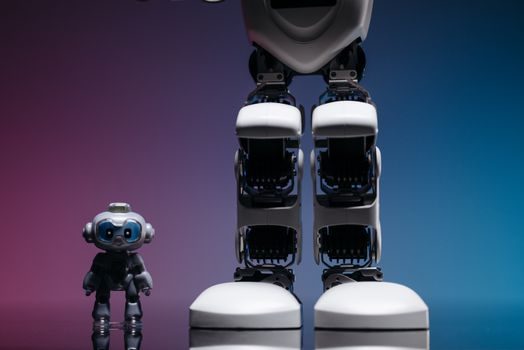
Spec FOR: automotive and 3C assembly cells with structured routes and 5G coverage, where Walker S1-class units can replace wheeled AGVs for tote and crate handling — see the AGV vs AMR selection logic and the mobile manipulator variant for the wheeled baseline being disrupted. Research labs needing general-purpose bipeds should evaluate Unitree G1 and Tiangong Ultra; service-robot deployments needing expressive faces should benchmark against Sophia's 33-DoF head [S1][S2][S4]. Spec NOT for: unstructured outdoor terrain, safety-rated collaborative work in human-occupied spaces without ISO/TS 15066-rated cell design, or any task where a conventional articulated six-axis arm, SCARA, or collaborative robot already meets cycle-time and payload at one-tenth the integration cost.
Trackable next signals: UBTech's conversion of its "500+ potential orders" into firm POs, the first third-party IEC functional-safety certification of a Chinese biped, and any public listing of Dobot Atom shipping volumes beyond the 199,000 yuan pre-sale tier [S1][S5].