
Indian shell core shooter manufacturers cluster in Rajkot, Kolhapur, and Ahmedabad, offering PLC-based horizontal, roll-over, top-shooting, and two-station machines with 5–20 kg shooting capacity at 4–6 bar blow pressure [S1][S5][S6].
The global supply base remains concentrated in Western India, where foundries serve automotive, pumps, motors, and aluminium die-casting lines; average quoted machine weight runs 700 kg for a 5 kg-per-shot unit up to floor-mounted 20 kg-class rigs [S1][S4]. A practical spec-first breakdown of options is mapped in the How to Choose a Shell Core Shooter: Spec-First Selection Guide.
Working Principle and Sand-Binder Chemistry
A shell core shooter injects a sand-resin mix into a heated core box at controlled pressure, curing a thin-walled hollow shell that is ejected for use in metal-casting moulds [S3]. The classic mix is roughly 95% silica sand, 3–4% urea-formaldehyde resin, and 1–2% hardener, with cleanliness and grain-size consistency dictating final core strength [S3]. The blowing head forces this mix into the core box, while the heating system cures the resin binder, locking shell geometry before ejection.
ATHI Engineers describes a 4-station workflow: sand mixing, core box setup, shooting and curing, then extraction; cycle time depends on box temperature, blow pressure, and resin cure window [S3]. Box surface prep with release agent and accurate half-alignment are the two most common defect vectors in field reports [S3]. For a primer on broader shell molding machine line components, this thermal-cure step is the binding reaction that distinguishes the shell process from cold-box amine-cured systems.
Core Configuration Options and Matched Specs
Top-shooting roll-over, swing-door, top-shooting compact, horizontal-parting, two-station, and table-type configurations are all in production at Indian OEMs as of 2026, each targeting a different core-size window [S5]. Plate-size windows range from 200x400 mm on compact top-shooting units up to 1000x1200 mm on swing-door machines; the swing-door line alone has more than 150 installations in the field [S5].
Core weight tracks plate size: 7 kg compact, 15 kg top-shooting, and 20 kg roll-over/horizontal-parting for the larger swing-door and roll-over units [S1][S5]. Roll-over and two-station designs let one operator run two core boxes in parallel, doubling throughput per cell without doubling floor space [S5]. Selection logic for matching plate size, core weight, and station count against casting-mix volume is detailed in the Shell Core Shooter Specs for Oil and Gas Foundries reference.
Electrical, Pneumatic, and Mechanical Spec Envelope
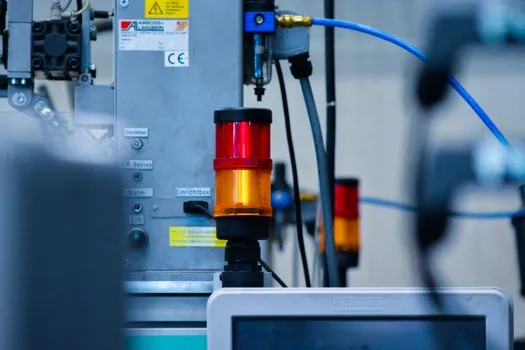
Standard floor-mounted units run on 440 V 3-phase at 50 Hz, with mild-steel frames, electric core-box heating, and PLC-based control; blow pressure lands at 4 bar for the 5–10 kg/12 kg class and 6 bar for the 10–20 kg/20 kg class [S1]. The lower-end 240 V single-phase, 3 HP / 5 HP hydraulic variant by Vermac delivers up to 5 kg per shot at a 50-second cycle and 85% efficiency, weighing 700 kg in a 1600 x 750 x 1700 mm footprint [S4].
Premium automatic machines add Mitsubishi PLC, SCADA, Industry 4.0 telemetry, sand-level sensors, individual temperature controllers per core-box half, and hydraulic top-and-bottom ejection with multi-cavity compatibility [S1]. Ganesh Quality Machines' swing-door and two-station units run in pneumatic or hydraulic mode, with optional core-tilting and core-belter take-aways to integrate into downstream handling [S5]. For buyers comparing broader shell core machine envelopes across the global OEM base, the 4–6 bar / 250°C envelope is the working baseline to anchor against [S1][S4].
Supplier Landscape in India and Pricing Anchors
Makewell Technomac in Rajkot quotes approximately INR 690,000–790,000 per piece for PLC-based automatic shell core shooters with 5–20 kg shooting capacity [S1]. Ganesh Quality Machines in Kolhapur exports top-shooting, roll-over, and table-type units alongside shell moulding machines and shell fusers [S5]. Navdis Engineers LLP, established 1989 in Ahmedabad, lists shell core shooter, cold box core shooter machine, induction motor body, and 3D vane impeller among its manufacturing lines [S6].
Alcast Machines & Automation (operating since 2015) markets vertical-parting-line, horizontal-parting-line, twin-trolley, and two-station core shooters for automotive, heavy-machinery, and aerospace casting [S2]. Galaxy Machines supports cold-box and shell core shooting lines plus sand-prep plants, amine scrubbers, and core-painting stations as a turnkey supplier [S8]. Vermac Foundry Equipments in Rajasthan exports a 240 V / 5 HP hydraulic shell core shooter with 50-second cycle time and 3.7 kW draw [S4]. Related construction machinery and equipment supply chains share several of these sub-suppliers for fabrication and structural assemblies.
Selection Criteria: Manual vs PLC vs Industry 4.0
For a buyer weighing manual-lever hydraulic (Vermac 5 kg class, ~700 kg, 240 V, 85% efficiency) against PLC automatic (Makewell 12–20 kg class, 440 V 3-phase, 4–6 bar, Mitsubishi controller), four decision criteria dominate: core weight per shot, cycle time, operator count, and integration telemetry [S1][S4]. On core weight per shot, manual 5 kg loses to automatic 12–20 kg by 2.4–4x; on cycle time, the 50-second manual cycle is competitive only at low-volume job shops [S1][S4].
On operator count, two-station and roll-over designs let one operator run two core boxes, halving labour cost per core [S5]. On integration telemetry, SCADA/Industry 4.0 packages add fault diagnostics, digital temperature control, and sand-level sensing that pay back only above a sustained monthly core volume [S1]. A unit at the 20 kg class typically demands 440 V 3-phase power and 6 bar shop-air, both of which must be confirmed at the plant electrical survey before order release [S1]. For the broader lighting equipment and electric lamps and ancillary foundry-floor spec context, the curing-window lighting and inspection-lamp coverage on core-box temperatures is a typical adjacent buying line.
Standards, Failure Modes, and Buyer Watch-Outs
No single ISO or IS standard governs the shell core shooter itself; instead, foundries typically anchor purchases to in-house casting-quality acceptance criteria, resin-system supplier datasheets, and CE/IS safety interlocks for the heating and clamping circuits [S3][S4]. Resin cure window (governed by urea-formaldehyde system) and box temperature uniformity (governed by per-half PID controllers on premium machines) are the two highest-leverage quality parameters [S1][S3].
Common failure modes reported by Indian OEMs include resin bridging (cold box hot-spots), blow-pressure starvation on long hose runs, and PLC sensor drift on sand-level probes; fault-diagnostic alarms are now standard on the Makewell Mitsubishi platform [S1][S3]. Buyers should request cycle-time verification at full shot weight, not nominal, and confirm that the resin-system supplier's cure-window data matches the machine's heating-platen rating [S1][S3]. Final cross-check is to validate that the shell core shooter mounting footprint, crane-lift points, and floor-loading rating all match the foundry's existing bay layout before issuing a purchase order.
Two trackable signals for the next procurement cycle: (1) Makewell's Industry 4.0 / SCADA retrofit kit availability for the 5–10 kg class, which would compress the price gap to the 10–20 kg auto line; (2) Ganesh's table-type compact unit expansion, which targets small water-jacket cores with sub-300x300 mm box sizes for aluminium die-cast foundries [S1][S5]. Both signal 2026–2027 spec roadmaps worth monitoring at the OEM sites.