
Specifying a hydraulic actuator starts with three numbers: required breakaway torque, stroke or rotation angle, and available supply pressure — the rest of the decision tree (Scotch yoke vs rack-and-pinion vs linear) follows from those [S1][S3].
The five dominant architectures in industrial valve automation are rotary vane, helical spline, linear, scotch yoke, and rack-and-pinion, each with a defined torque-density and stroke-density envelope; choosing the wrong family is the most common source of actuator undersizing on ESD and isolation valves [S1].
Selection Criteria: Torque, Stroke, Pressure, and Interface
Four inputs drive the initial shortlist: breakaway torque (Nm or ft-lb), operating stroke (degrees for rotary, mm for linear), supply pressure (typically 30-210 bar working, with intensifiers reaching 350 bar), and the valve-to-actuator mounting interface (ISO 5211, MSS-SP-101, or direct-mount) [S1][S3].
Breakaway torque must be derated by a safety factor of 1.25-1.5 for on/off duty and 1.5-2.0 for throttling duty, because packing friction and seat sealing loads rise as cycle count accumulates; Emerson's actuator portfolio documentation explicitly targets "harsh environments and demanding ESD applications" where this margin is non-negotiable [S1].
Mounting geometry decides whether you can specify a direct-mount actuator such as the Bray Series 98H (Scotch yoke, modular) or whether you need a separate bracket, coupler, and adapter — the direct-mount path reduces parts count and eliminates coupling backlash, a frequent source of position-error drift on modulating duty [S3].
Scotch Yoke vs Rack-and-Pinion vs Linear: Decision Logic
Scotch yoke actuators deliver the highest torque density in the first 90° of rotation and are the default for quarter-turn ball and butterfly valves above ~500 Nm where the seat friction peak occurs at the start of stroke; Bray's Series 98H is a modular Scotch yoke explicitly engineered for direct mounting and high-torque efficiency [S3].
Rack-and-pinion designs give near-constant torque across the full 90° rotation, making them better for gate and globe valves requiring uniform seating force, and for double-acting service where symmetry matters; rotary vane units cap out at lower torque (~50-2000 Nm typical) and suit small quarter-turn valves and dampers [S1].
Linear hydraulic cylinders — driven by a hydraulic cylinder with rated force tied to bore area and pressure — dominate multi-turn gate and globe valve service, large damper drives, and dam/penstock actuation, where stroke can exceed 600 mm and the load is essentially translational rather than rotational [S6].
The drive fluid is itself a spec line: a dedicated hydraulic power unit sized for the actuator's flow demand (L/min at operating pressure) and reservoir capacity is what differentiates a working hydraulic system from a noisy, hot, cavitation-prone one.
Fail-Safe Direction, ESD, and Hazardous-Area Compliance
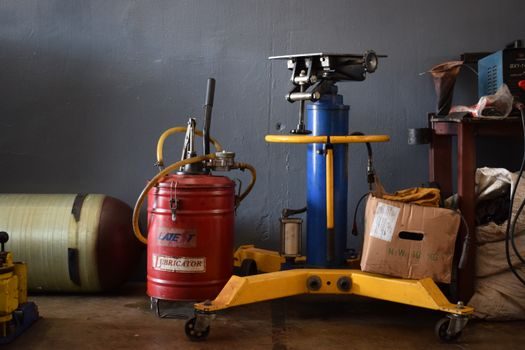
Fail-safe direction (fail-open or fail-closed on loss of pressure) is determined by spring-return selection or by an accumulator-backed hydraulic power unit that guarantees stroking energy on loss of supply — a non-negotiable parameter for ESD and HIPPS duty, where Emerson's actuator guidance treats this as a baseline requirement [S1].
For oil & gas, chemical, and LNG service, hazardous-area certification (ATEX 2014/34/EU for the EU, IECEx for international projects, and the relevant IEC 60079-x protection concepts for Zone 1/2 or Zone 21/22) governs enclosure, breather/drain, and surface-temperature limits; this must be matched to the actuator's electrical components (solenoids, position transmitters, limit switches), not to the hydraulic side [S1][S3].
For fugitive-emission-sensitive service — including low-emission natural gas, hydrogen, and CO₂ pipelines — the actuator must integrate with a hydraulic valve package qualified to ISO 15848-1 (or the project-specified fugitive-emission class), and the actuator stem seal becomes part of the same leak path as the valve stem [S1].
Hydraulic vs Electric: When Conversion Makes Sense
Electric linear actuators (ball-screw or roller-screw driven) are increasingly considered as retrofits for legacy hydraulic actuators in factory automation, machine tools, and pressing/clamping work, primarily to remove the maintenance burden of pumps, hoses, seals, and oil leaks [S2].
Tolomatic's conversion guidance frames the trade as total cost of ownership: hydraulic systems win on raw force density, peak-load handling, and resistance to shock overload, while electric actuators win on repeatability (±0.01 mm typical for ball-screw), cleanliness, energy efficiency at partial duty, and integration with PLC motion profiles [S2].
For process valve automation on pipelines, ESD, and offshore — the domain of Emerson's and Bray's product lines — hydraulic remains the default because the actuator must share the same fail-safe energy source as the rest of the safety system, and because hydraulic supply is already on site; this is the operating envelope where hydraulic pump and accumulator sizing, not electric servo sizing, is the controlling discipline [S1][S3].
Simulation, Sizing Tools, and Modelling References
Mathworks' Simulink closed-circuit hydraulic actuator example — driven by a variable-speed motor with check-valve replenishment and a spring accumulator — is a current public reference model for sizing the replenishment circuit and the accumulator precharge, two parameters that decide whether the actuator strokes in the required time without pump starvation [S9].
The rotating single-acting actuator example models piston motion on a spinning shaft using the combined static-pressure and centrifugal-force terms, which is the correct formulation for any actuator mounted on a rotating machine (e.g., tensioning, clamping on a rotary table) [S10].
For aerospace linear utility actuators, ISO 18387-2019 remains the governing general-specifications document and is the reference used for airworthiness qualification of flight-control and utility hydraulic actuators; it sits above the more common industrial specs such as ISO 4413 (general hydraulic systems) and is cited by manufacturers and certification bodies for that reason [S4].
Operating Envelope, Failure Modes, and Limit States
Three failure modes drive most hydraulic-actuator field returns: seal extrusion under pressure spikes, water-in-oil contamination causing pump cavitation and erratic stroking, and thermal overload of the supply fluid that drops viscosity below the actuator's minimum operating threshold — the standard industrial mitigation is a conditioned hydraulic power unit with filtration to ISO 4406 cleanliness code 18/16/13 or better. [S1]
Stroke-end shock is the most common mechanical failure on direct-mounted quarter-turn units and is controlled by flow-control valves or deceleration blocks at the cap ends; for Scotch yoke designs, the peak torque occurs at the start of stroke, so sizing must be driven by breakaway, not running, torque [S1][S3].
Temperature derating is mandatory: standard NBR seals are typically rated to ~80 °C operating fluid temperature, FKM to ~150 °C, and HNBR or fluorocarbon compounds for sub-Arctic service; specifying the wrong seal compound is the single fastest path to a hydraulic leak path that defeats the entire fugitive-emission control argument.
Matching Vendor Line to Application

Emerson's hydraulic actuator portfolio — rotary vane, helical spline, linear, Scotch yoke, and rack-and-pinion, grouped under the Bettis and Anderson Greenwood brands — is the workhorse line for upstream, midstream, and refinery ESD and isolation service, with documented zero-emission variants for gas transmission [S1].
Bray's Series 98H is a direct-mount modular Scotch yoke aimed at quarter-turn butterfly and ball valves up to high-torque classes, and integrates with Bray's own actuator sizing software (publicly listed under their software resources) [S3].
For electro-hydraulic packages where the controller, pump, and actuator are supplied as one unit, the KIMRAY electro-hydraulic actuator range is positioned for low-emission oil & gas process control; for OEM test rigs and special-machine applications, German hydraulic-cylinder maker Hänchen (operating since 1925) supplies both single hydraulic cylinders and complete test rigs with rod-clamping units [S6][S7].
Taiwanese suppliers on CENS continue to offer modular hydraulic actuators and cylinders for OEM machinery, where the buying decision is driven by interface standard, lead time, and bore/stroke configurability rather than the certification package that dominates oil & gas spec [S5].
For selection paths that also touch adjacent equipment, the same decision logic used for ball valve selection and electric vs pneumatic actuator gearing is a useful cross-check on torque margin and modulation duty.